+1Kontinente:EU
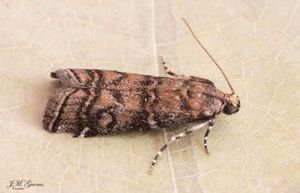
1. Lebendfotos
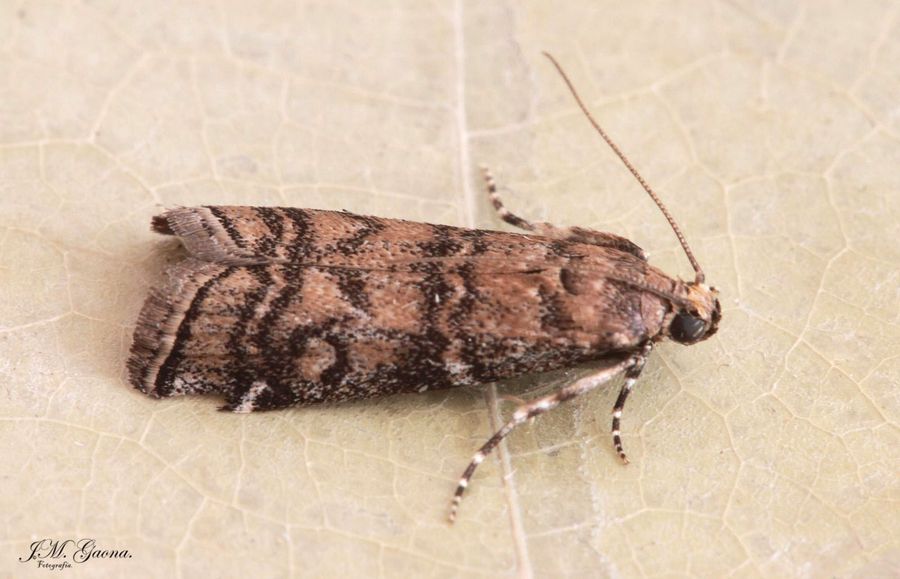
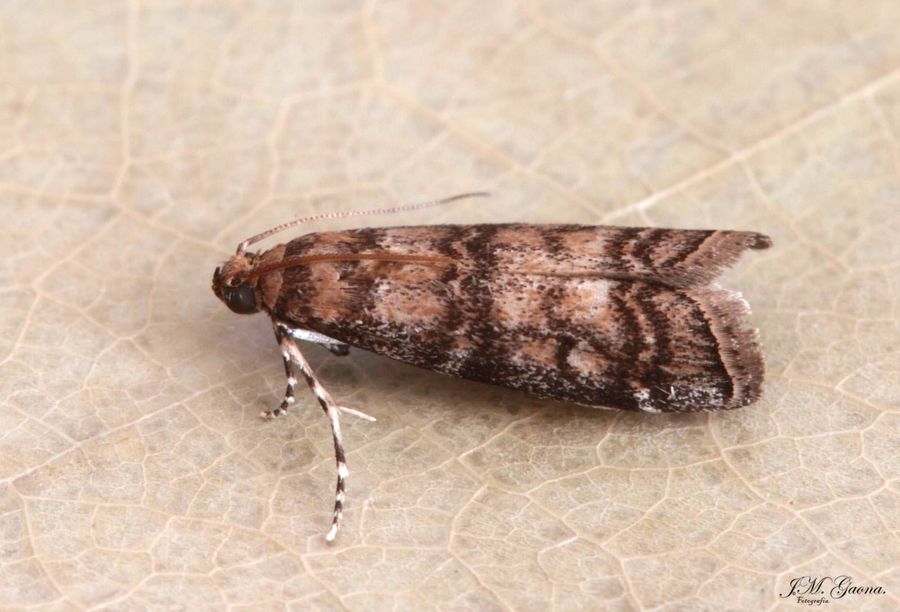
1.1. Falter
2. Biologie
2.1. Nahrung der Raupe
Noch unbekannt! Mit hoher Wahrscheinlichkeit ist zu erwarten, dass die Raupe in Zapfen von Abies pinsapo lebt.
(Autor: Erwin Rennwald)
3. Weitere Informationen
3.1. Etymologie (Namenserklärung)
Garre et al. (2026: 288) erklären: "The specific name refers to the toponym of the Andalusian municipality where this new species has been located."
3.2. Taxonomie und Faunistik
Nach Garre et al. (2026) ist die Art leichter äußerlich von A. terrebrella und A. conicolella zu trennen als anhand der Genitalien. Die Unterschiede beim COI-Barcode liegen bei über 5 %, so dass es an der Artberechtigung keinen Zweifel geben kann. Die 3 untersuchten Exemplare repräsentieren BIN BOLD:AHE8424.
Die Art wurde bisher nur an der Typenlokalität im Südwesten von Spanien gefunden, doch die Autoren der Erstbeschreibung hoffen auf noch weitere Funde: "Only known from the Sierra de Grazalema Natural Park (Cádiz, Andalusia, Spain) although it could probably be found in the relict forests of Abies pinsapo in the National Park of Sierra de las Nieves and in Sierra Bermeja (Málaga, Andalusia, Spain) and even in other relict fir forests in Jebel Tissouka and Jebel Tazaoten in the Rif Mountains (Morocco)." Dass es sich um eine räumlich stark eingeengte Reliktart handelt, dürfte sicher sein.
3.3. Typenmaterial
Garre et al. (2026: 287) listen: Holotype: SPAIN, Cádiz, Grazalema, Puerto del Pinar, Sierra de Grazalema Natural Park, lat: 36.775377, long: -5.428415, 1,056 m, 1 ♀, 7 Jun 2025, [g. prep.] 2304MG, [Sample-ID BOLD] IBLAO3713-25, leg. J.M. Gaona, deposited in the Research Collection of Biología Animal (RCBAUM) in the Department of Zoology and Physical Anthropology of the University of Murcia (Spain). Paratypes: 1 ♂, 3 ♀♀ with same data of holotype, [g. prep.] GR018, [Sample-ID BOLD] IBLAO3712-25; 2 ♂♂, 1 ♀, same data but 24-IV-2024, [g. prep. 1 ♂] GR010, [g. prep. 1 ♀] GR011, [Sample-ID BOLD] IBLAO3711- 25, J.M. Gaona leg. & coll., deposited in the Museo Nacional de Ciencias Naturales (MNCNM) (Madrid, Spain)."
(autor: Erwin Rennwald)
3.4. Literatur
- Erstbeschreibung: Garre, M., Gaona, J.M., Rubio, R.M. & A.S. Ortiz (2026): Assara grazalemensis, a new species of Phycitinae (Lepidoptera: Pyralidae) from Spanish fir forests of southern Iberian Peninsula. — Zootaxa, 5853 (2): 283–290. DOI: 10.11646/zootaxa.5853.2.9. [zum open-access-Artikel mit PDF-Download auf mapress.com]