+26Kontinente:NAMAKISA


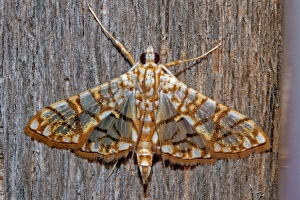
1. Lebendfotos
1.1. Falter

2. Weitere Informationen
2.1. Andere Kombinationen
- Samea jarbusalis Walker, 1859 [Originalkombination]
2.2. Synonyme
- Zebronia cottalis Walker, 1859 [Synonym nach funet.fi]
- Samea chlorophasma Butler, 1878
2.3. Taxonomie und Faunistik
Nach [BOLD] kommt die Art in Costa Rica, USA, Mexiko, Argentinien und Panama vor. Die vielen Amerika-Angaben zu "Synclera traducalis" bei GBIF dürften sich allesamt auf S. jarbusalis beziehen, die dort noch [abgefragt 10. September 2026] als Synonym von S. traducalis geführt wird.
Locus typicus sowohl von "Samea jarbusalis Walker, 1859" als auch des Synonyms "Zebronia cottalis Walker, 1859" ist jeweils "St. Domingo". Butler (1878: 493) beschrieb seine Samea chlorophasma von "Jamaica".
Núñez Aguila & Barro Cañamero (2012: 27) listen die Art für Kuba und geben dabei den Hinweis, dass die Art dort von diversen Autoren bisher als "S. traducalis fehlbestimmt wurde. Wie u.a. die Angaben auf [iNaturalist.com] zeigen, ist die Art in Mittel- und Südamerika weit verbreitet.
(Autoren Erwin Rennwald & Michel Kettner)
2.4. Literatur
- Beschreibung als Samea chlorophasma: Butler, A.G. (1878): On a small collection of Lepidoptera from Jamaica. — Proceedings of the Zoological Society of London, 1878: 480-495. [S. 493, Digitalisat auf archive.org]
- Núñez Aguila, R. & A. Barro Cañamero (2012): A list of Cuban Lepidoptera (Arthropoda: Insecta). — Zootaxa, 3384: 1–59. [zum PDF-Download auf researchgate.net]
- Erstbeschreibung: Walker, F. (1859): List of the Specimens of Lepidopterous Insects in the Collection of the British Museum 17: 509-798. [S. 352, Digitalisat auf archive.org]
- Beschreibung als Zebronia cottalis: Walker, F. (1859): List of the Specimens of Lepidopterous Insects in the Collection of the British Museum 19: 509-798. [S. 964, Digitalisat auf archive.org]
2.5. Informationen auf anderen Websites (externe Links)
- [BOLD]
- [Moth Photographers Group]
- [Butterflies and Moths of North America]
- [Global Biodiversity Information Facility] [Achtung: alle Angaben zu "Synclera traducalis aus Amerika dürften sich auf S. jarbusalis beziehen! (die von anderen Kontinenten nicht)]