+2Kontinente:EUAF


2. Diagnose
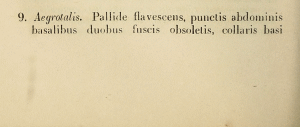
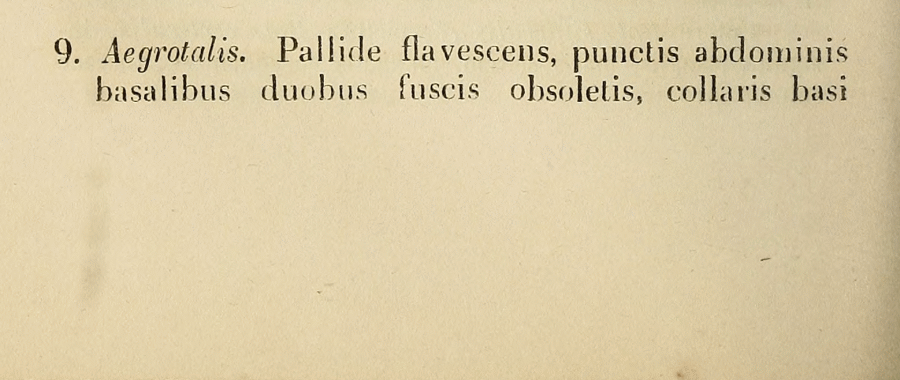
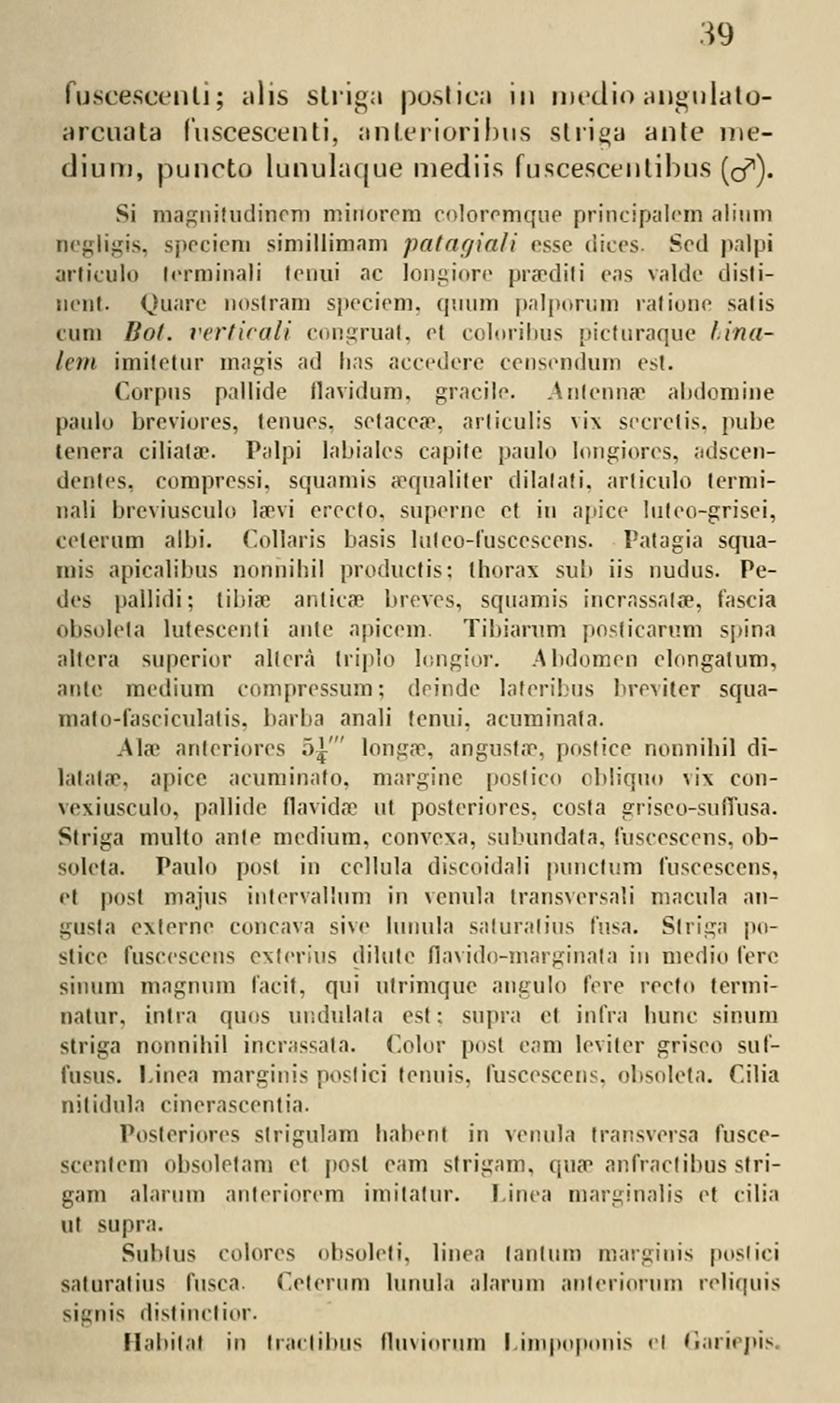
2.1. Erstbeschreibung
3. Weitere Informationen
3.1. Andere Kombinationen
- Botys aegrotalis Zeller, 1852 [Originalkombination]
- Patania aegrotalis (Zeller, 1852) [von ca. 2015 bis Mai 2026 übliche Kombination]
3.2. Taxonomie
Die Art wurde lange Jahre in der Kombination mit Pleuroptya geführt. Dann wurde Pleuroptya mit Patania synonymisiert, die Art infolgedessen als "Patania aegrotalis (Zeller, 1852)" behandelt.
Doch mit dem Artikel "Revalidation of the genus Pleuroptya Meyrick, removed from synonymy with Patania Moore (Lepidoptera: Crambidae: Spilomelinae)" von Matsui et al. (2026) wurde dieses Rad wieder zurückgedreht. Jene Autoren stellen in ihrem Abstract fest: "Molecular phylogenetic analyses indicate that most Pleuroptya species form a well-supported monophyletic clade, whereas the type species of Patania is sister to Nosophora. Morphologically, Patania can be discriminated from Pleuroptya by the male secondary sexual structures, including presence or absence of a hind tibial scale-tuft, a pleural scale tuft, and a well-developed hair-pencil sclerite with specialized scales, as well as by differences in the male genitalia. These results strongly support the separation of the two genera. We thus reinstate Pleuroptya stat. rev. from synonymy with Patania, and redefine the genus based on the recognized monophyletic clade. Based on morphological diagnoses provided here, we confidently place 20 species in Pleuroptya, whereas Patania in the strict sense is currently restricted to only the type species." P. aegrotalis wurde hier nicht konkret mit in die genetische Analyse einbezogen, in der Liste der neu kombinierten Pleuroptya-Arten aber namentlich genannt; in der "tree topology based on ML analysis" bilden dann alle untersuchten Pleuroptya-Arten ein kompaktes Cluster, während die Typusart von Patania - Patania concatenalis - einsam neben zwei Nosophora-Arten steht. "Patania expictalis", "Patania characteristica" und Patania ultimalis stehen weit davon entfernt zwischen Vertretern anderer Gattungen - dort bleiben also viele taxonomische Fragen offen.
3.3. Faunistik
Die Art wurde aus Südafrika beschrieben ("Habitat in tractibus fluviorum Limpoponis et Gariepis"). Sie ist ganz auf Subsahara-Afrika beschränkt.
Die Art ist in Europa sicher nicht etabliert, wurde aber wenigstens einmal nach England verschleppt. Agassiz et al. (2013: 112) führen die Art unter dem Namen Pleuroptya aegrotalis bei den "adventive species" und schreiben zu England: "One near Bolton, Lancashire, 1890. South African." [hantsmoths.org.uk (abgefragt 26. Januar 2022)] schreiben noch kritischer: "Occurrence in the British Isles unconfirmed. One example of this native of South Africa was taken near Bolton, Lancashire and exhibited at an Entomological Society meeting in London in March 1890. Wingspan 23-30 mm. No evidence of breeding in the UK."
(Autor: Erwin Rennwald)
3.4. Literatur
- Agassiz, D.J.L., Beavan, S.D. & R.J. Heckford (2013): Checklist of the Lepidoptera of the British Isles. - Royal Entomological Society. 206pp.
- Matsui, Y., Yagi, S. & T.-H. Pham (2026): Revalidation of the genus Pleuroptya Meyrick, removed from synonymy with Patania Moore (Lepidoptera: Crambidae: Spilomelinae). — Zootaxa, 5802 (3): 520–532.
- Erstbeschreibung: Zeller, P. C. (1852): Lepidoptera Microptera, quae J. A. Wahlberg in Caffrorum terra collegit. — Kongl. Vetenskapsakademiens Handlingar 1852: 1-120. Stockholm (P. A. Norstedt & Söner). [Digitalisat auf archive.org]