+26Kontinente:EUAS


1. Lebendfotos
1.1. Falter





1.2. Eiablage
1.3. Raupe


1.4. Jüngere Raupenstadien

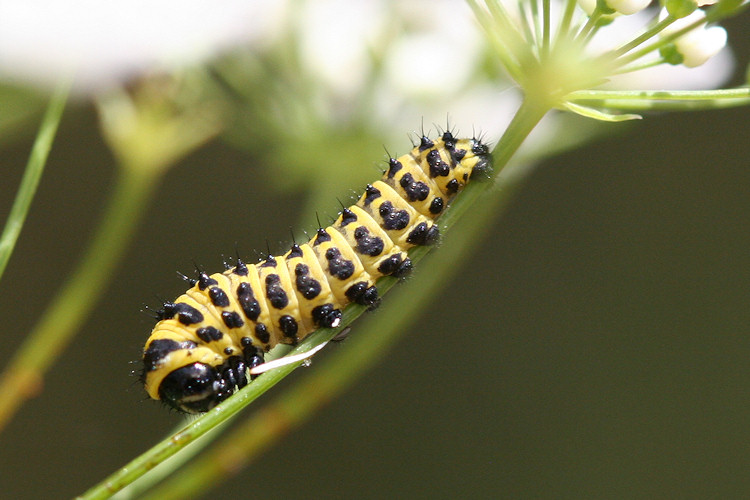
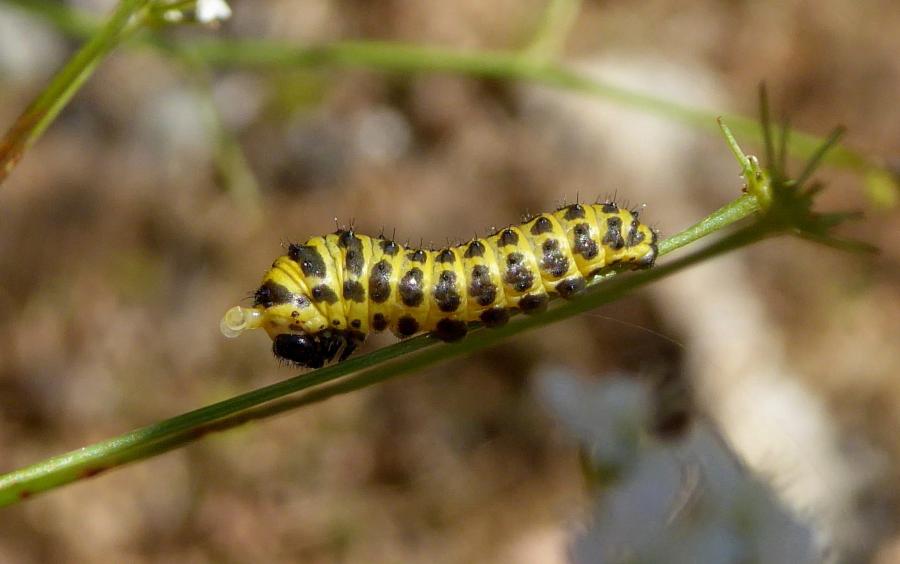
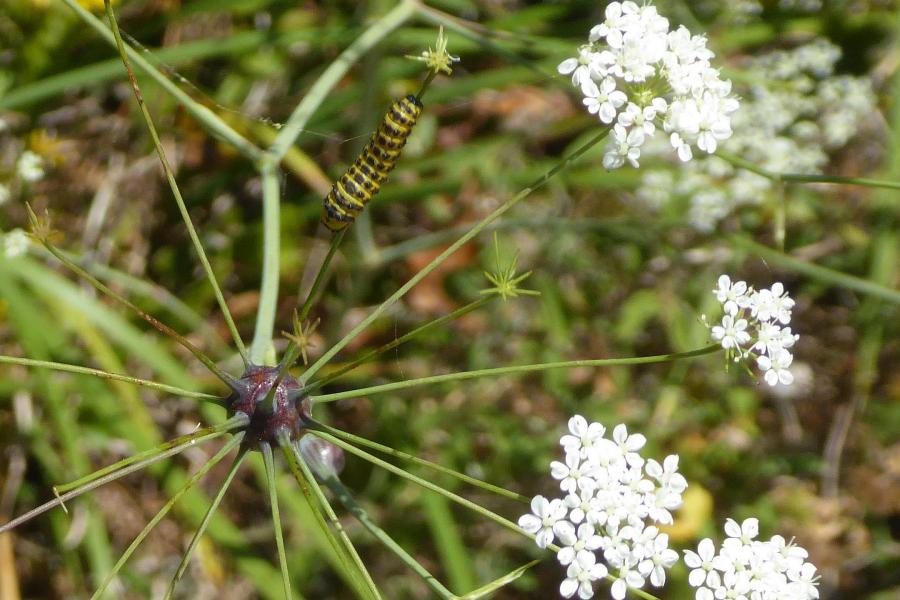
1.5. Puppe

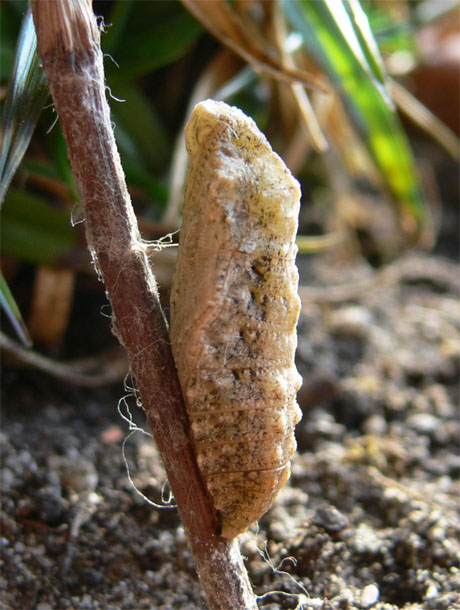
1.6. Ei
2. Diagnose
2.1. Falter
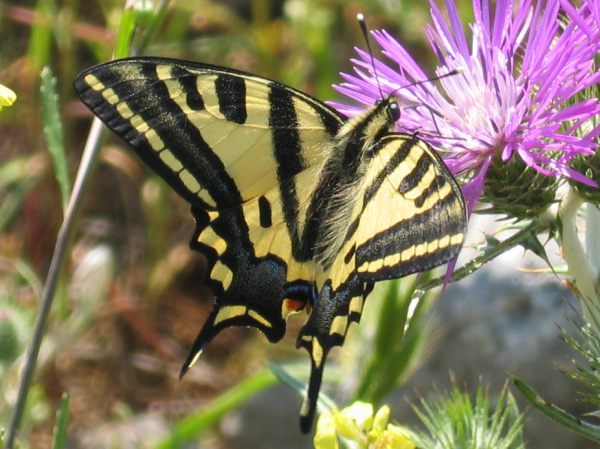
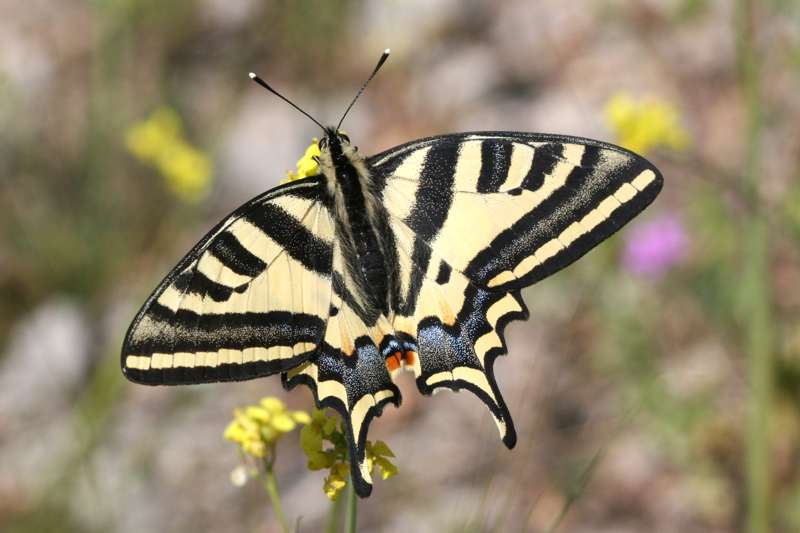
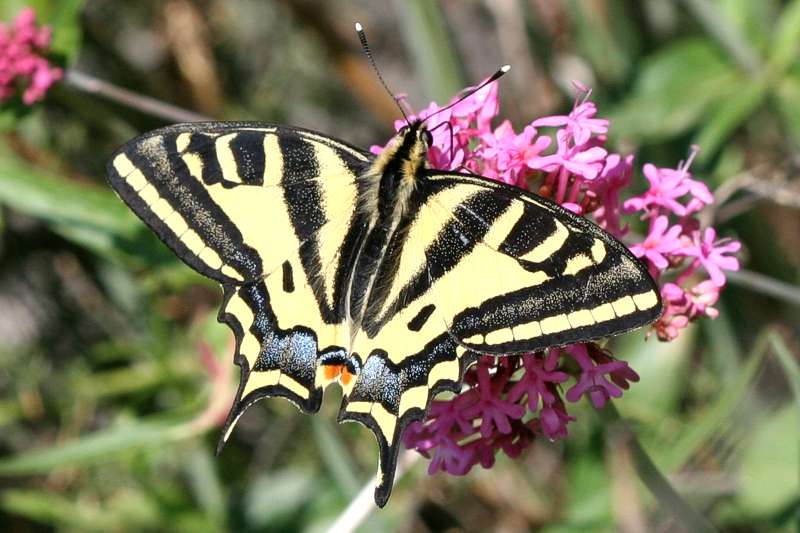
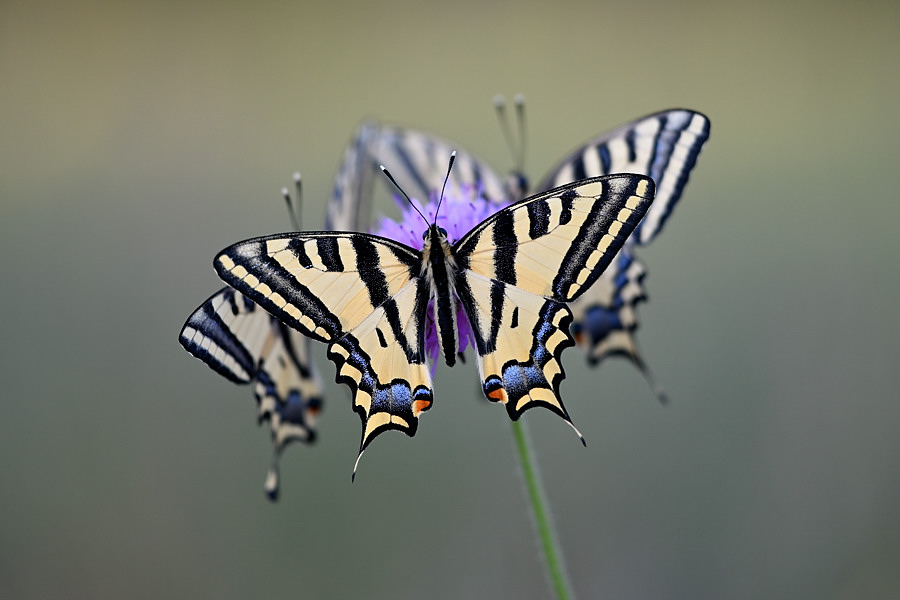
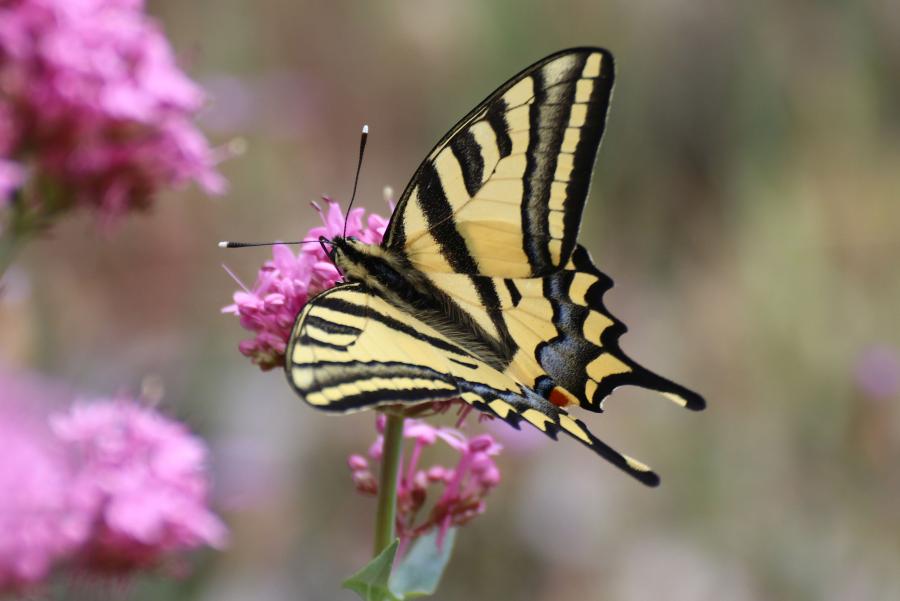
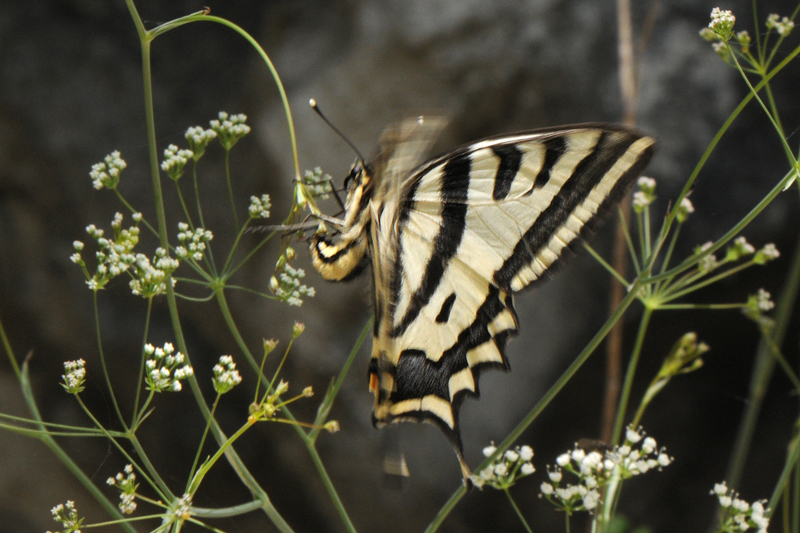
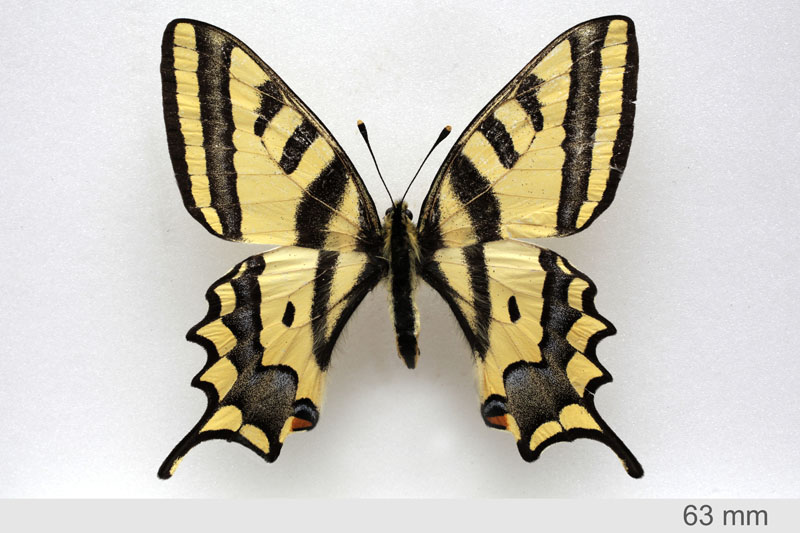
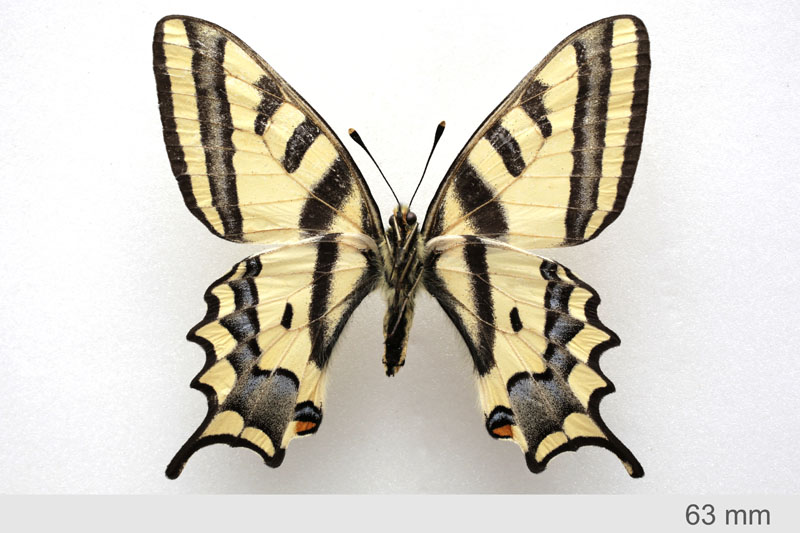
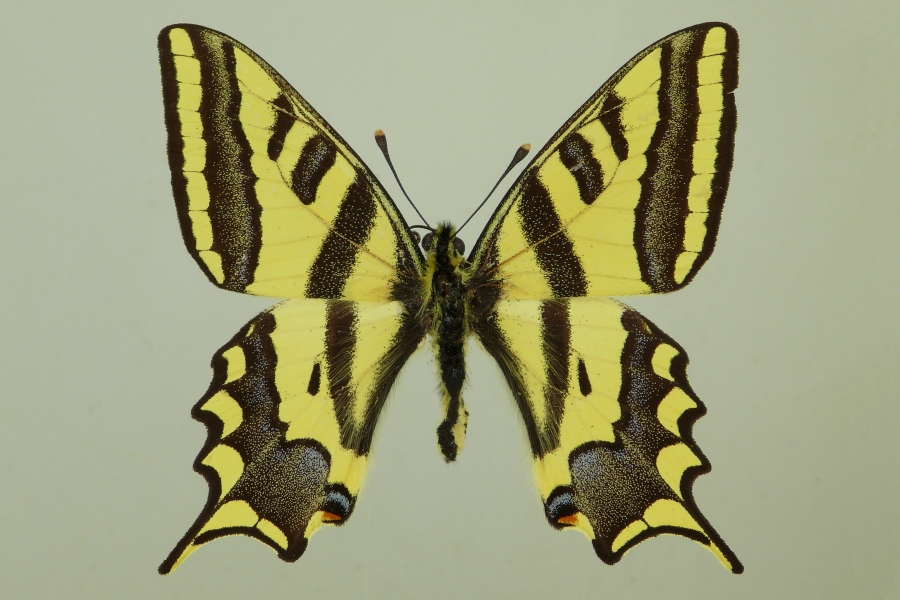
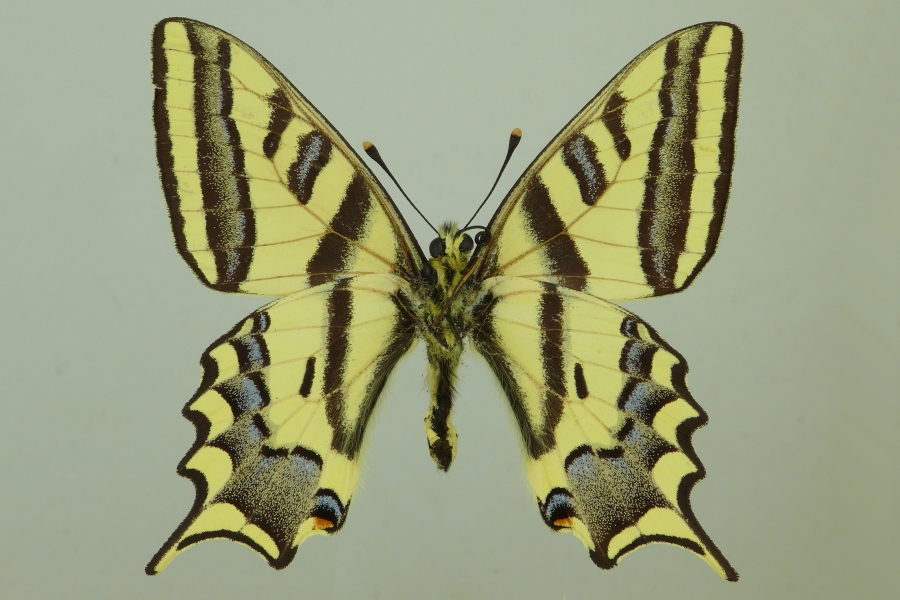
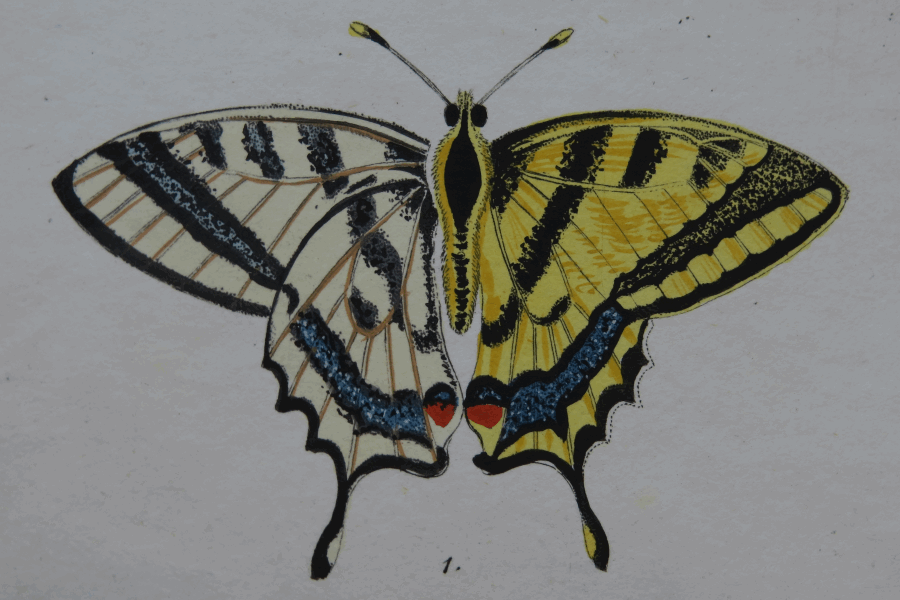
Papilio alexanor kann nur im Flug mit P. machaon verwechselt werden. Bei näherer Betrachtung erkennt man sofort, dass er anstatt schwarzer Flecken Streifen auf den Flügeln trägt und ihm die dunkle Aderbestäubung fehlt. Er ähnelt in diesem Merkmal hinwiederum dem Segelfalter I. podalirius, von dem er sich aber durch die viel intensiver gelbe Grundfarbe sofort unterscheiden lässt.
2.2. Ssp. orientalis
2.2.1. Männchen
2.3. Ssp. hazarajatica
2.3.1. Männchen

2.4. Raupe
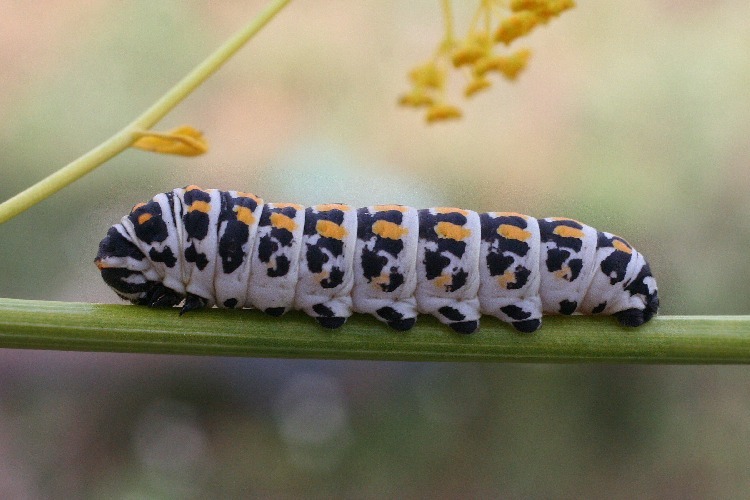
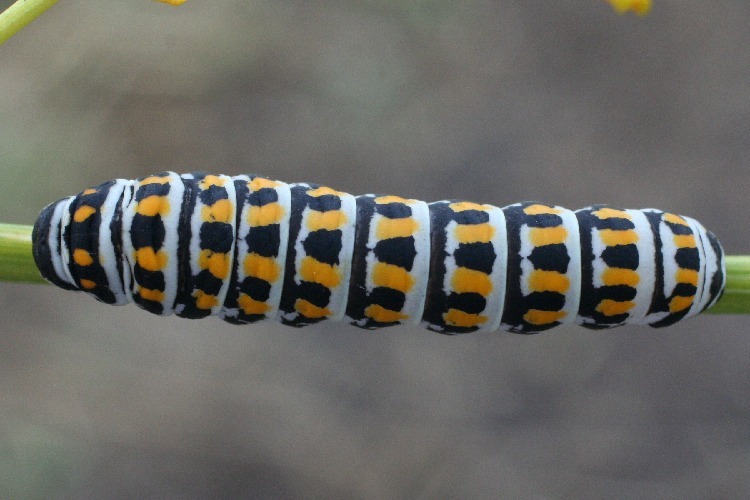
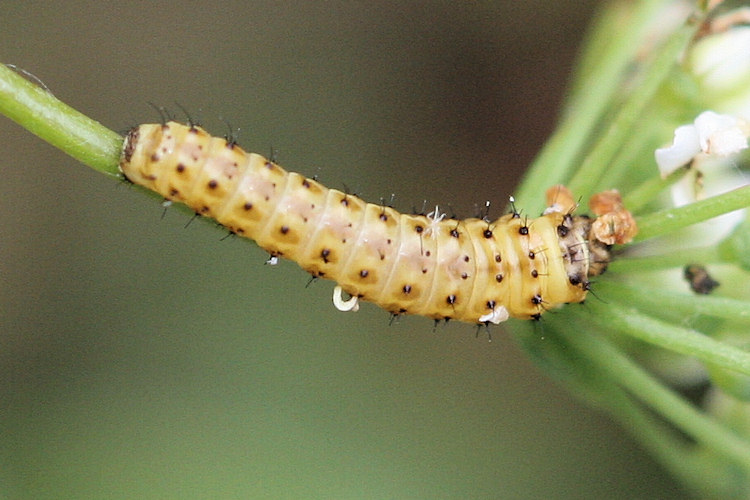
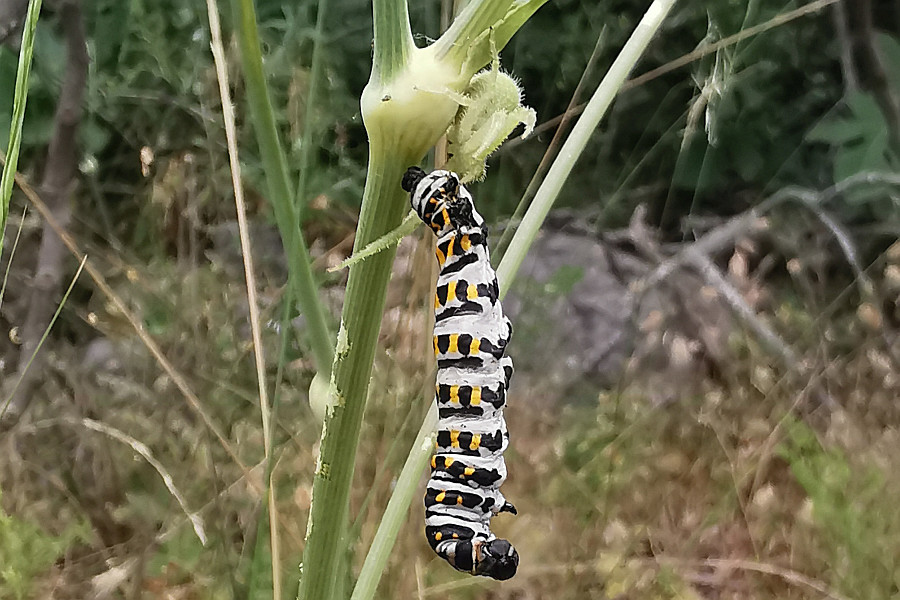
Die ausgewachsene Raupe ähnelt der von P. machaon. Ihre Grundfarbe ist jedoch heller, fast weiß und die orangen Punkte sind durch kurze ockergelbe Streifen ersetzt.
2.5. Ähnliche Arten
2.6. Genitalien
2.6.1. Männchen
2.6.2. Weibchen
2.7. Erstbeschreibung
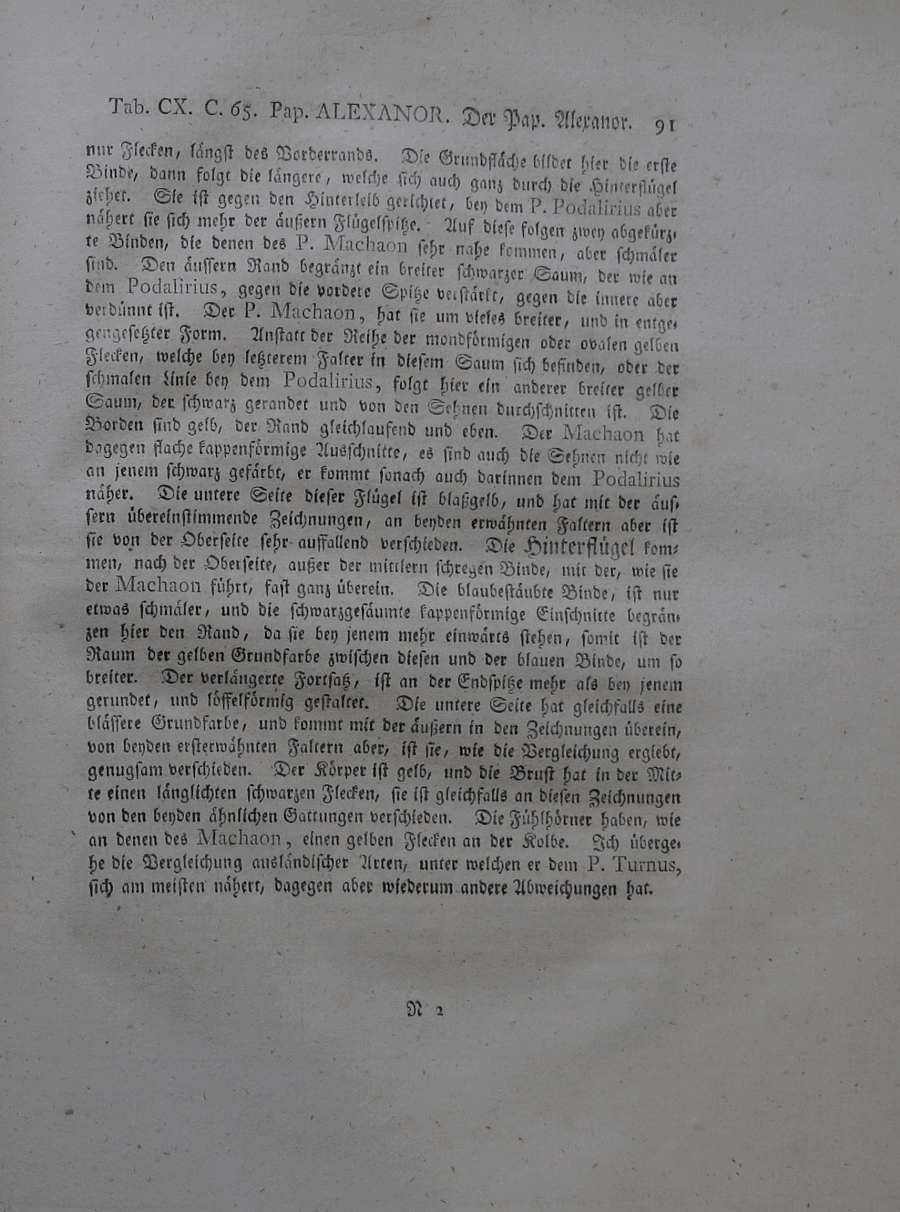
23 Jahre später hierzu erschienene Abbildung

3. Biologie
3.1. Lebensweise
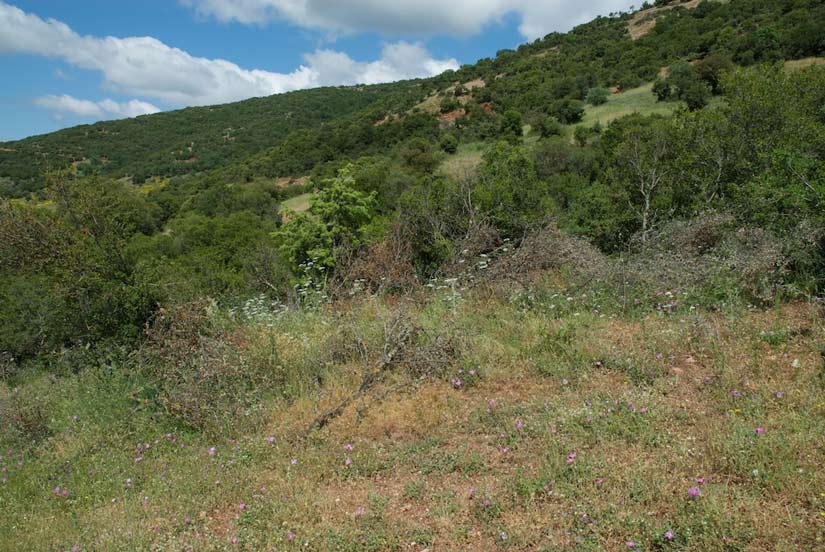
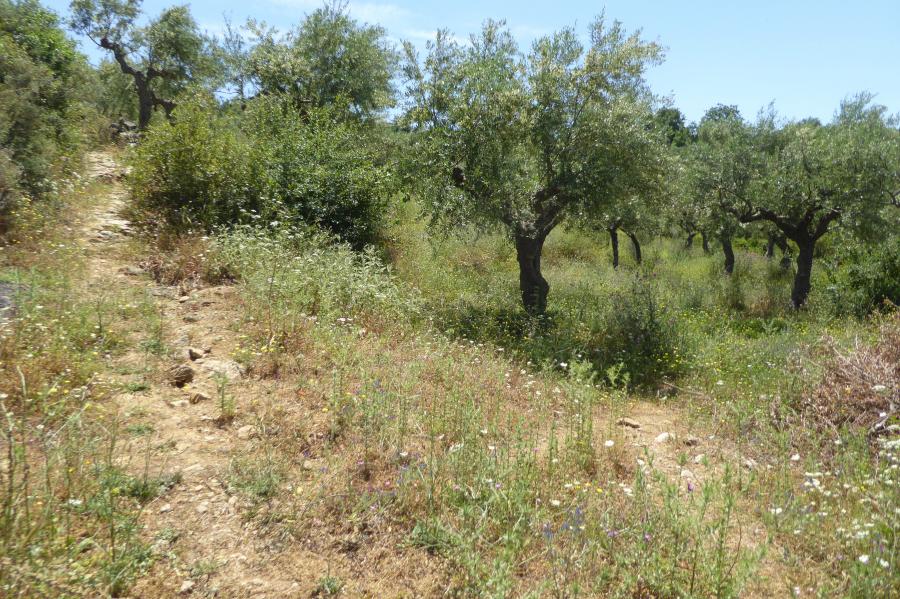
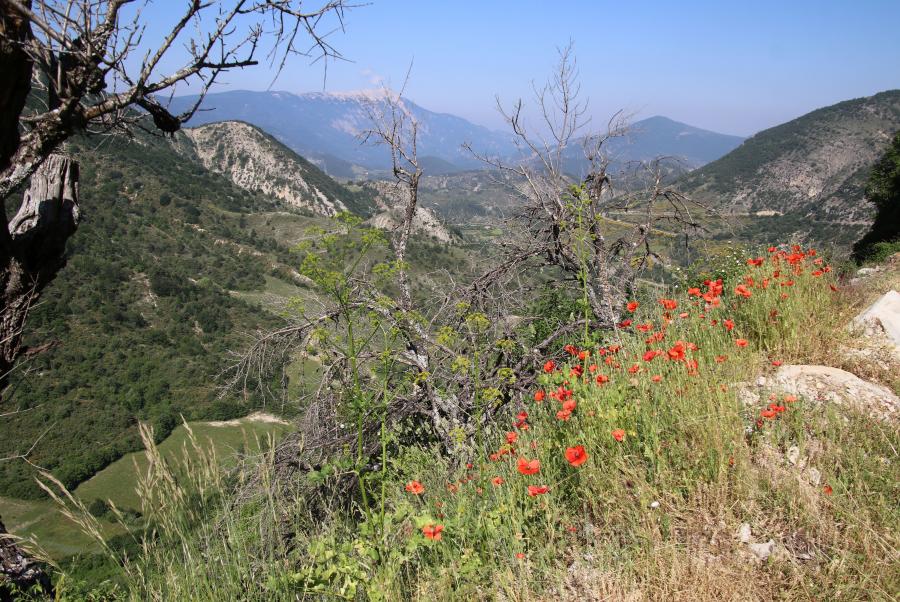
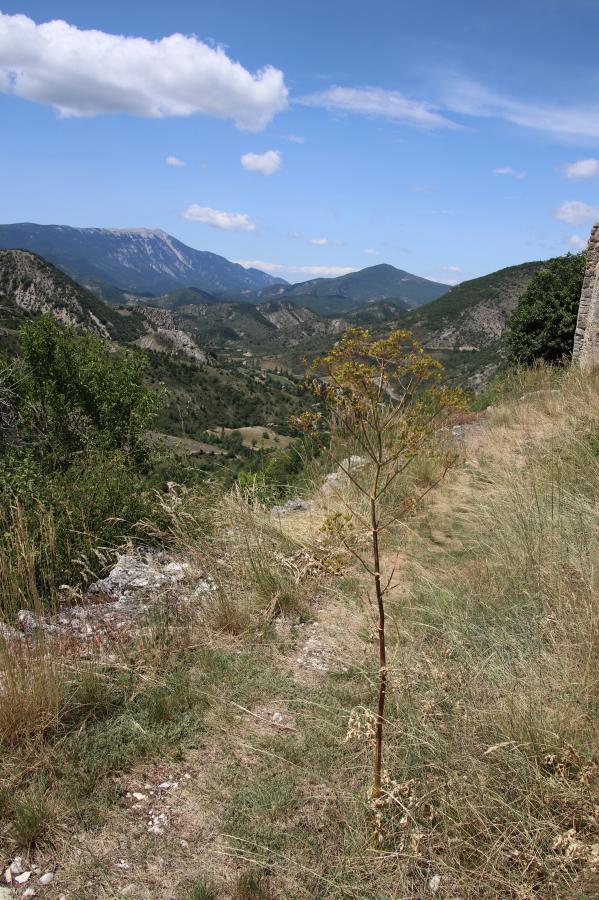
In Asien ist Papilio alexanor ein Steppenbewohner. In Europa sind es ganz ähnliche kleinräumige Vorkommensorte, die oftmals durch menschliches Wirken entstanden sind: Locker bewachsene Straßenböschungen und Erosionsflächen aller Art. Aber auch steile Berghänge, die naturgemäß nur sehr spärlich mit niederen Pflanzen bewachsen sind. Der Lebensraum von Papilio alexanor liegt meist unterhalb 1000 m, vereinzelt kann der Falter an günstigen Stellen aber bis auf 1700 m steigen.
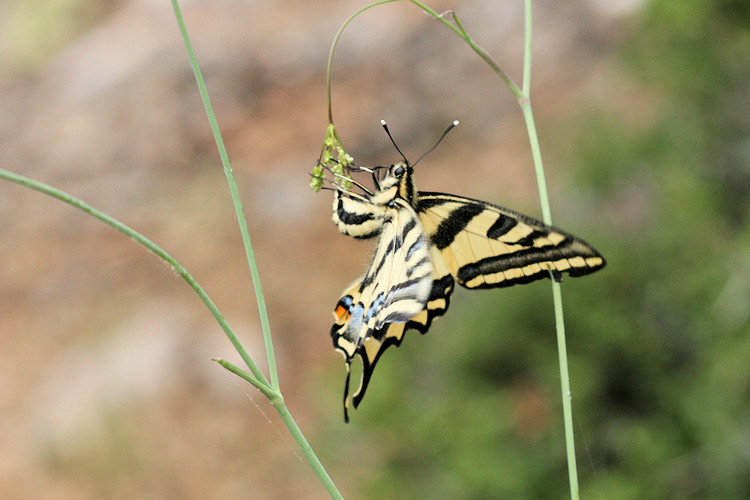
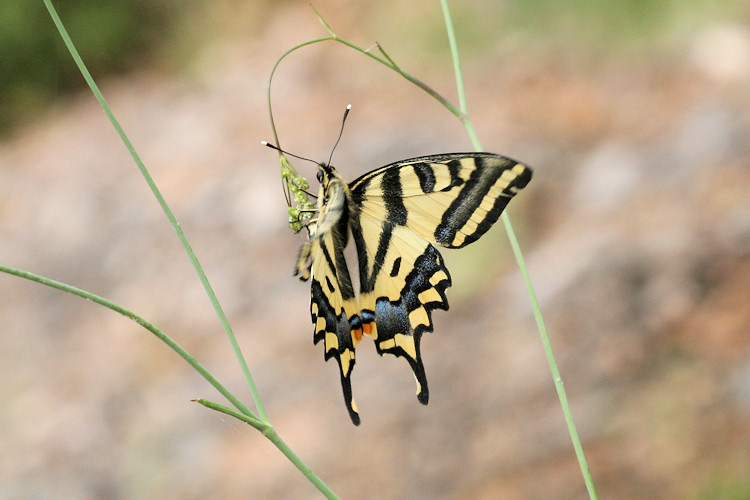
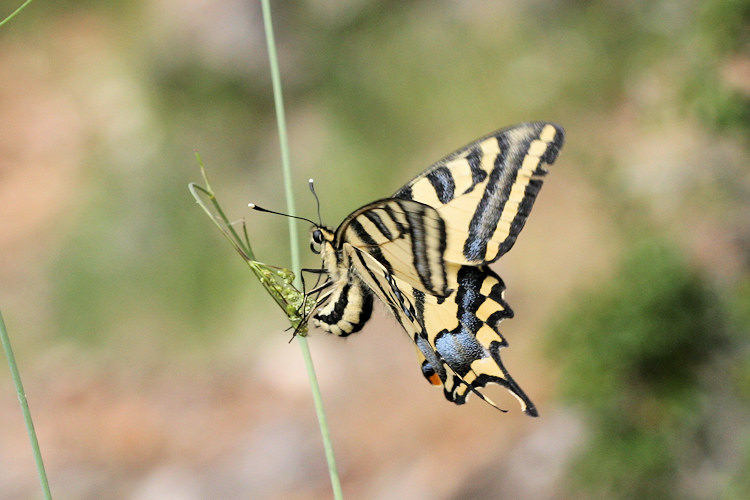
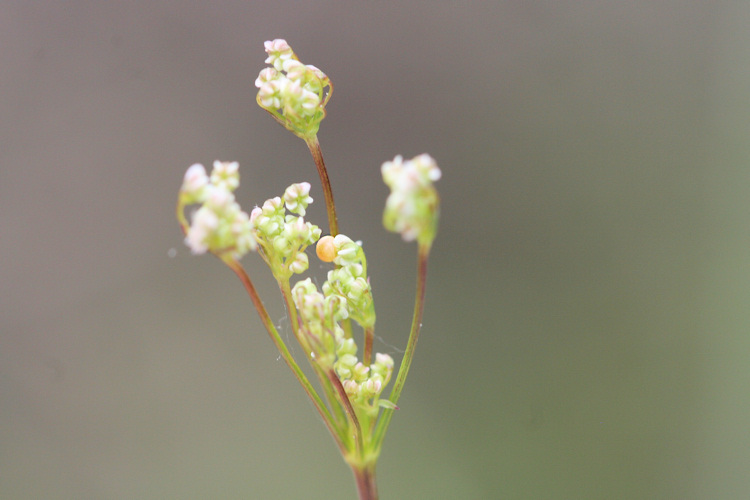
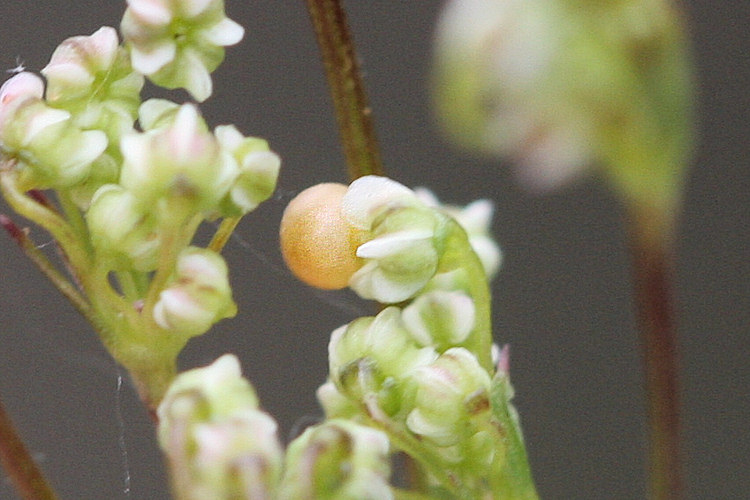
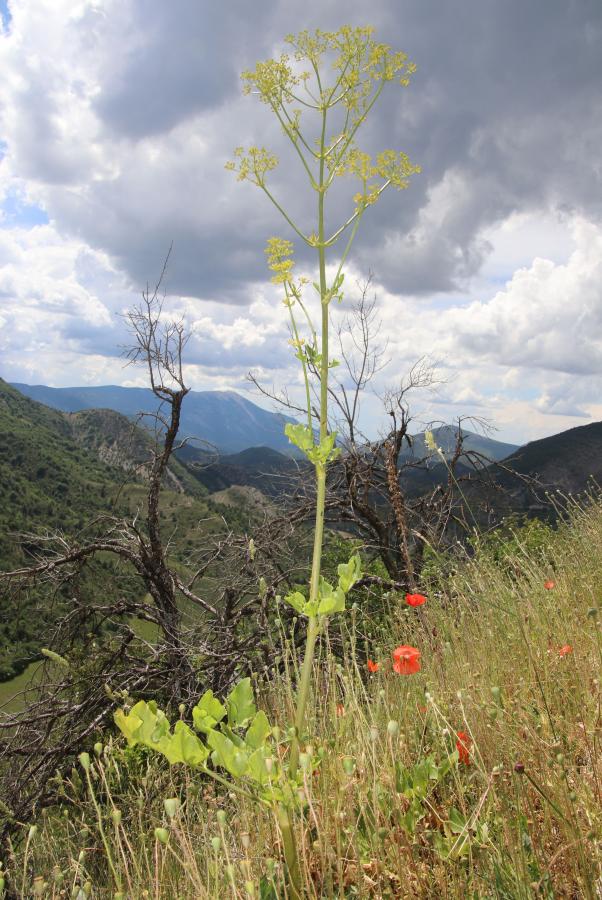
Nahrungspflanzen der Raupen sind gelbblühende hochwüchsige Doldenblütler (Apiaceae). In Asien und Griechenland beispielsweise Rutenkraut-Arten (Ferula -spp.) aber auch Opopanax hispidus und Heptaptera anisoptera. In Frankreich und Italien leben die Raupen an Ptychotis saxifraga. Die Raupe frisst ausschließlich Blüten und unreife Früchte der Nahrungspflanze. Und da die Raupennährpflanzen nur im Frühjahr und Frühsommer blühen, bildet die Art auch nur eine Generation aus, die von Mai bis Juli fliegt. Die Puppe überwintert. Sie kann bei extremer Trockenheit mehrere Jahre lang ausharren, ehe der Falter schlüpft. Auch dies ist eine Anpassung an die spezielle Nahrung der Raupen, denn in sehr trockenen Jahren blühen ihre Nahrungspflanzen nicht.
(Autor: Jürgen Hensle)
3.2. Habitat

3.3. Raupennahrungspflanzen
3.4. Nahrung der Raupe
- [Apiaceae:] Ptychotis saxifraga [wichtigste Eiablagepflanze in Frankreich und Italien, auch von Lorković (2009) für Kroatien angeführt]
- [Apiaceae:] Ferula glauca [nach Sanetra (2026) in Griechenland wichtigste Eiablagepflanze]
- [Apiaceae:] Ferula communis (Riesenfenchel) [[Lafranchis et al. (2015), in Westeuropa sicher nur ganz ausnahmsweise genutzt, im Ostteil des Areals hingegen wichtigste Eiablagepflanze (zusammen mit anderen Arten der Gattung)]
- [Apiaceae:] Ferula tingitana [Zarikian & Benyamini (2019): Israel: wichtige Eiablagepflanze]
- [Apiaceae:] Ferula orientalis [Zarikian & Benyamini (2019): Armenien]
- [Apiaceae:] Ferula rigidula [Zarikian & Benyamini (2019): Armenien]
- [Apiaceae:] Ferula sp. [im Ostteil des Areals wichtige Eiablagepflanzen]
- [Apiaceae:] Ferulago sp. [im Ostteil, Bedeutung unklar]
- [Apiaceae:] Opopanax hispidus [sehr wichtige Eiablagepflanze in Griechenland]
- [Apiaceae:] Opopanax chironium [Funde fressender Raupen von Russell & Pateman (2018), eigene Ei- und Raupenfunde in Südfrankreich, dort teilweise einzige genutzte und daher sehr wichtige Eiablagepflanze]
- [Apiaceae:] Scaligeria napiformis [= Scaligeria cretica] [Raupenfund von Walter Schön in Griechenland [Forum]; auch Lafranchis (2019)]
- [Apiaceae:] Heptaptera anisoptera [Israel: wichtige Eiablagepflanze nach dem Abblühen von Ferula tingitana]
- [Apiaceae:] Foeniculum vulgare (Fenchel) [Lafranchis et al. (2015)]
- [Apiaceae:] Falcaria vulgaris ? (Sichelmöhre ?) [Tshikolovets (2011)]
- [Apiaceae:] Pastinaca sativa ?? (Pastinak ??) [Lafranchis (2019): Griechenland - wahrscheinlich sind alle älteren Meldungen Fehlbestimmungen von Opopanax hispidus]
- [Apiaceae:] Pimpinella saxifraga ?? (Kleine Bibernelle ??) [van Swaay et al. (2012): im Osten des Areals - wahrscheinlich Fehlbestimmungen von Scaligera napiformis]
- [Apiaceae:] Seseli montanum ?? (Berg-Sesel ??) [van Swaay et al. (2012): im Westteil des Areals angeblich ebenfalls genutzt - wahrscheinlich Fehlbestimmungen von Pt. saxifraga]
- [Apiaceae:] Trinia glauca ?? (Faserschirm ??) [van Swaay et al. (2012): im Westteil des Areals angeblich ebenfalls genutzt- wahrscheinlich Fehlbestimmungen von Pt. saxifraga]
Wiemers et al. (2012: ) schreiben zu den regionalen Unterschieden im Eiablagespektrum: "The Southern Swallowtail is mostly found on warm, dry calcareous slopes with flower-rich vegetation and low-growing bushes. The butterflies prefer slopes that are steep and rocky. They are especially active during the hottest hours of the day. Different foodplants are known, all of them umbellifers. Ptychotis saxifraga is the most important one in the western part of its range, but eggs are also laid on Opopanax chironium, Seseli montanum and Trinia glauca. In the Eastern part, the caterpillars feed mostly on various fennels (Ferula spp.) and also on Opopanax hispidus, Burnet saxifrage (Pimpinella saxifraga), Scaligeria cretica and Wild Parsnip (Pastinaca sativa). The caterpillars eat the flowers and ripening seeds. They seem to prefer plants growing in very sparse vegetation near bare patches."
David & Sanetra (1994) hatten das Eiablageverhalten in Südfrankreich studiert. Sanetra (2026: 7) nimmt jetzt den Vergleich vor: "Host plant usage of P. alexanor varies according to geographic region, but is restricted to the plant family Apiaceae. In the southern Alps of France and Italy Ptychotis saxifraga (Apiaceae) plays clearly the dominant role (e.g. David & Sanetra 1994, Bonelli et al. 2015, Anselmo 2021) as in a population recently introduced to Switzerland (Gerber 2015). In the past, P. saxifraga was apparently often confused by many authors with Seseli montanum (Apiaceae) and Trinia glauca (Apiaceae) (e.g. David & Sanetra 1994, Baruzi & Caimi 2021). A second host plant alternatively used in certain parts of France and Italy is Opopanax chironium (Apiaceae) (e.g. Reche 1978, Bollino & Sala 2004). Most findings of larvae on this plant species are assignable to more southerly areas like Alpes-Maritimes, but some records far from the coast also do exist (Rennwald 2021)."
Und auch für den Ostteil des Areals war mit einigen botanischen Fehlbestimmungen aufzuräumen. Dazu Sanetra (2026: 8): "On the Balkan Peninsula the situation concerning larval food sources is more complex. Opopanax chironium is recorded from Croatia, Bosnia & Herzegovina and Greece (Bollino & Sala 2004, Verovnik & Svara 2016, Koren & Matinović 2019) and Opopanax hispidus (Apiaceae) from Peloponnese and Samos (Köstler 1991, Bollino & Sala 2004, Pyrgus.de 2025). Bollino & Sala (2004) also record Ferulago sp. (Apiaceae) for central Greece. While the abovementioned plant species are tall and have large yellow inflorescences, there is also a small, white umbelifer used by P. alexanor in Greece (similar to P. saxifraga in central Europe), which is Scaligera napiformis (Apiaceae) (lepiforum.org 2025). This species, nominally recorded as host plant of P. alexanor quite late (Schön 2007), was up to that time most likely confused with S. montanum and Pimpinella sp. (Apiaceae) (see also Bollino & Sala 2004 on identification errors regarding the latter two plants in central Greece)."
Weniger dramatisch waren die bisherigen ungenauen Bestimmungen der Ferula-Arten - die jetzt als zentral bedeutend erkannte Ferula glauca gehörte nach älterer Taxonomie als Unterart oder auch nur Form mit zu Ferula communis agg. Sanetra (2026: 10) berichtet weiter: "Ferula glauca is documented here as host plant for P. alexanor on the Peloponnese Peninsula in southern Greece. It appears that many previous records of Ferula in that area were due to misidentifications (Weidemann 1986, Leestmans & Arheilger 1987, Köstler 1991), so that the use of that plant genus in Greece has been questioned in general (Bollino & Sala 1995, 2004). Nevertheless, there are reliable records of P. alexanor-larvae feeding on Ferula from western Turkey (Bollino & Sala 1995 referring to K. Rose in litt., Hesselbarth et al. 1995) and from the eastern part of the range (de Freina 1983, Bollino & Sala 2004, Zarikian & Benyamini 2019). However, taking all available information together it seems likely that one of the most important larval host plants of P. alexanor in Greece is Opopanax hispidus (Fuchs 1992, Bollino & Sala 1995, 2004, lepiforum.org 2025). On the island of Samos, O. hispidus also serves as the dominant food plant (Köstler 1991, Bollino & Sala 1995, Pyrgus.de 2025), albeit described as Pastinaca sativa (Apiaceae) in the original report by Schmitt (1989). Additionally, larvae of P. alexanor have been reported to feed on Scaligera napiformis (a rather small plant with white flowers) on the Peloponnese near Platsa (Langer 2018), a location very close to the study area (about five kilometres)." Und dann wird es noch einmal spannend: "On the Peloponnese, as far as yet known, we have three different host plants, namely F. glauca, O. hispidus and S. napiformis available for P. alexanor. Different blossom periods make the successive use of several host plants advantageous, because eggs are laid on the flower buds just before blooming (prebloom buds)." Ja, das macht Sinn: Es gibt nicht eine "wichtigste" Eiablagepflanze, sondern drei - sie kommen in einer Saison nacheinander an die Reihe als wichtigste Eiablagepflanze, und wenn sich in einem Jahr etwas verschiebt, hat das keine dramatischen Auswirkungen auf P. alexanor.
(Autoren: Erwin Rennwald und Jürgen Rodeland)
3.5. Prädatoren
4. Weitere Informationen
4.1. Etymologie (Namenserklärung)
„Heldenname, von άλέξω ich wehre ab und άνήρ der Mann.“
4.2. Unterarten
- Papilio alexanor orientalis Romanoff, 1884 [Unterart nach funet.fi]
- Papilio alexanor judaeus Staudinger, 1894 [Unterart nach funet.fi]
- Papilio alexanor hazarajatica Wyatt, 1961 [Unterart nach funet.fi]
- Papilio alexanor destelensis Nel & Chauliac, 1983 [Unterart nach funet.fi]
- Papilio alexanor voldemar Kreuzberg, 1989 [Unterart nach funet.fi]
- Papilio alexanor radighierii Sala & Bollino, 1991 [Unterart nach funet.fi]
4.3. Verbreitung
Papilio alexanor hat ein stark zersplittertes Verbreitungsgebiet. Das westlichste Teilgebiet liegt in der Provence und im angrenzenden Italien, dort im südlichen Piemont und im westlichen Ligurien, angesiedelt auch lokal im mittleren Wallis, dort in Ausbreitung begriffen.
Die nächste Gruppe lebte in Süditalien, in Kalabrien und Ostsizilien, ist dort aber mittlerweile ausgestorben. Eine weitere fliegt von Süddalmatien bis Mazedonien und Südgriechenland. Das mit Abstand größte Teilgebiet aber ist das östliche. Dieses beginnt auf den griechischen Ägäisinseln Lesbos und Samos und reicht über die Türkei einerseits bis Afghanistan und ins westliche Zentralasien, andererseits entlang der Küste des östlichen Mittelmeers bis Israel und Jordanien.
(Autor: Jürgen Hensle)
4.4. Faunistik
Aktuell ist im östlichen Teilareal eine deutliche Ausweitung zu registrieren. Vukajlović et al. (2025) melden den ersten Falternachweis für Serbien und fassen für die Region zusammen: "Although P. alexanor was considered extinct in former Yugoslavia (COLLINS and MORRIS, 1985), there are many recent records proving its occurrence in the neighboring Balkan countries, Croatia, Bosnia and Herzegovina, Montenegro, North Macedonia, Albania and Greece (BOLLINO and SALA, 2004; MELOVSKI and BOZHINOVSKA, 2014; ŠVARA et al., 2015; VEROVNIK and ŠVARA, 2016; KOREN and MARTINOVIĆ, 2019; KOREN et al., 2019, 2020; GBIF SECRETARIAT, 2023). The nearest record is from Orljak hill, 5 km SW of Raduša, Skopje, North Macedonia (MELOVSKI and BOZHINOVSKA, 2014), which is just 8 km from the Serbian-North Macedonian border, so the occurrence of P. alexanor was expected in Serbia, in the southern parts of the Autonomous Province of Kosovo and Metohija, or the Preševo and Pčinja valleys in south Serbia. To the west, the nearest record was from the Nevidio canyon, Šavnik, Montenegro (GBIF SECRETARIAT, 2023), around 50 km from the Serbian-Montenegrin border, so the occurrence of P. alexanor could have been expected in canyons of south-western Serbia. Based on these assumptions, this article aims to report the first record of P. alexanor in Serbia."
(Autor: Erwin Rennwald)
4.5. Publikationsjahr der Erstbeschreibung
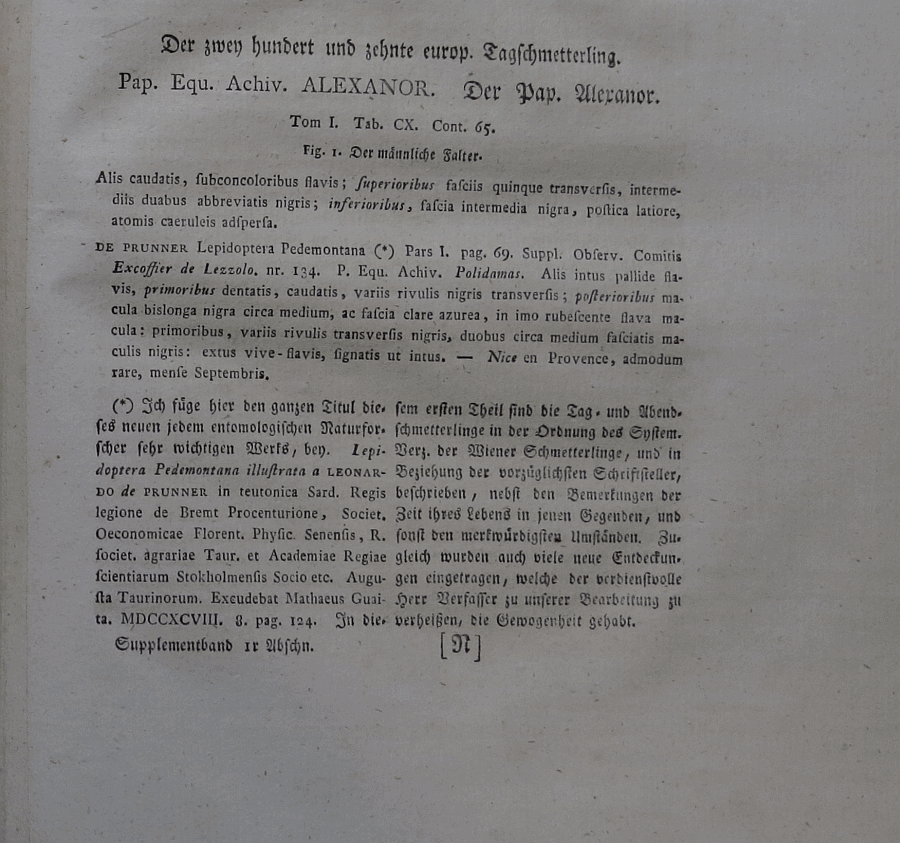
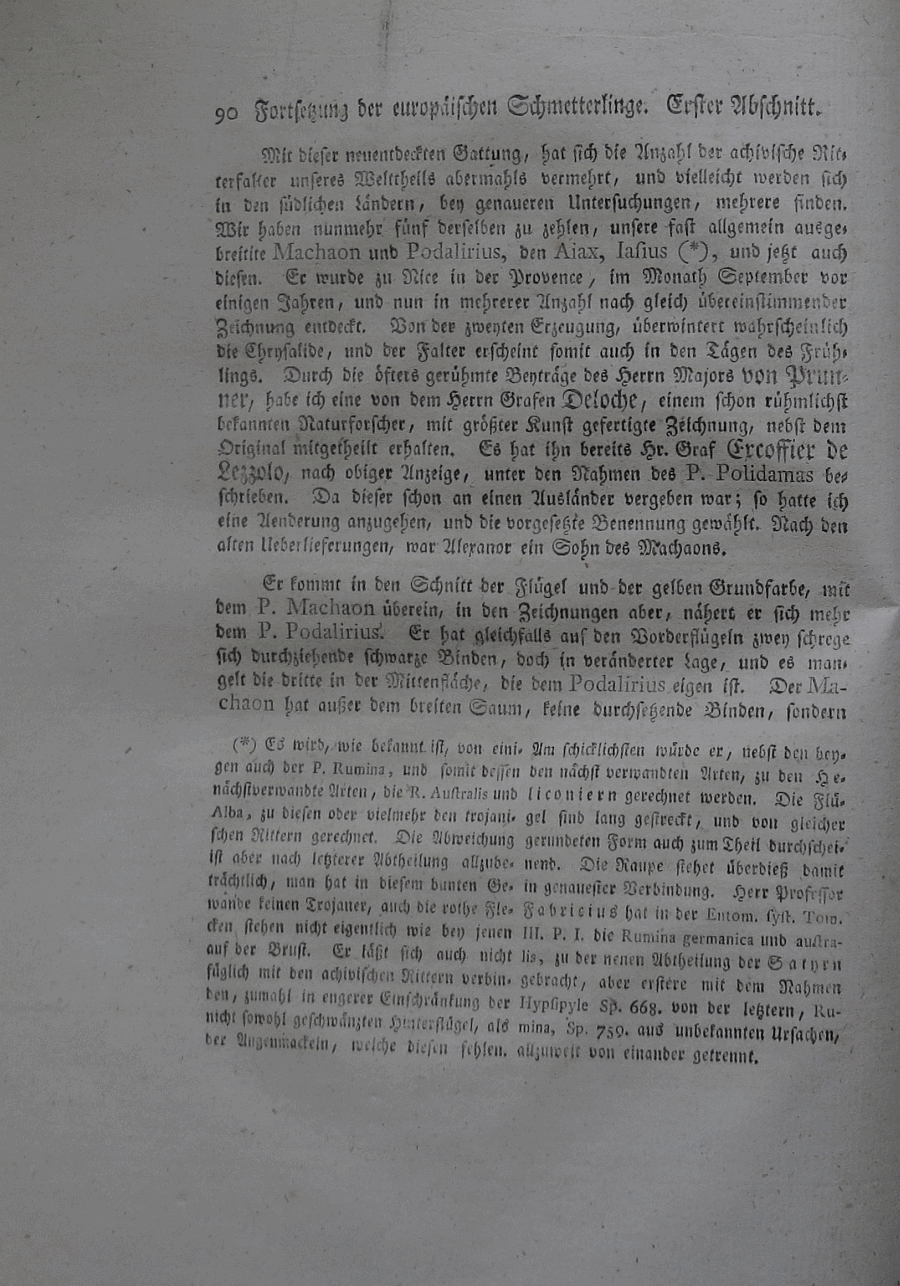
Wir folgen den Angaben von Heppner (1981). Wiemers et al. (2018) nennen - ohne Kommentar - "1800" als Jahr der Erstbeschreibung, also das Jahr in dem die Abbildung erschien. Warum ihnen der Text von 1777 nicht als Beschreibung reicht, verraten sie nicht.
(Autoren: Erwin Rennwald und Jürgen Rodeland)
4.6. Literatur
- Bollino, M. & G. Sala (2004): Synopsis of Papilio alexanor Esper, 1799. (An updated revue of its taxonomy and biology). — 64 pp. Bologna (Natura Edizioni Scientifiche). [zum PDF-Download auf researchgate.net]
- David, C. & M. Sanetra (1994): Verbreitung, Biologie und Autökologie von Papilio alexanor Esper 1799 in der südwestlichen Alpenregion (Lepidoptera: Papilionidae). — Nachrichten des Entomologischen Vereins Apollo, N.F. 15: 1–24. [PDF auf zobodat.at]
- Erstbeschreibung: Esper, J. C. (1777): Der Schmetterlinge III. Heft. Tab. XIII. - XVIII. Bögen K, L, M, N: 4 unpaginierte Seiten mit Text von W. Walther, 73-104, pl. XIII-XVIII. Erlangen (Wolfgang Walther).
- Heppner, J. B. (1981): The dates of E. J. C. Esper's Die Schmetterlinge in Abbildungen ... 1776–[1830]. — Archives of Natural History 10 (2): 251–254.
- Koren, T. & M. Martinović (2019): The rediscovery of the Southern Swallowtail (Papilio alexanor Esper, 1799) in Bosnia & Herzegovina after 50 years of absence. — Entomologist’s Gazette, 70: 27–30. [zum PDF-Download auf researchgate.net]
- Reche, C. (1978): Opopanax chironium Koch plante nourriciere de Papilio alexanor Esper. (Lep., Papilionidae). — Entomops, 45: 145-147. [Sekundärzitat]
- Russell, P. & J. Pateman (2018): A southward extention to the currently known range of Papilio alexanor Esper, 1799 (Lepidoptera: Papilionidae) in Croatia. — Entomologist's Gazette 69 (1): 15-17.
- Sanetra, M. (2026): On the larval host plants of Papilio alexanor Esper, 1777 in southern Greece (Lepidoptera: Papilionidae). — Entomologische Zeitschrift, 136 (1): 7-11.
- Swaay, C. van, Collins, S., Dušej, G., Maes, D., López Munguira, M., Rakosy, L., Ryrholm, N., Šašić, M., Settele, J., Thomas, J.A., Verovnik, R., Verstrael, T., Warren, M., Wiemers, M. & I. Wynhoff (2012): Dos and Don'ts for butterflies of the Habitat Directive of the European Union. — Nature Conservation, 1(1): 73-153. DOI: 10.3897/natureconservation.1.2786. [zum PDF-Download auf researchgate.net]
- Tshikolovets, V. V. (2011): Butterflies of Europe & the Mediterranean area. - 544 S.: Pardubice, Czech Republik (Tshikolovets Puplications).
- Verovnik, R. & V. Švara (2016): Confirmed recent occurrence of the Southern Swallowtail (Papilio alexanor Esper, 1799) in Croatia (Lepidoptera: Papilionidae). — SHILAP Revista de lepidopterología 44 (176): 547-552. [PDF auf redalyc.org]
- Vukajlović, F.N., Reljić, K., Kostić, M. & B. Vojnović (2025): The southern swallowtail, Papilio alexanor Esper, 1800 (Lepidoptera: Papilionidae) – New butterfly species for the fauna of Serbia. — Kragujevac Journal of Science, 47: 111-119. [zum PDF-Download auf researchgate.net]
- Wiemers, M., Balletto, E., Dincã, V., Fric, Z.F., Lamas, G., Lukhtanov, V., Munguira, M.L., Swaay, C.A.M. van, Vila, R., Vliegenthart, A., Wahlberg, N. & R. Verovnik (2018): An updated checklist of the European Butterflies (Lepidoptera, Papilionoidea). — ZooKeys 811: 9–45. [zum open-access-Artikel auf zookeys.pensoft.net]
- Zarikian, N. & D. Benyamini (2018): Longterm pupal diapause of the Southern Swallowtail – Papilio alexanor orientalis Romanoff, 1884 in Armenia, and P. a. maccabaeus Staudinger, 1881 in Israel. — News of the Israeli Lepidopterists‘ Society, 36: 18–24. [zum PDF-Download auf researchgate.net]