+14Kontinente:EUAS


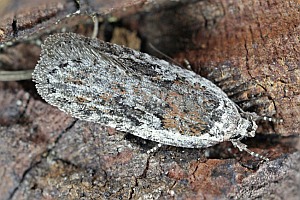
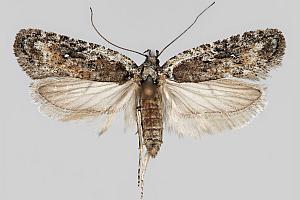
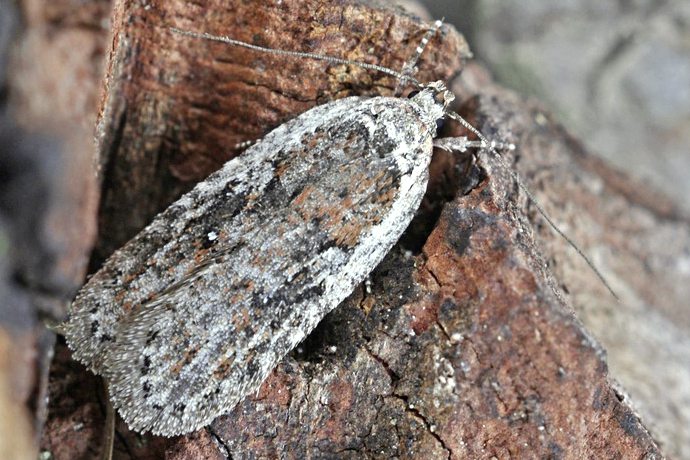
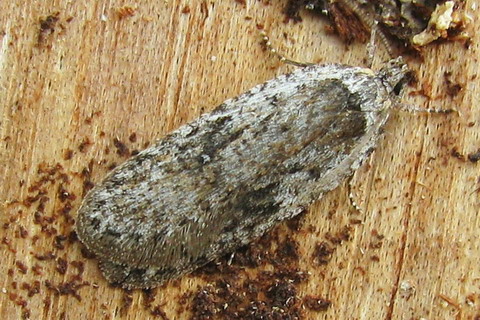
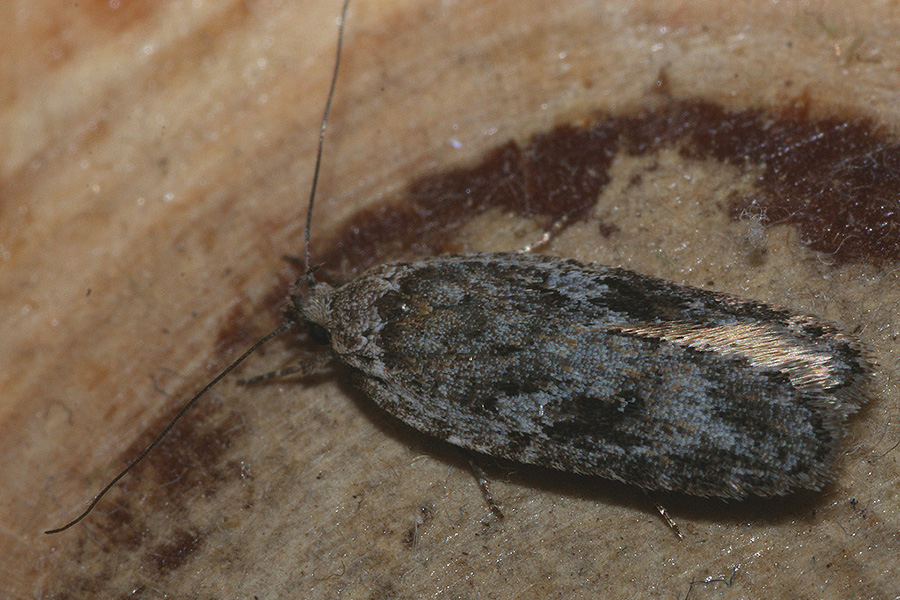
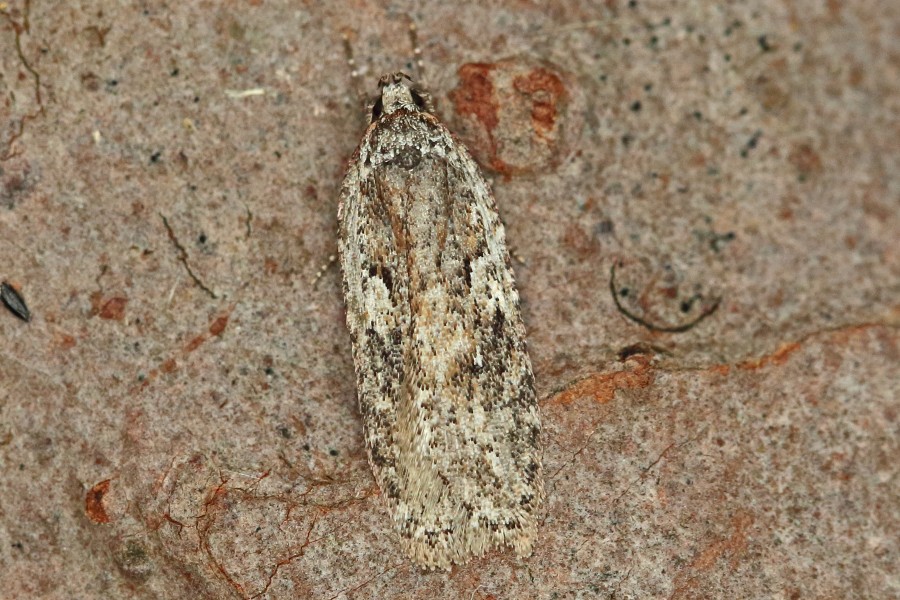
1. Lebendfotos
1.1. Falter

2. Diagnose
2.1. Geschlecht nicht bestimmt
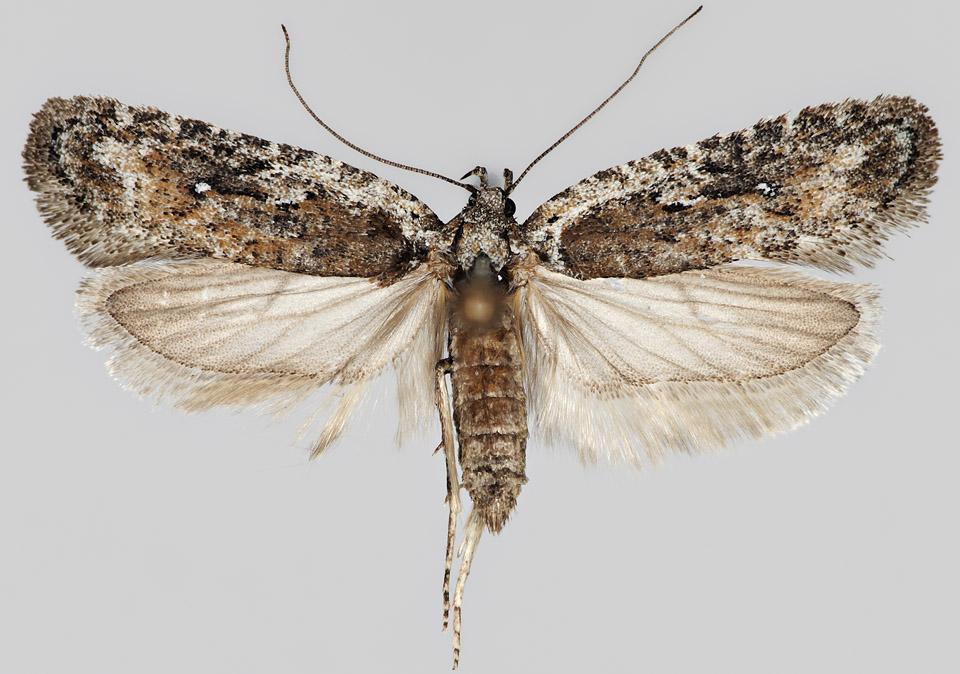
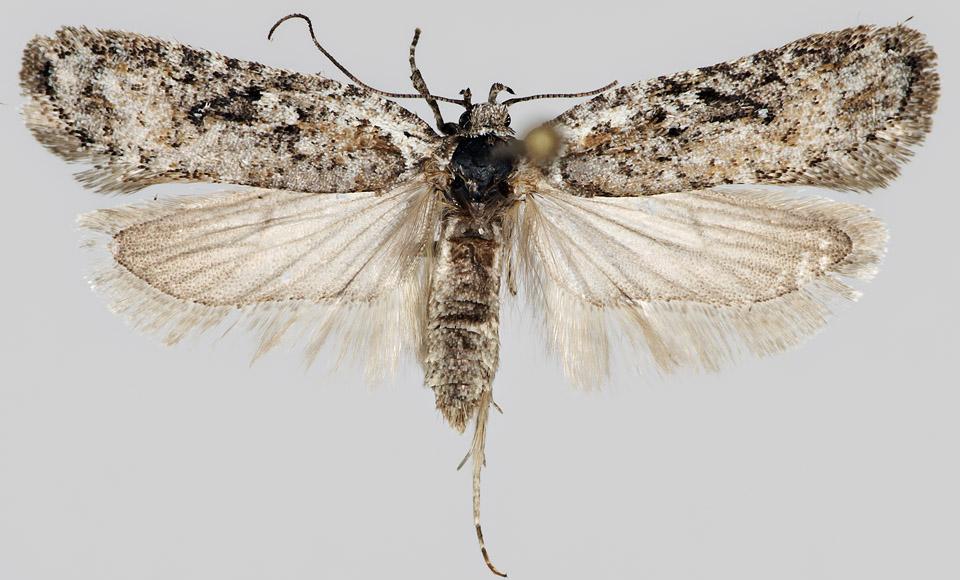
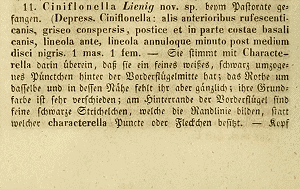
2.2. Erstbeschreibung
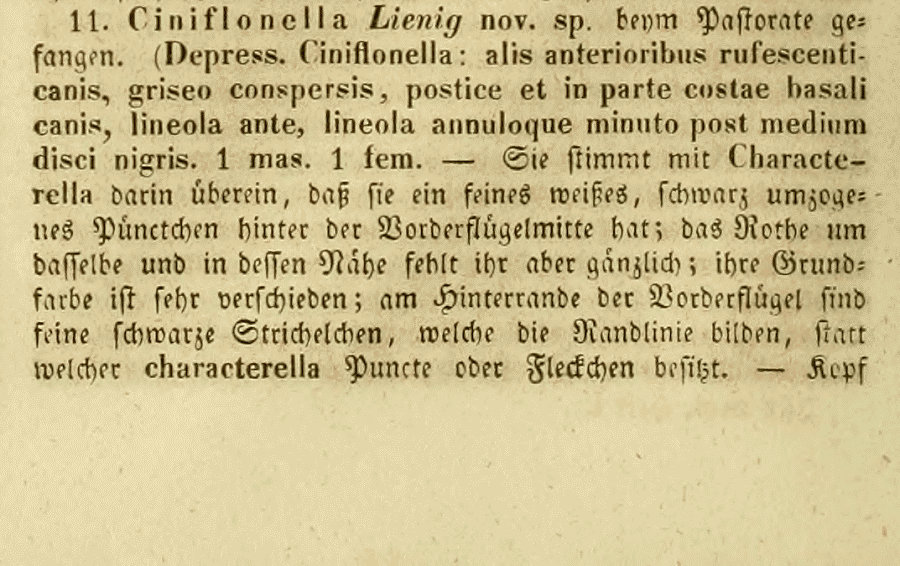
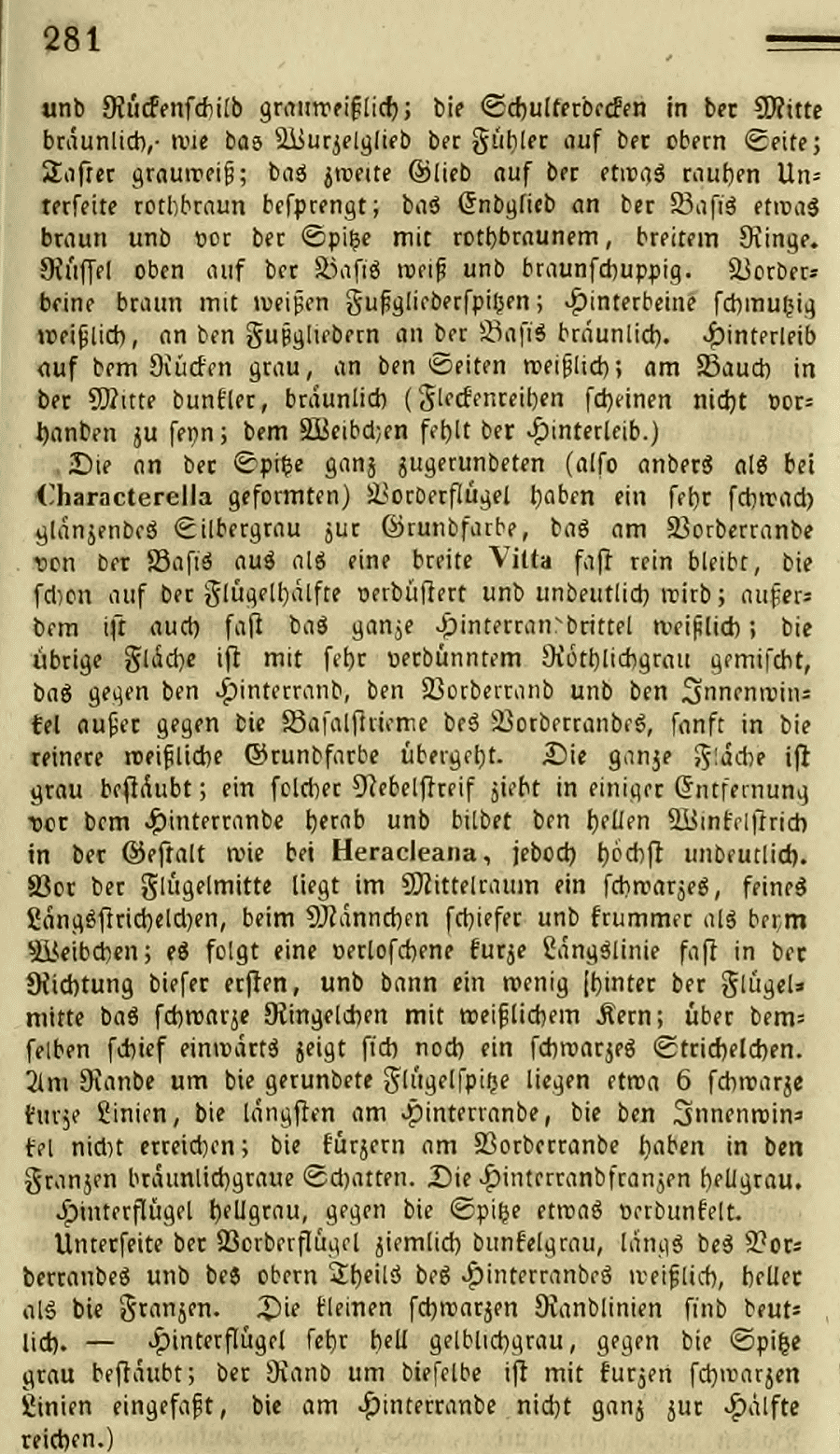
3. Biologie
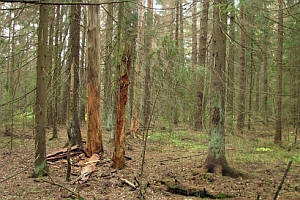
3.1. Habitat
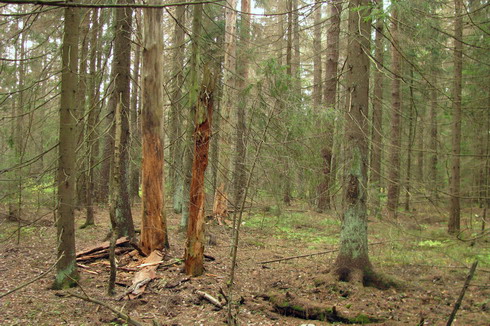
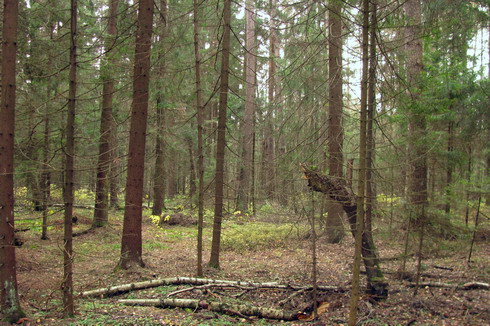
3.2. Nahrung der Raupe
Strenggenommen noch unbekannt! Beavan & Heckford (2017) berichteten über eine erfolgreiche ex-ovo-Zucht an und mit Betula sp. Es ist ihnen jedoch nicht gelungen, die Raupe in Crathie, South Aberdeenshire, Schottland in der Natur zu finden, nicht einmal Raupenfraßspuren. Dabei hatten die größeren Raupen in der Zucht meistens einfach zwei Blätter zusammengesponnen, zwischen denen sie lebten - eines der Blätter war meist tot, so dass das Fraßbild eigentlich auch am Baum auffallen müsste.
Liest man bei Buchner & Corley ([2024]: 67) wundert man sich zunächst: "Larva in spun leaves of Betula L. in early summer (Jacobs, 1954 [recte: 1956]). In Russia and North America also on Alnus L., Salix L. and Populus L. (Lvovsky 1981, 2013a)." Kannten Beavan & Heckford (2017) die Arbeit von Jacobs nicht ? Liest man bei Jacobs (1956: 71-72) nach, dann steht da ganz klar: "Larva purple brown, head pale reddish, plates blackish and warts black, IV-V in spun birch leaves." Daher nochmals die Fage: Kannten Beavan & Heckford (2017) die Arbeit von Jacobs nicht ? Kaum denkbar. Daher ist die Frage anders zu stellen: Kannte Jacobs die Raupe dieser Art ? Er liefert zwar eine Raupenbeschreibung, aber ist die wirklich von ihm ? Seine Abhandlung "On the British Oecophoridae (Lep. Tin.) III." über 31 Depressariiden-Arten war Teil seiner "President's Adress" der Gesellschaft und dass das nur eine Zusammenstellung im Rahmen eines Vortrags war, ist schon daran erkennbar, dass es kein einziges Literaturzitat gibt. Beavan & Heckford wussten also, dass das nur eine Wiederholung der Angabe aus der Quelle war, die sie selbst als Grundlage ihrer Arbeit genommen hatten: Fletcher (1887: 258)! Und die Angaben dort lassen ganz klar erkennen, dass es sich auch "nur" um eine ex-ovo-Zucht handelte: "In March, 1885, I received from Mr. Salvage, then collecting at Rannoch, some living females of this species, with the information confirming a previously formed guess of my own, that the larvae would be likely to eat birch leaves. One of these moths laid about a dozen eggs, the greater part of them in a row along the crevice between a birch bud and the twig on which it grew, fastening them to the scales of the bud. When I first saw these eggs they were very bright red, and became, a few days before hatching, dark smoky-purple in colour. The young larvae appeared during the last half of April, and took readily to birch, Betula alba. The following description was taken on May l2th : Length, about 1/3-in., tapering towards both ends; head dark brown; corselet almost black, bisected by thin median line; anal segment with black plate, and large black spots on anal claspers; body, dull sage-green, the spots large with black bristles. On May 20th, being about full-grown, they were again described, thus: Length, about 3/5-in.; head pale reddish, marked with dark brown about the mouth; corselet and anal plate blackish; body purple-brown, rather lighter anteriorly; spots, large and black. By June 8th the larvae had pupated. The pupa is about 5/16 in. long ; the colour of the body red, that of the wing-cases olive-brown, with a greenish tinge." Und dann kamen die Zeilen, die Beavan & Heckford (2017) leicht korrigiert haben: "The larvae live in a tube open at both ends, formed by turning down a piece at the edge of a birch leaf, or by folding one down the middle." Der Schluss war dann: "The moths emerged towards the end of June, and were, on the average, larger than wild specimens from the same locality, from which I conclude that birch is almost certainly the natural food-plant of the larvae." Diese Aussage gilt noch immer. Und noch immer scheint - zumindest in Europa - niemand die Raupe in der Natur gefunden zu haben.
(Autoren: Erwin Rennwald & Jürgen Rodeland)
4. Weitere Informationen
4.1. Andere Kombinationen
- Depressaria ciniflonella Lienig & Zeller, 1846 [Originalkombination]
4.2. Synonyme
- Depressaria klamathiana Walsingham, 1881
- Depressaria smolandiae Palm, 1943
- Martyrhilda isa Clarke, 1947
4.3. Publikationsjahr der Erstbeschreibung
Begründung für die Datierung auf 1846
4.4. Literatur
- Beavan, S. D. & R. J. Heckford (2017): Exaeretia ciniflonella (Lienig & Zeller, 1846) (Lepidoptera: Depressariidae): an account of the larva in all instars and the pupa. — Entomologist's Gazette 68 (1): 9-18.
- Buchner, P. & M. Corley ("2025" [2024]): Microlepidoptera of Europe. Volume 10: Depressariidae. — 605 S.; Leiden, Boston (Brill)
- Fletcher, W.H.B. (1887): On the live-history of Depressaria ciniflonella, Z. — The Entomologist's Monthly Magazine, 23: 258. [Digitalisat auf biodiversitylibrary.org]
- Jacobs, S.N.A. (1956): President's Adress. — Proceedings and transactions of the South London Entomological & Natural History Society, 1953-1955, [Digitalisat auf biodiversitylibrary.org]
- Erstbeschreibung: Lienig, F. & P. C. Zeller (1846): Lepidopterologische Fauna von Lievland und Curland. — Isis von Oken 1846 (3-4): 175-200, [Spaltennummer 201 nicht vergeben], 202-302. Leipzig (Brockhaus).