+35Kontinente:EUASNA


1. Lebendfotos
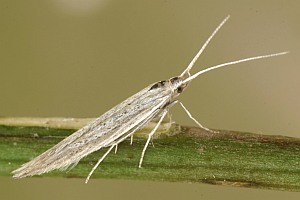
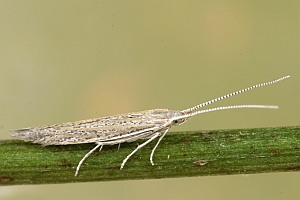
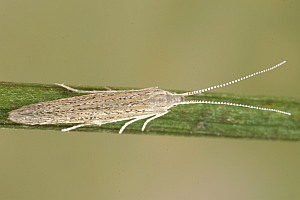
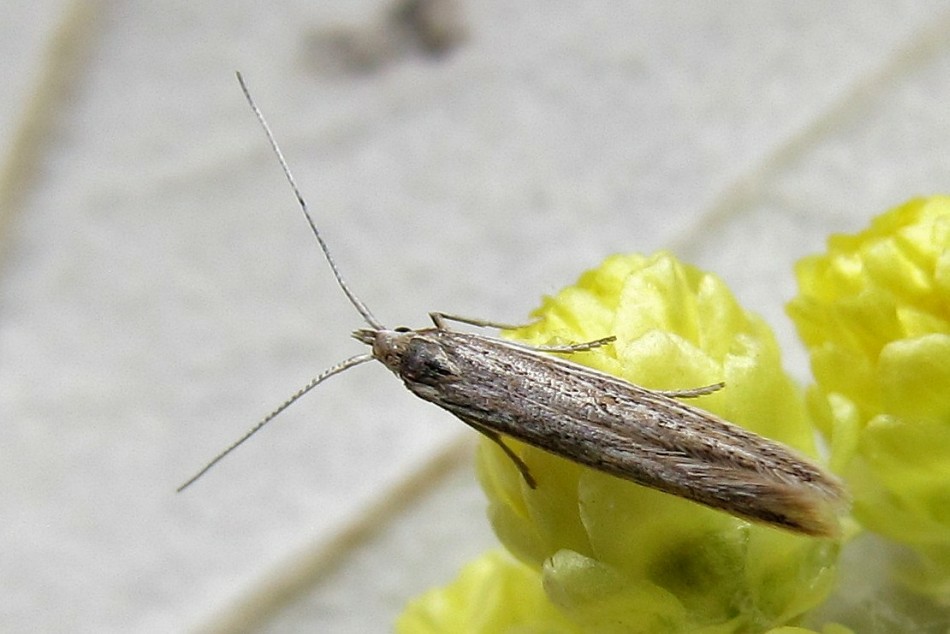
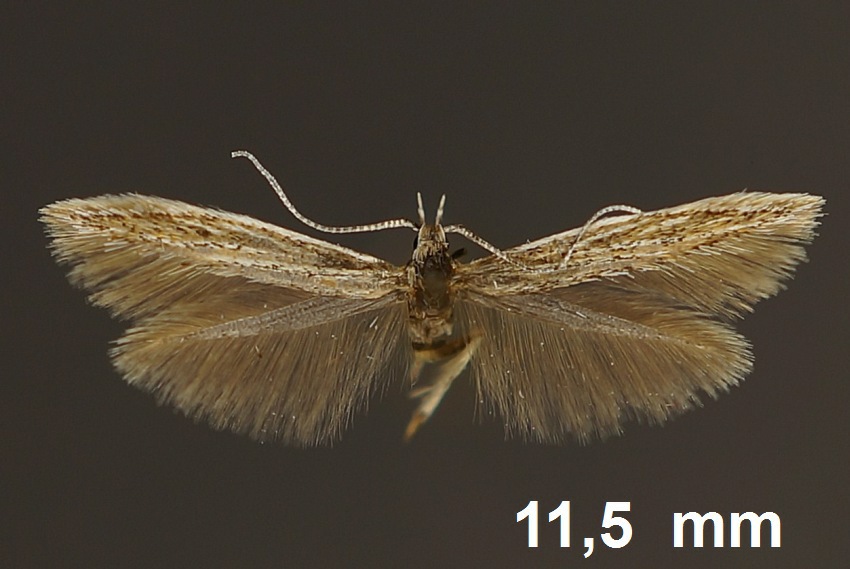
1.1. Falter



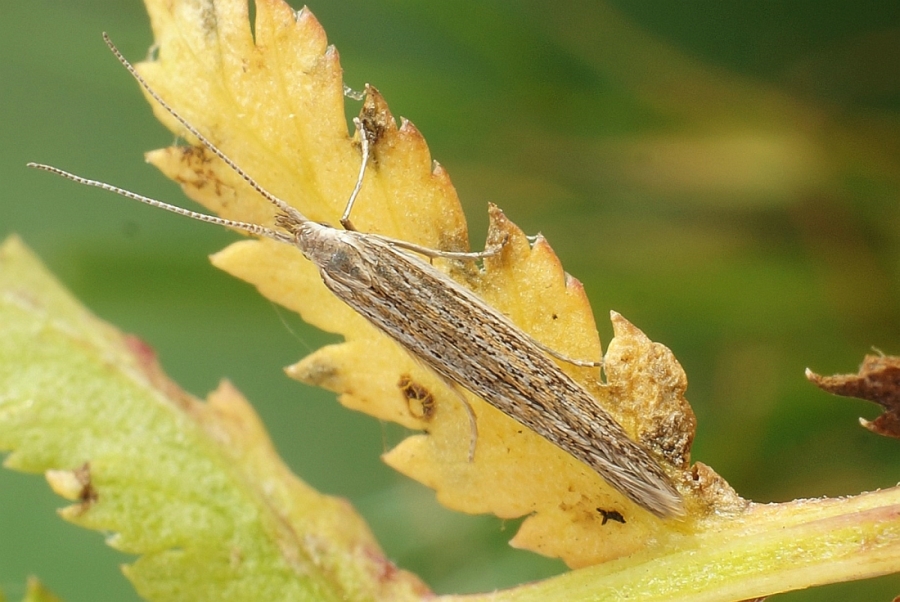

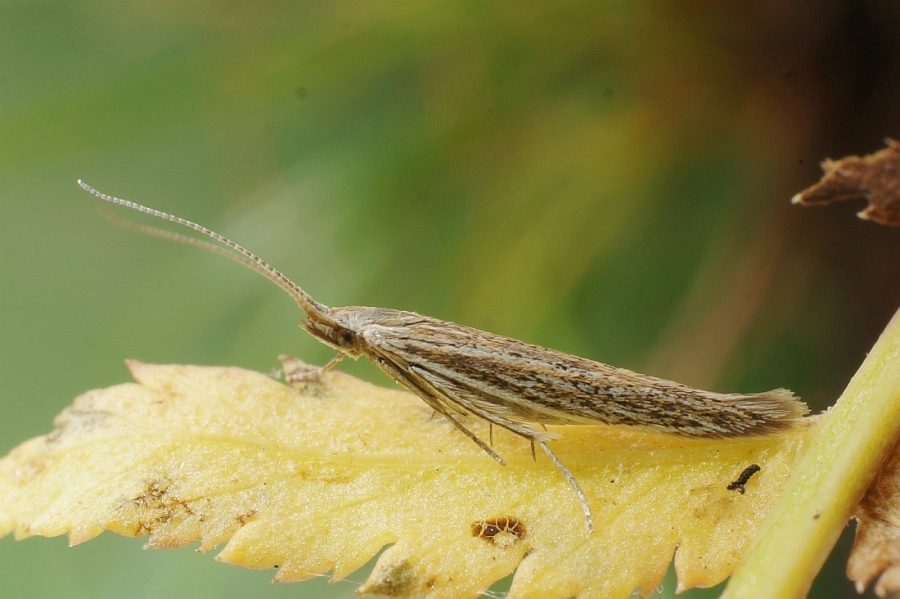
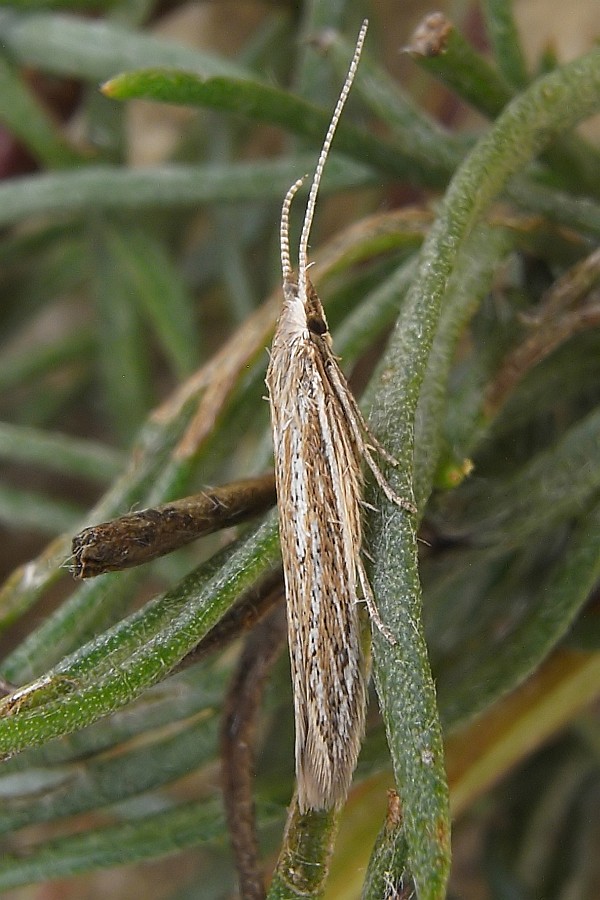
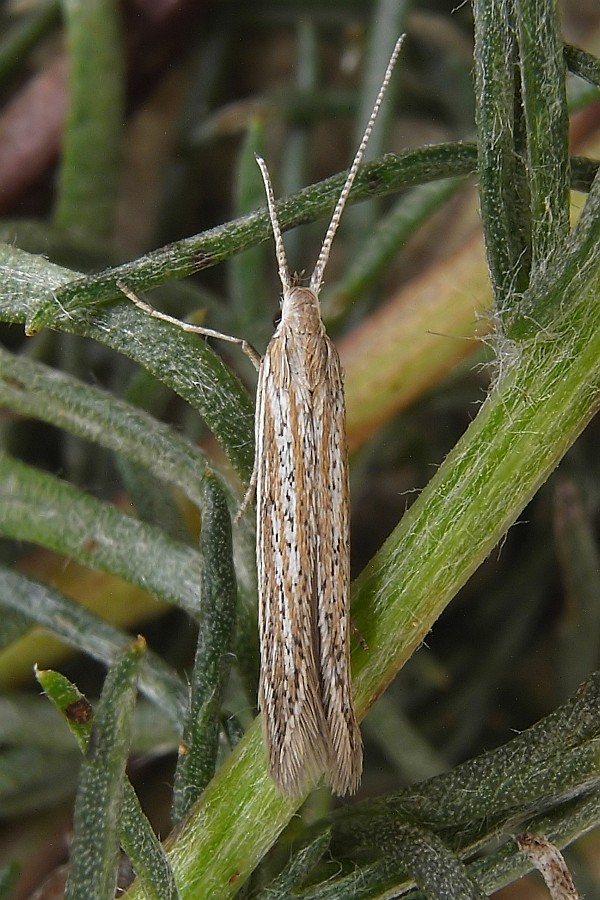
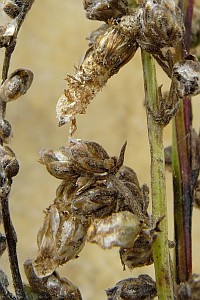
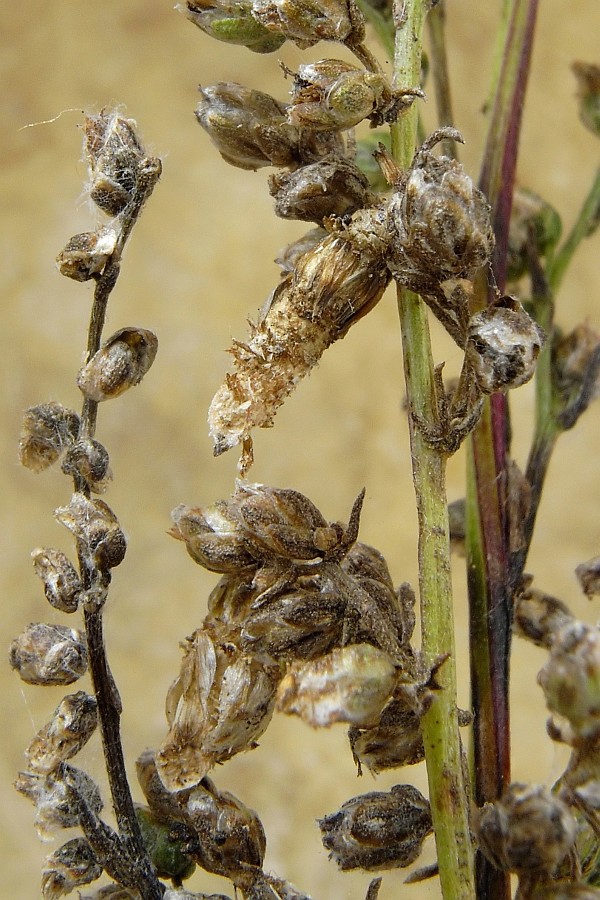
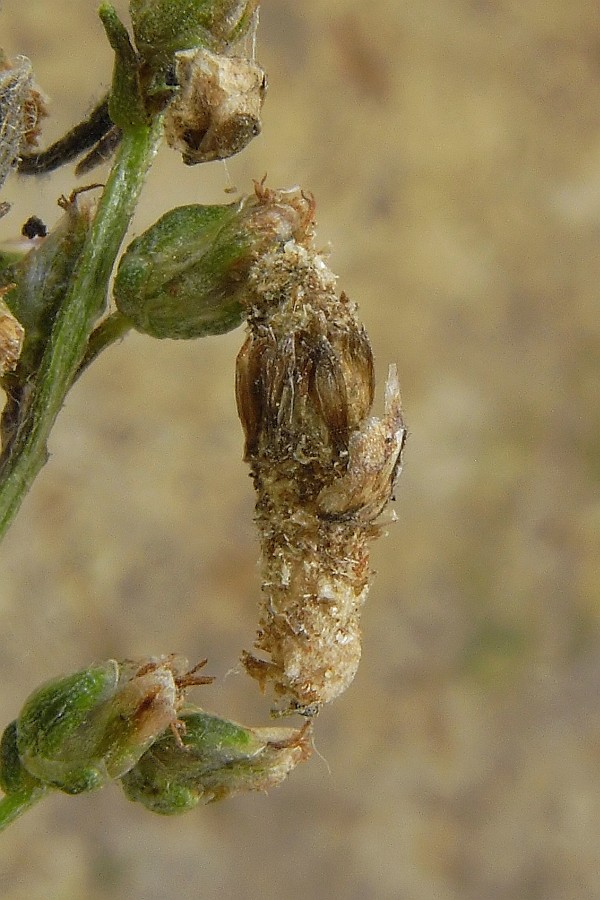
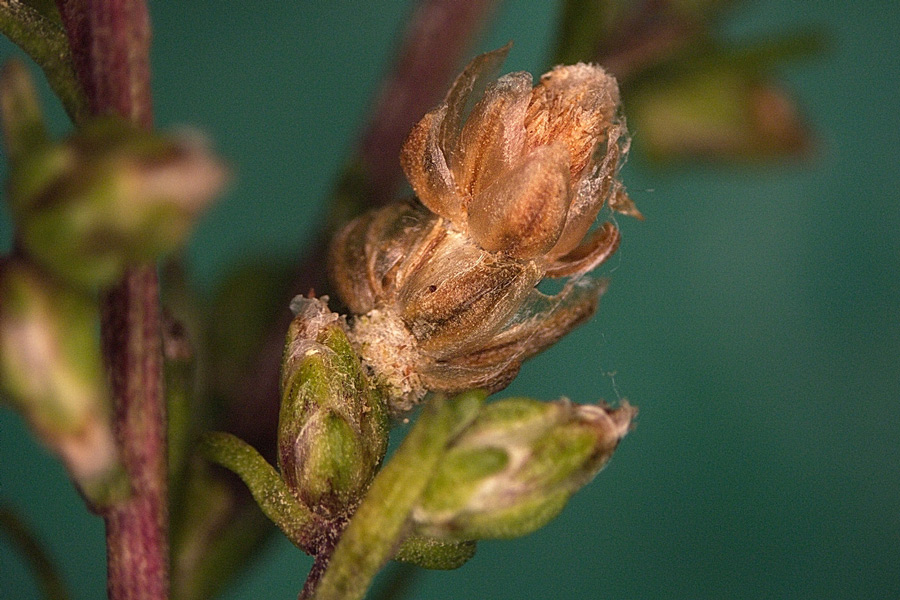
1.2. Raupe, Raupensack



2. Diagnose
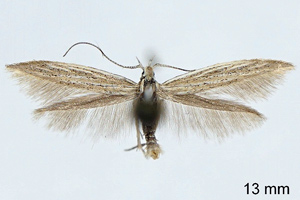
2.1. Männchen

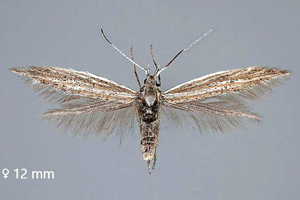
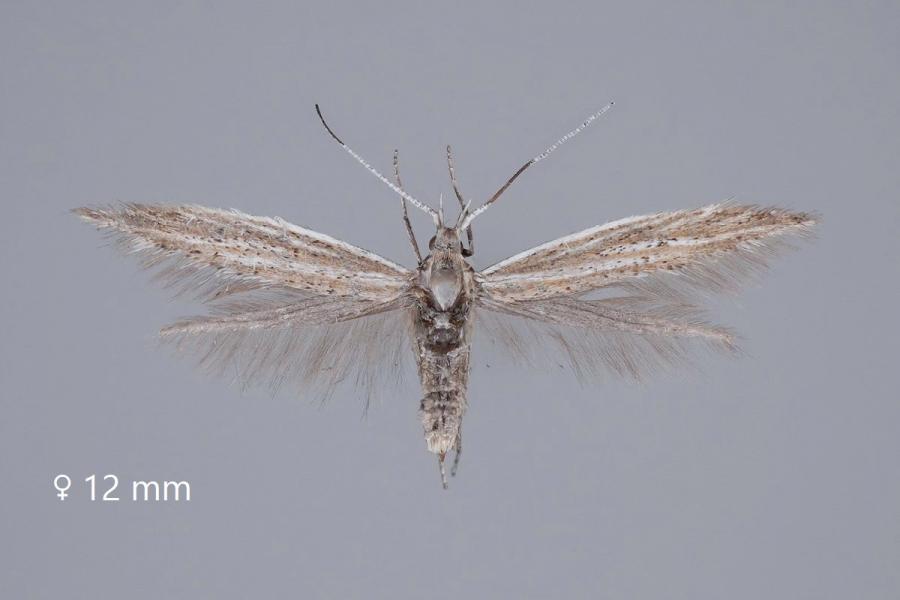
2.2. Weibchen
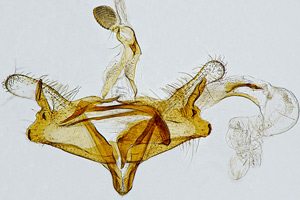
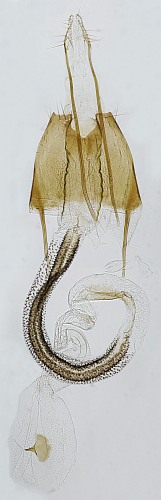
2.3. Genitalien
2.3.1. Männchen


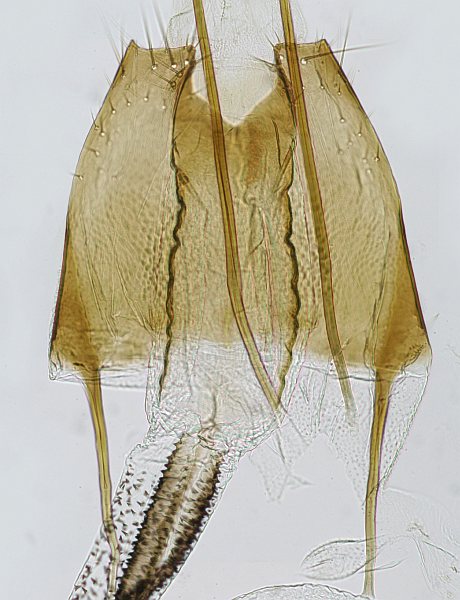
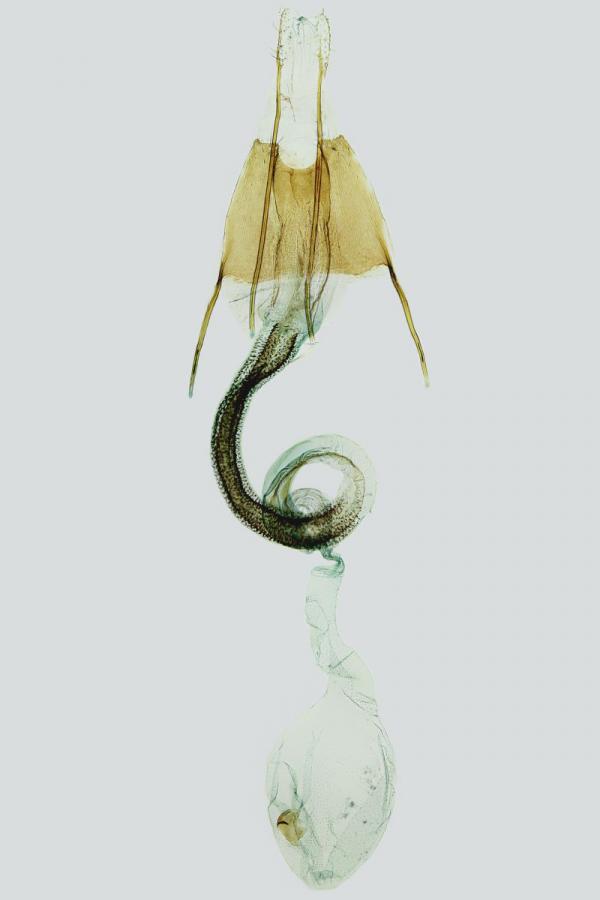
2.3.2. Weibchen
Genitalabbildungen z.B.: Razowski, J.: Motyle (Lepidoptera) Polski 16 - Coleophoridae, p. 212 (♂), p.244 (♀)

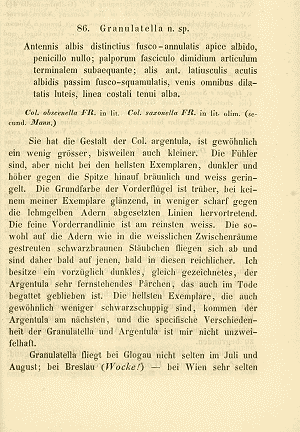
2.4. Erstbeschreibung


3. Biologie
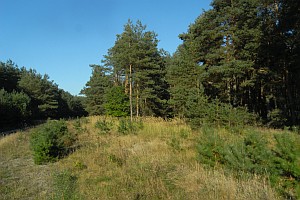
3.1. Habitat

3.2. Nahrung der Raupe
- [Asteraceae:] Artemisia campestris (Feld-Beifuß)
- [Asteraceae:] Artemisia taurica (Taurischer Beifuß)
- [Asteraceae:] Artemisia austriaca (Österreich-Wermut, Österreichischer Beifuß)
- [Asteraceae:] Artemisia santonicum [= Artemisia santonica] (Salzsteppen-Wermut)
- [Asteraceae:] Artemisia maritima ? (Strand-Beifuß ?)
Lange Zeit einzige sichere Raupennahrungspflanze war der schon in der Erstbeschreibung erwähnte Feld-Beifuß (Artemisia campestris). Erst Budashkin (2011: 27) berichtet von der Krim über ex-larva-Falter von Artemisia taurica. Nach seinen Ausführungen wird diese Pflanze dort häufig genutzt, Artemisia austriaca und Artemisia santonica nur sehr selten.
Baldizzone (2019: 406) listet zusätzlich Artemisia maritima - die Quelle dafür ist mir noch nicht klar.
(Autor: Erwin Rennwald)
4. Weitere Informationen
4.1. Andere Kombinationen
- Casignetella granulatella (Zeller, 1849) [so bei Budashkin (2011: 27) und Anikin et al. (2017: 116)]
4.2. Synonyme
- Coleophora artemisiae Mühlig, 1864
4.3. Taxonomie
Baldizzone & Huemer (2026: 78) teilen zum Barcode mit: "BIN: BOLD:AAB3655 (see also below). The intraspecific average p-distance of the barcode region is 0.72% (n=107). Specimens of C. peisoniella Kasy, 1965, in this BIN are either indicating BIN-sharing or based on misidentifications. The minimum p-distance to the Nearest Neighbor, Coleophora tridentifera Baldizzone, 1985, from Spain, is 1.76% (BIN: BOLD:ACT4437) (n=5)."
4.4. Faunistik
Nach Sauter & Whitebread (2005) ist die Art in die Schweizer Lepidopterenfauna aufzunehmen. Landry et al. (2013: 36) melden die Art neu für Kanada und die USA: "This overlooked species is most likely native to North America with a Holarctic distribution. This conclusion is supported by its predominantly interior western distribution, its occurrence in the Yukon and in the Peace River grasslands in northern Alberta, and association with the presence of sage at all reported localities."
Baldizzone & Huemer (2026: 78) melden die Art neu für Kirgisistan und fassen zusammen: "Europe, russia (lower Volga, W Siberia) Caucasus including Armenia, Azerbaijan. Turkmenistan, Mongolia, Kashmir, Korea, China, Canada, USA. New for Kyrgyzstan."
(Autor: Erwin Rennwald)
4.5. Literatur
- Anikin, V.V., Sachkov, S.A. & V.V. Zolotuhin (2017): "Fauna lepidopterologica Volgo-Uralensis": from P. Pallas to present days. — Proceedings of the Museum Witt Munich, Volume 7: 1-696; Munich and Vilnius.
- Baldizzone, G. (2019): Fauna d’Italia. Vol. LIII. Lepidoptera Coleophoridae. - XVII + 907 S.; Milano (Calderini).
- Baldizzone, G. (2020): New species and new faunistic records of genus Coleophora Hübner, 1822 from Kashmir (Lepidoptera, Coleophoridae). Contributions to the knowledge of Coleophoridae: CXLI. — Bollettino dell’Associazione Romana di Entomologia, Nuova Serie 1 (1–4): 133–148.
- Baldizzone, G. & P. Huemer (2026): Taxonomy and faunistics of Coleophoridae in Kyrgyzstan, with descriptions of 23 new species (Lepidoptera). — Zootaxa, 5847 (1): 1-104.
- Baldizzone, G. & H. Patzak (1980): Coleophora granulatella Zeller, 1849 und Coleophora campestriphaga nov. spec. (Lep. Coleophoridae). — Deutsche Entomologische Zeitschrift, Neue Folge 27 (4-5): 313-316. Berlin (Akademie-Verlag) [Digitalisat und PDF-Download auf onlinelibrary.wiley.com].
- Будашкин, Ю. И. (2011): Дополнения к фауне и биологии молей-чехлоносок (Lepidoptera, Coleophoridae) Крыма. — Экосистемы, их оптимизация и охрана Выпуск 5 (24): 21-36. [PDF auf cyberleninka.ru]
- Будашкин, Ю. И., Рихтер, И. & Ю. Табель (2015): Новые находки молей-чехлоносок (Lepidoptera: Coleophoridae) в России и в Армении. — Эверсманния 41: 11–22.
- Фалькович, М. И. (1992): К фауне чехлоносок (Lepidoptera, Coleophoridae) южной Туркмении (с описанием новых видов) Часть 2. — Труды Зоологического института Российскии Академии Наук 248: 96-126.
- Фалькович, М. И. & С. Я. Резник (1980): Результаты зоологических иссиледований Доктора З. Касаба в Монголии. 444. Список видов семейства чехлоносок (Lepidoptera, Coleophoridae) [Falkovitsh, M. I. & S. J. Reznik (1980): Ergebnisse der zoologischen Forschungen von Dr. Z. Kaszab in der Mongolei. 444. Verzeichnis der Coleophoriden-Arten (Lepidoptera)]. — Насекомые Монголии 7: 366-377.
- Landry, J.-F., Nazari, V., Dewaard, J. R., Mutanen, M., Lopez-Vaamonde, C., Huemer, P. & P. D. N. Hebert (2013): Shared but overlooked: 30 species of Holarctic Microlepidoptera revealed by DNA barcodes and morphology. — Zootaxa 3749 (1): 1-93 [PDF www.mapress.com].
- Park, K. T. & G. Baldizzone (1992): Systematics of Coleophoridae (Lepidoptera) in Korea. — Korean Journal of Applied Entomology 31 (4): 516-535. [Zum PDF auf entomology2.or.kr]
- Sauter, W. & S. Whitebread (2005): Die Schmetterlinge der Schweiz (Lepidoptera). 9. Nachtrag. — Mitteilungen der Schweizerischen Entomologischen Gesellschaft, Bulletin de la Société Entomologique Suisse, 78 (1/2): 59-115. [Digitalisat auf e-periodica.ch]
- SCHÜTZE (1931): 192
- Erstbeschreibung: Zeller, P. C. (1849): Beitrag zur Kenntniss der Coleophoren. — Linnaea Entomologica. Zeitschrift herausgegeben von dem entomologischen Vereine in Stettin 4: 191-416. Berlin (E. S. Mittler und Sohn).