+27Kontinente:EU


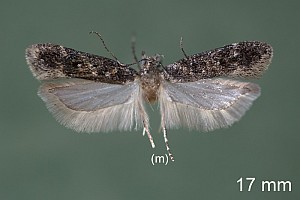
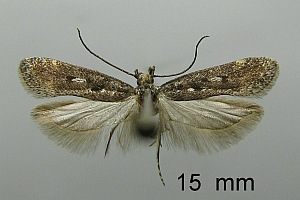
1. Lebendfotos
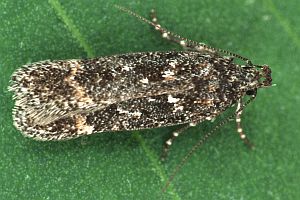
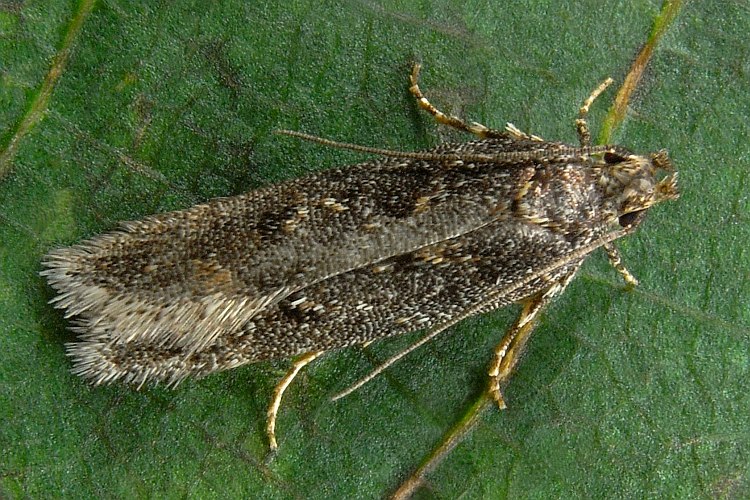
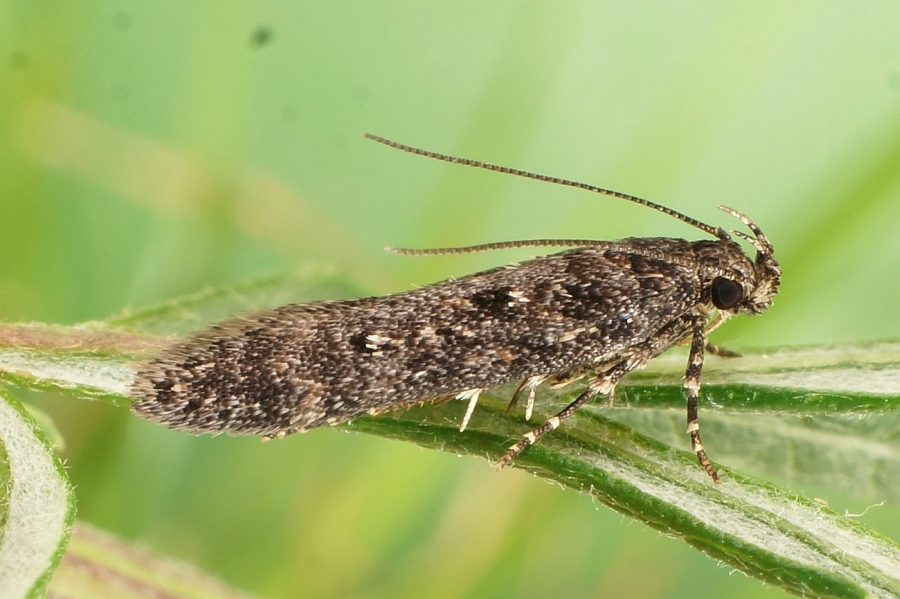
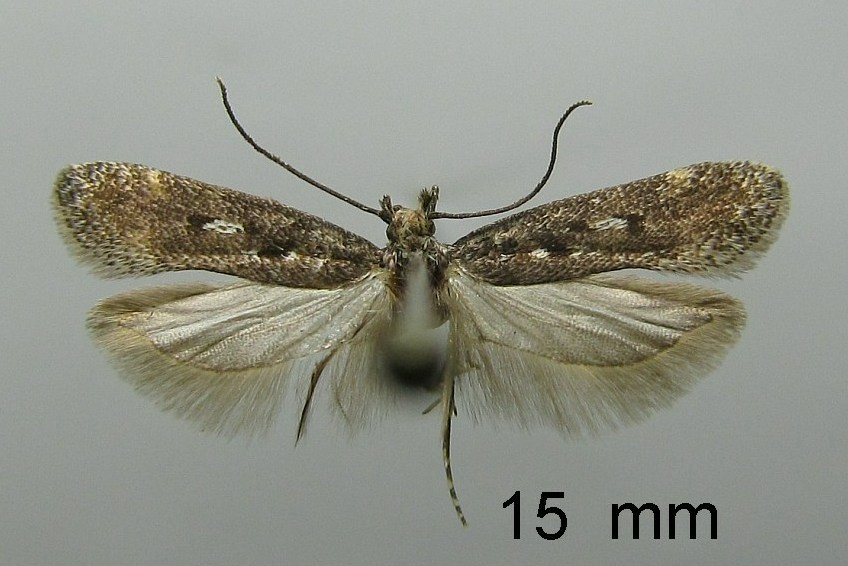
1.1. Falter




2. Diagnose
2.1. Männchen

2.2. Geschlecht nicht bestimmt
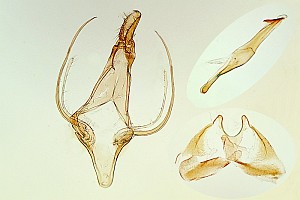
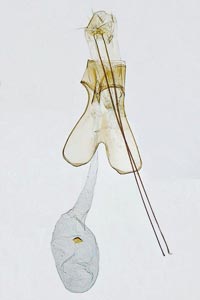
2.3. Genitalien
2.3.1. Männchen

2.3.2. Weibchen


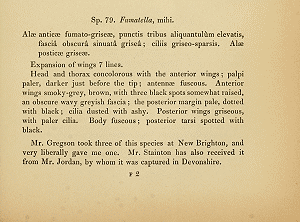
2.4. Erstbeschreibung

3. Biologie
Chionodes fumatella ist im Juni und Juli in den sandigen Gebieten der Oberlausitz (Sachsen) nicht selten am Licht zu finden. [Friedmar Graf]
3.1. Nahrung der Raupe
- [Brachytheciaceae:] Brachythecium albicans (Weißes Kurzbüchsenmoos)
Schütze (1931: 14) schrieb zu "Gelechia oppletella Herrich-Schäffer": "Raupe Mai bis Juni [...] Fand Stange im Moos an großen erratischen Blöcken, Otto Hofmann und Martini in Moospolstern auf Ziegeldächern." Nicht alles davon dürfte stimmen. Gregersen & Karsholt (2022: 425-426) beschreiben die Raupe. Zu ihrer Lebensweise teilen sie mit: "Host-plant. The larvae mentioned above were feeding among moss an sandy soil; they retired through a vertical tunnel of 5-6 cm depth in the sand into an underground system of silken galleries; the larvae were asumed to protect themselves there against strong sun. They were difficult to find as there were no spinning on the ground surface or among the moss (Gregersen obs.). The species was abundant in the locality which was an extremely hot south-facing sandy slope without other vegetation than moss. In the study of Beavan & Heckford (2016: 7, 10) the larva of C. fumatella was collected in a habitat with more diverse vegetation. The larvae lived in spun tubescovered with sand among the moss Brachythecium albicans. The species has earlier been associated with moss, but the statements on biology and larval description are partly contradioctionary. Early descriptions of the larvamy be dubious due to identification problems."
Ob Brachythecium albicans das einzige befressene Moos ist, ist noch zu klären. In Mitteleuropa ist dieses Moos jedenfalls weit verbreitet und ungefährdet.
(Autor: Erwin Rennwald)
4. Weitere Informationen
4.1. Andere Kombinationen
- Gelechia fumatella Douglas, 1850 [Originalkombination]
4.2. Synonyme
- Chionodes celerella Stainton, 1851
- Chionodes oppletella Herrich-Schäffer, 1854
- Chionodes nigricans Heinemann, 1870
- Chionodes reuttiella Heinemann, 1870
- Gelechia syrticola Staudinger, 1871
- Chionodes carpella Piskunov, 1971
4.3. Literatur
- Beavan S.D. & R.J. Heckford (2016): Chionodes fumatella (Zeller, 1839) (Lepidoptera: Gelechiidae): discovery of the larva in the British Isles. — Entomologist's Gazette, 67: 3-14. [zum PDF-Download auf researchgate.net]
- Erstbeschreibung: Douglas, J. W. (1850): On the British Species of the Genus Gelechia of Zeller. — The Transactions of the Entomological Society of London. New Series 1: 14-21, 60-68.
- Gregersen, K. & O. Karsholt (2022): The Gelechiidae of North-West Europe. — 939 pp., Oslo, Norway (Norwegian Entomological Society).
- SCHÜTZE (1931): 14