+24Kontinente:EUAS


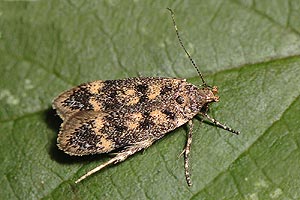
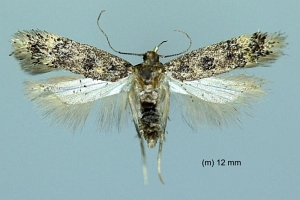
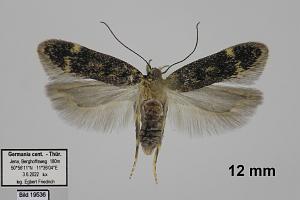
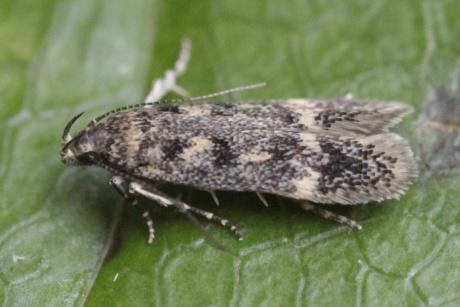
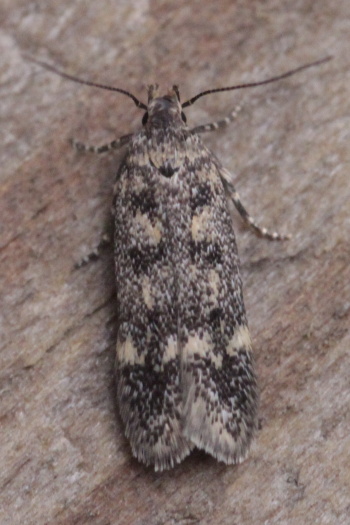
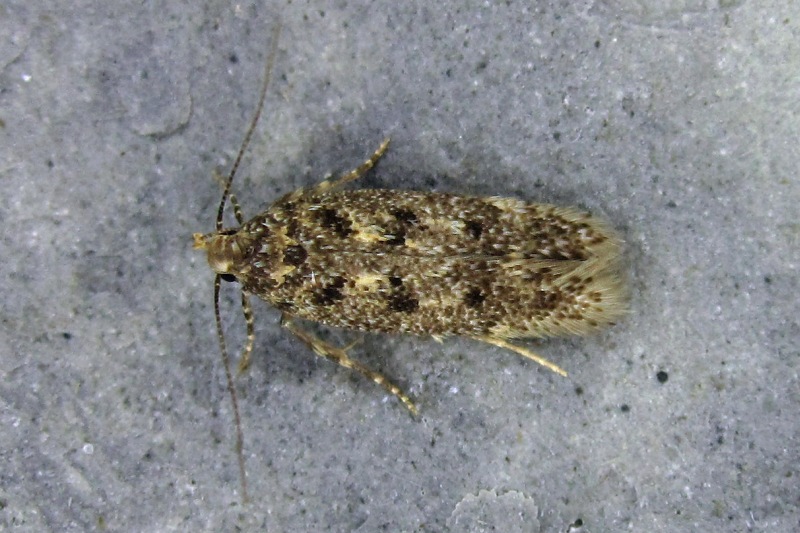
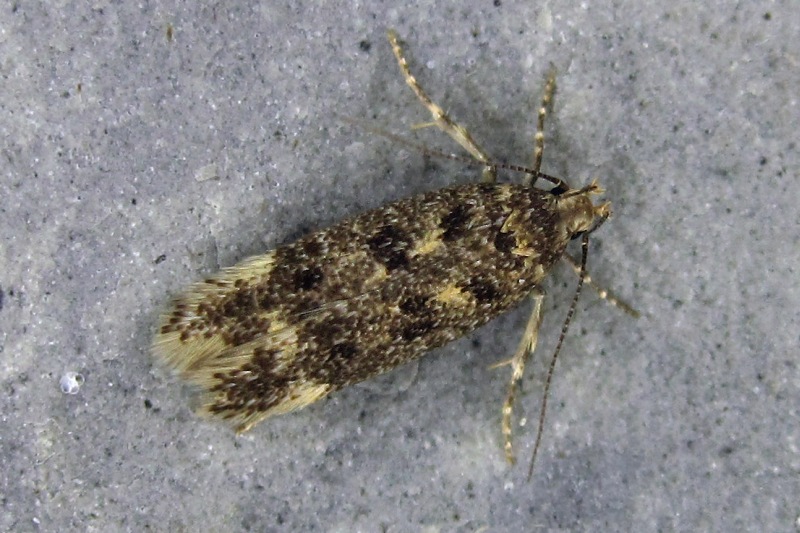
1. Lebendfotos
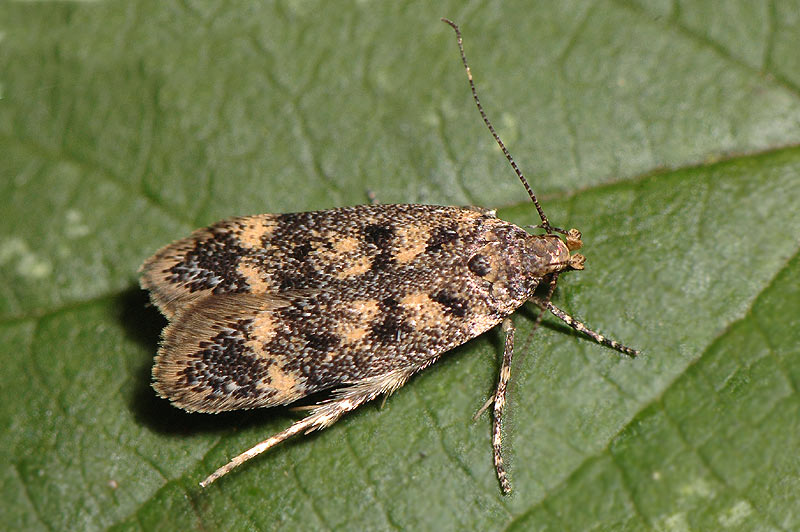
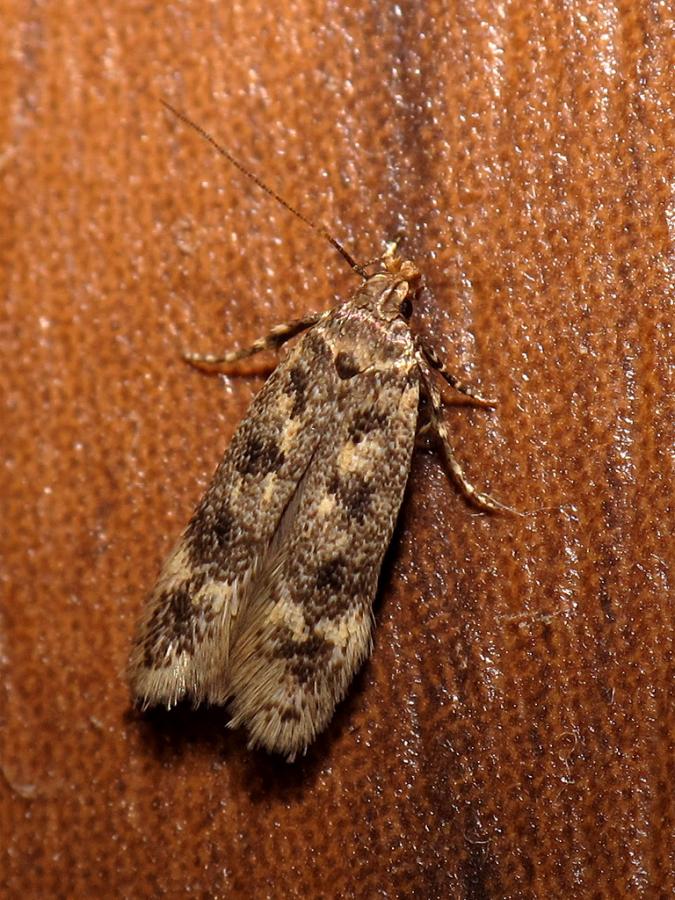
1.1. Falter
2. Diagnose
2.1. Männchen
2.2. Weibchen
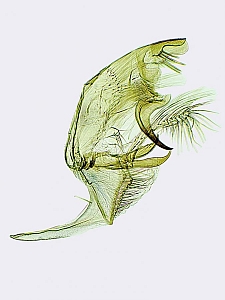
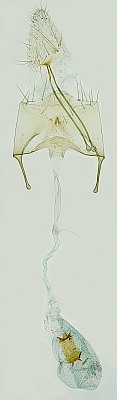
2.3. Genitalien
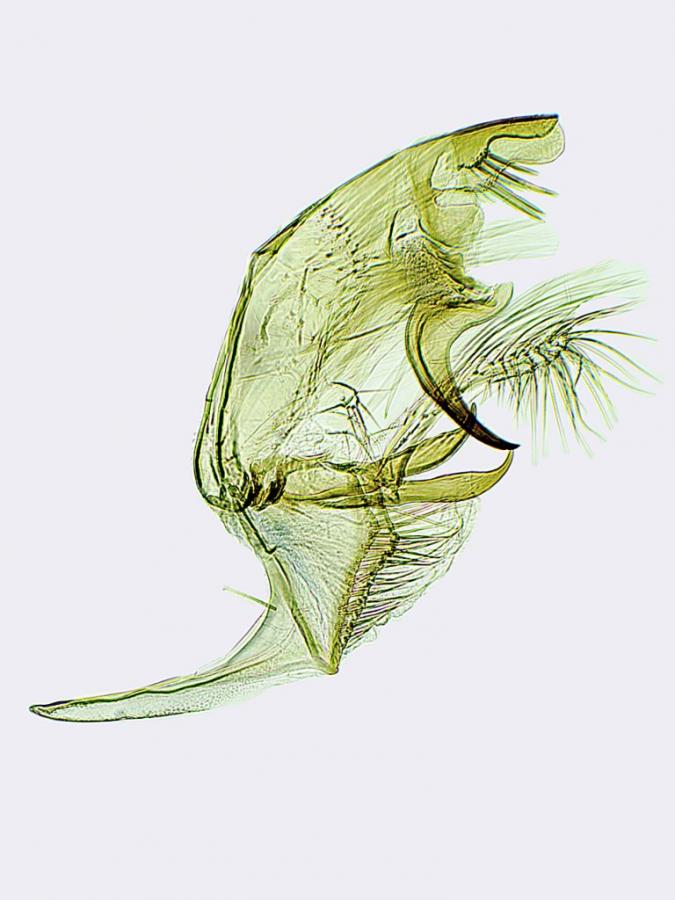
2.3.1. Männchen
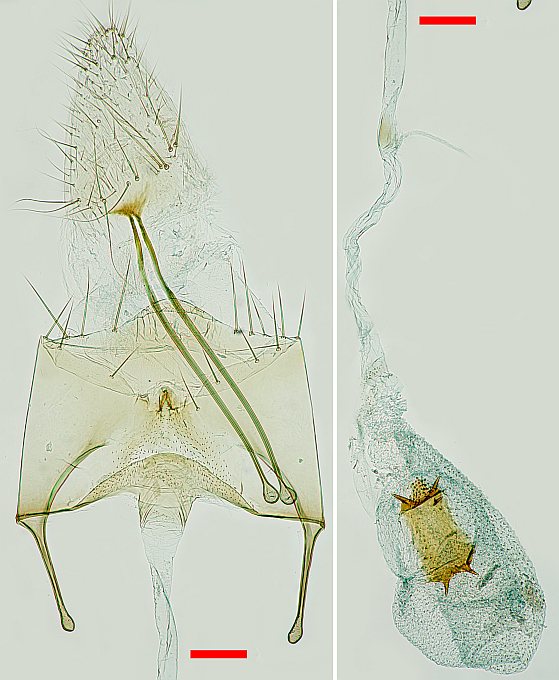
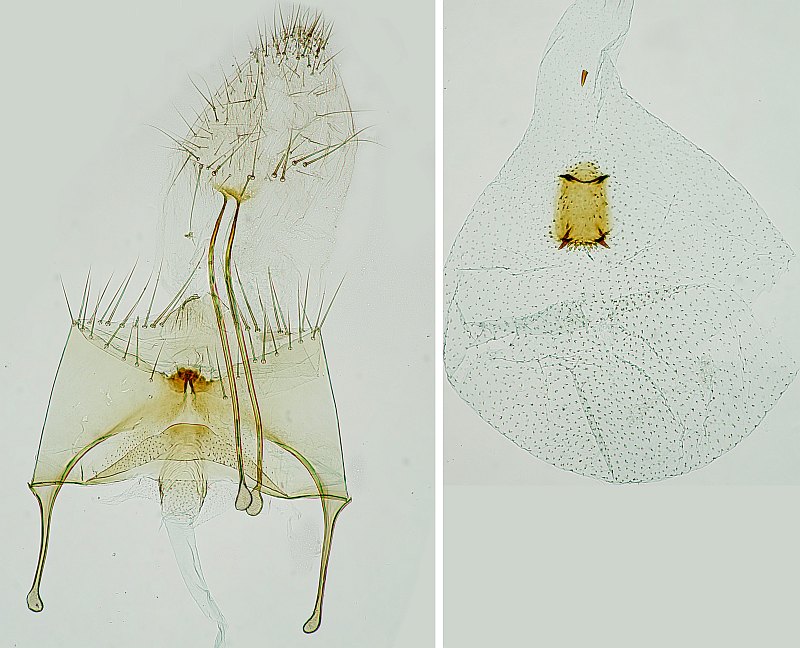
2.3.2. Weibchen
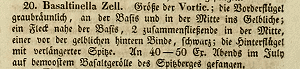
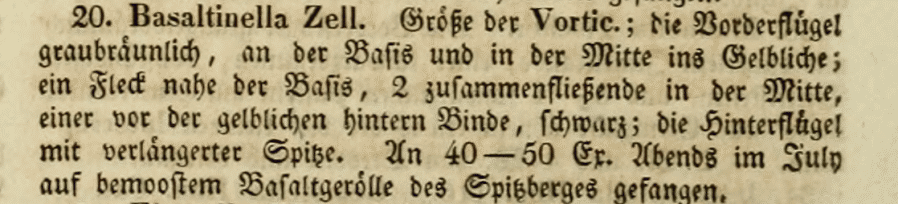
2.4. Erstbeschreibung
3. Biologie
3.1. Nahrung der Raupe
- [Pottiaceae:] Syntrichia ruralis (Dach-Drehzahnmoos)
Karsholt & Rutten (2005: 135) stellten fest: "The biology is described by Heckford & Sterling (2002). The larva with head and prothoracic plate black, body dull purplish brown with pale reddish brown to greyish white subdorsal lines, anal plate brown. It lives in a densely spun silken tube beneath the surface of the host plant. Zeller (1839) described B. basaltinella from an area characterized by basalt boulders, suggesting stone-growing mosses as the possible food plants. This is also indicated by observations in The Netherlands where B. basaltinella is most common in built-up areas. Heckford & Sterling (2002) found the larvae in roof-growing Syntrichia ruralis (Hedw.) The larval description given by Meess (1910) for B. basaltinella probably refers to Catoptria falsella ([Denis & Schiffermüller], 1775 (Crambidae) (Heckford & Sterling 2002)."
Gregersen & Karsholt (2022: 229-230) ergänzen nach der gleichen Quelle: "Host-plant. Larva so far only found on roof-growing Syntrichia ruralis (Heckford & Sterling op. cit.), but as B. basaltinella also occurs on hoardings, rocks and in thatches (Heinemann 1870: 244) it is likely, that it feeds on additional mosses. The larva lives in a dense whitish silken tube; the upper end of the tube is sometimes visible on the surface of the moss, where it is more flimsy and incorporates chewed moss fragments."
(Autor: Erwin Rennwald)
4. Weitere Informationen
4.1. Andere Kombinationen
- Gelechia basaltinella Zeller, 1839 [Originalkombination]
4.2. Faunistik
Bengtsson (2017: 138) meldet die Art von 2 Orten in Skåne als neu von Schweden.
Bisi & Lupi (2021) nahmen die Art nur mit großem Vorbehalt in ihren ["Catalogo dei Lepidotteri d'Italia Ropaloceri ed Eteroceri (Insecta: Lepidoptera)"] auf und vermerkten in ihrer [Anmerkung dazu]: "non presente in Italia secondo de Jong et al. (2014)." Es fehlen also anscheinend konkrete und übeprüfbare Belege.
(Autor: Erwin Rennwald)
4.3. Literatur
- Bengtsson, B.Å. (2017): Anmärkningsvärda fynd av småfjärilar (Microlepidoptera) i Sverige 2016. — Entomologisk Tidskrift, 138 (1): 1-24. [PDF auf sef.nu]
- Heckford, R.J. & P.H. Sterling (2002): The discovery of the larva of Bryotropha dryadella (Zeller, 1850) and larval descriptions of this species, B. basaltinella (Zeller, 1839), B. umbrosella (Zeller, 1839) and B. senectella (Zeller, 1839) (Lepidoptera: Gelechiidae). — Entomologist’s Gazette 53: 83-91. [Sekundärzitat]
- Karsholt, O. & T. Rutten (2005): The genus Bryotropha Heinemann in the western Palaearctic (Lepidoptera: Gelechiidae). — Tijdschrift voor Entomologie 148: 77-207. [PDF auf nev.nl]
- Meess, A. (1910): Fam. Gelechiidae. – In: Spuler, A. (1910): Die Schmetterlinge Europas 2: 330-380. E. Schweizerbart’sche Verlagsbuchhandlung, Stuttgart.
- SCHÜTZE (1931): 14
- Erstbeschreibung: Zeller, P. C. (1839): Versuch einer naturgemäßen Eintheilung der Schaben. — Isis von Oken 1839 (3): 167–220. Leipzig (Brockhaus).