+36Kontinente:EUAS



1. Lebendfotos
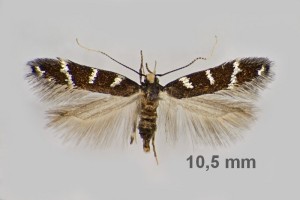
1.1. Falter
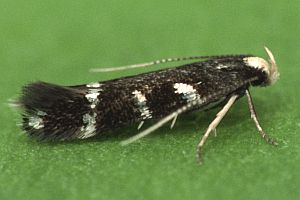
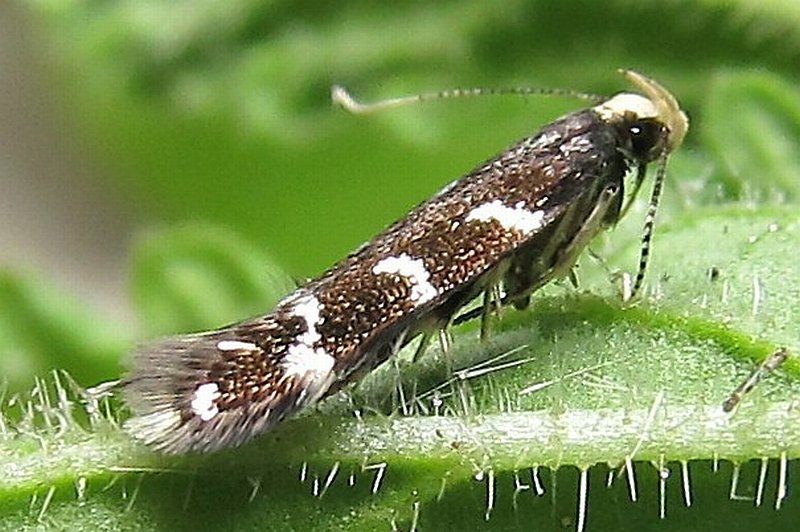
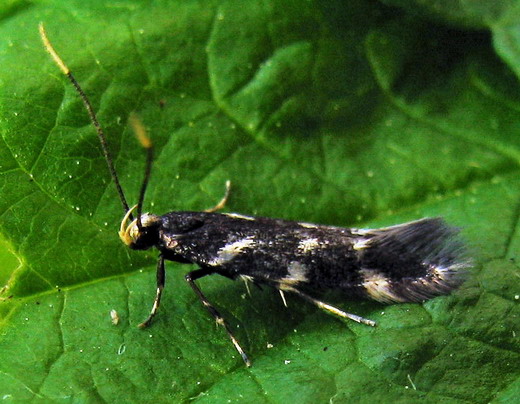
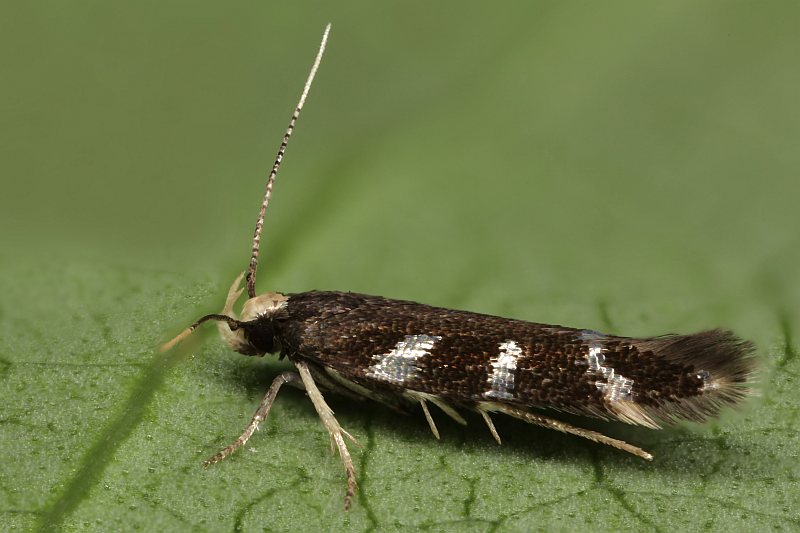
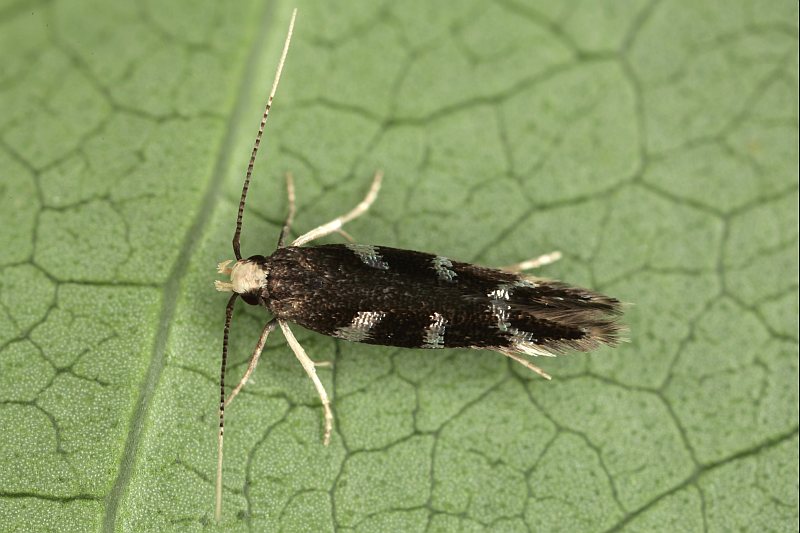
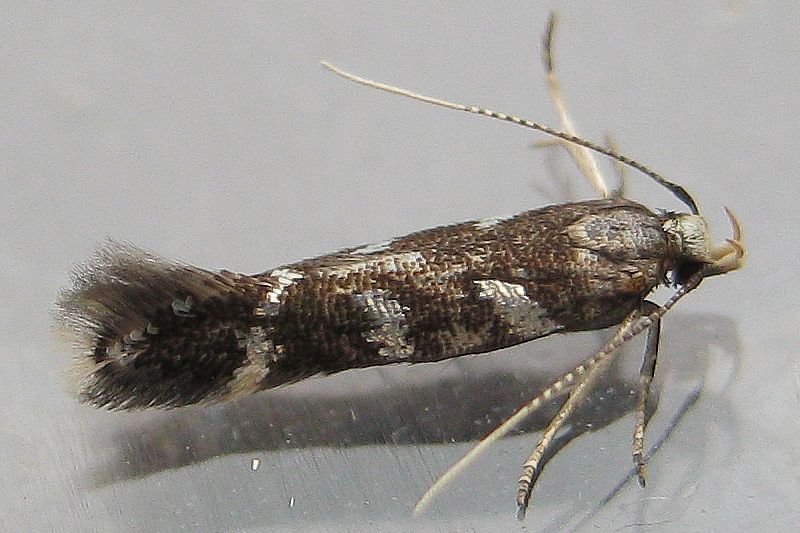
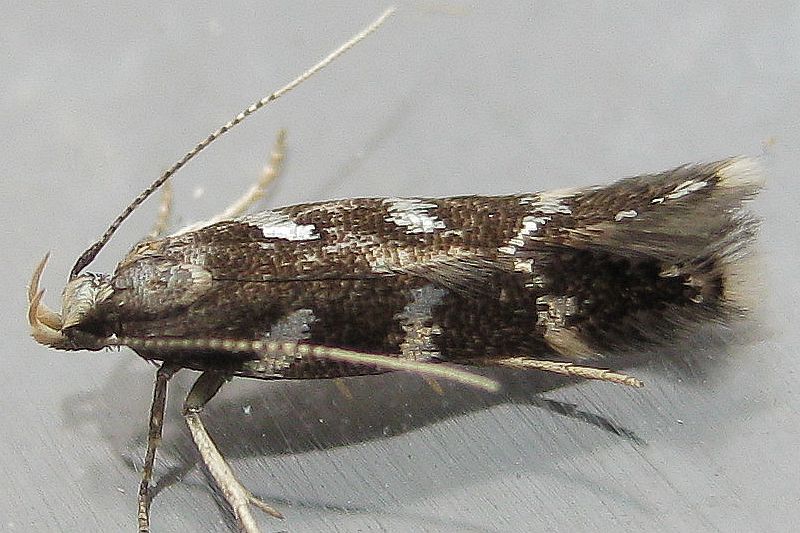
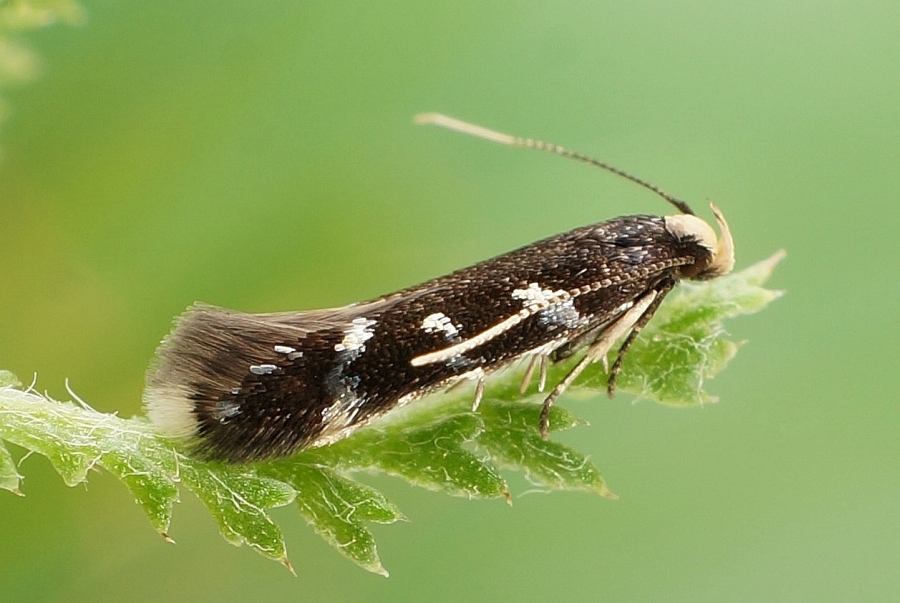
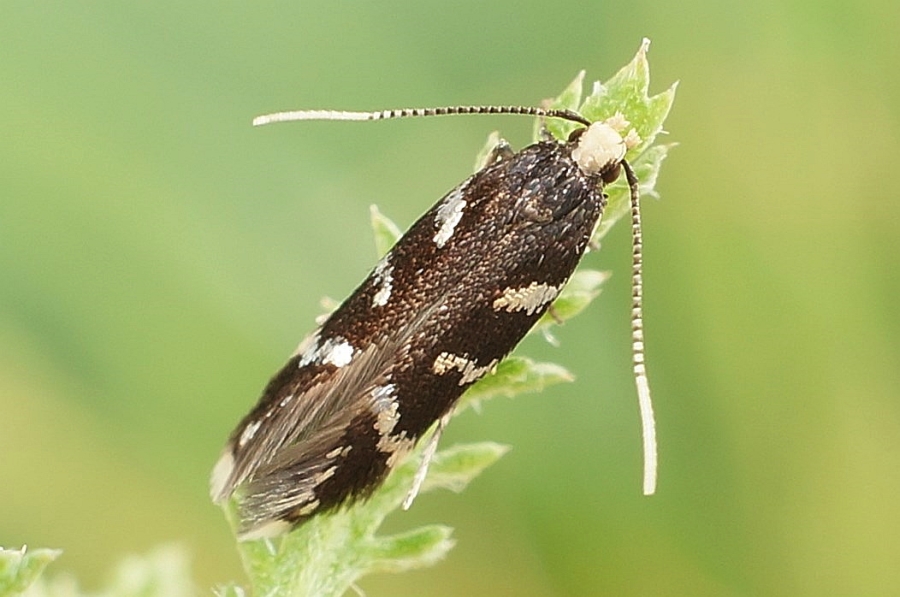
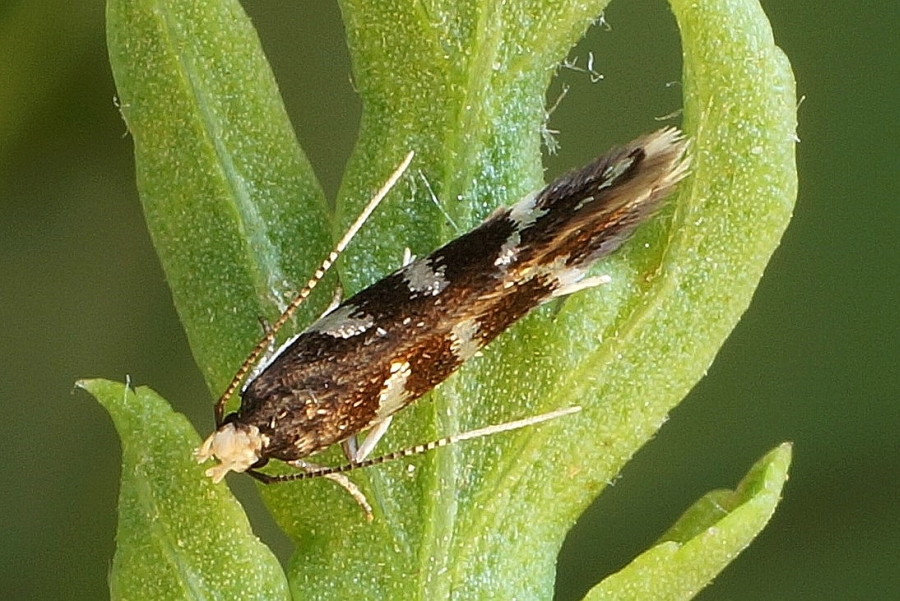
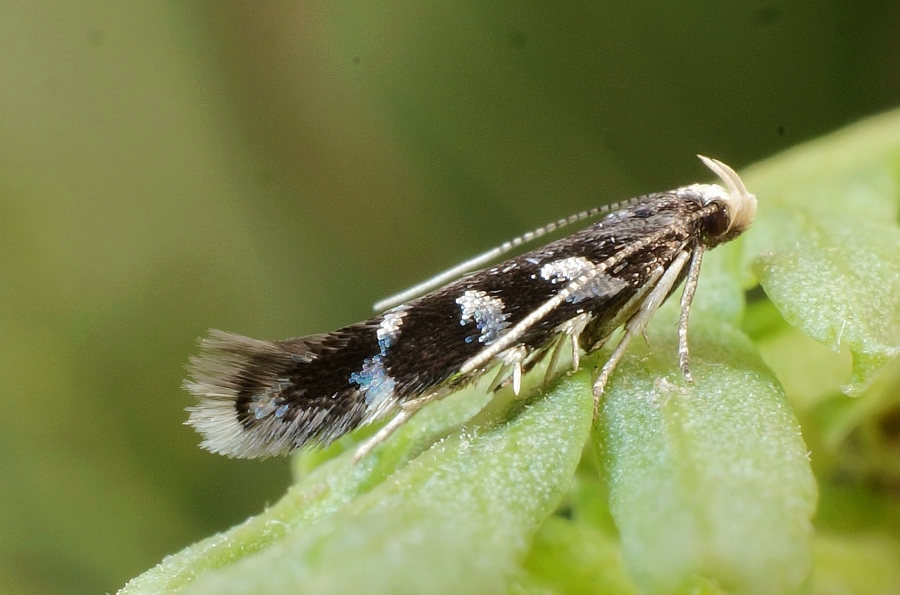
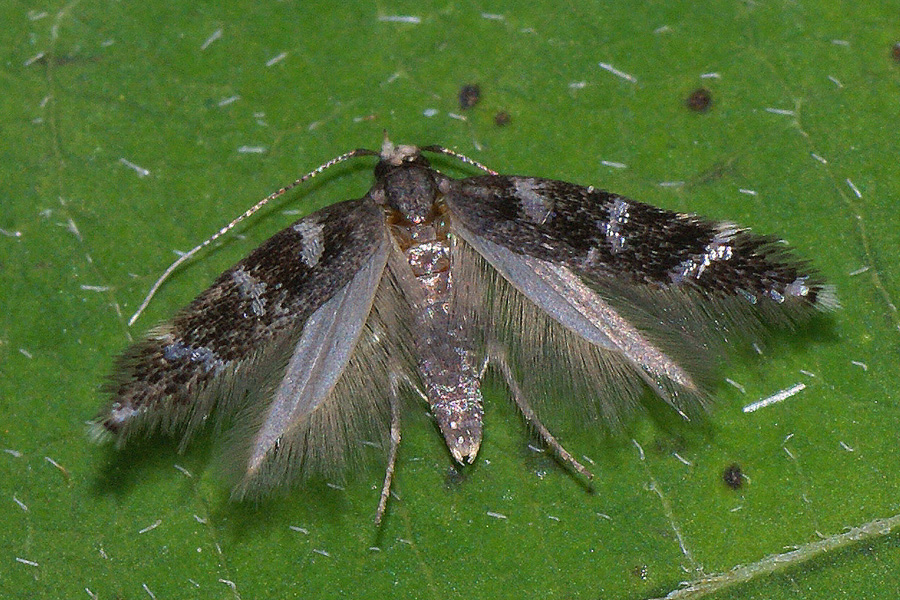
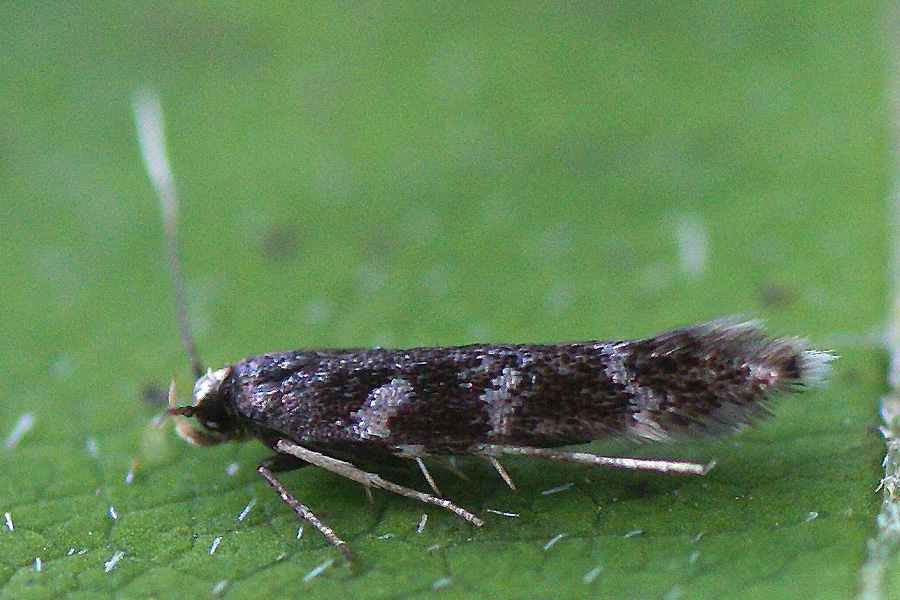
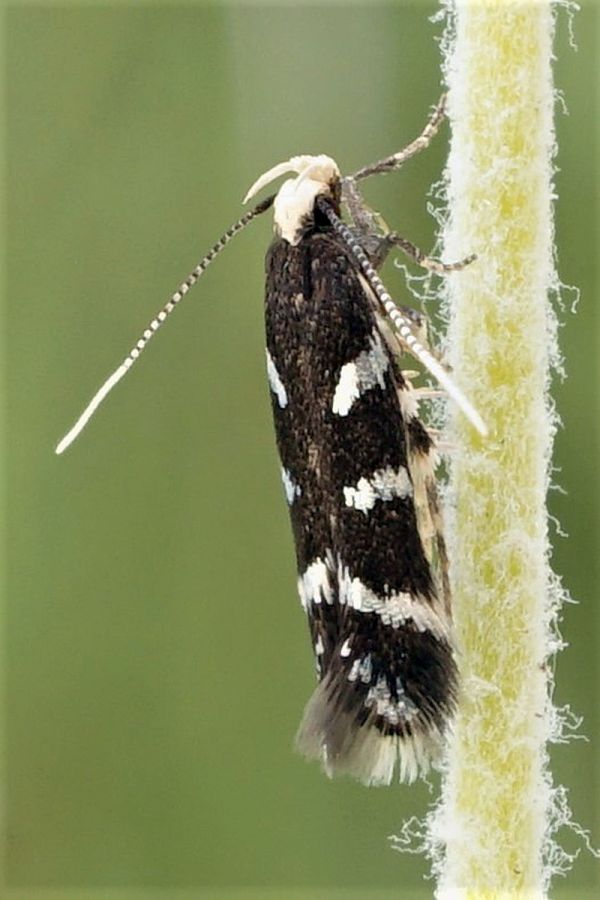
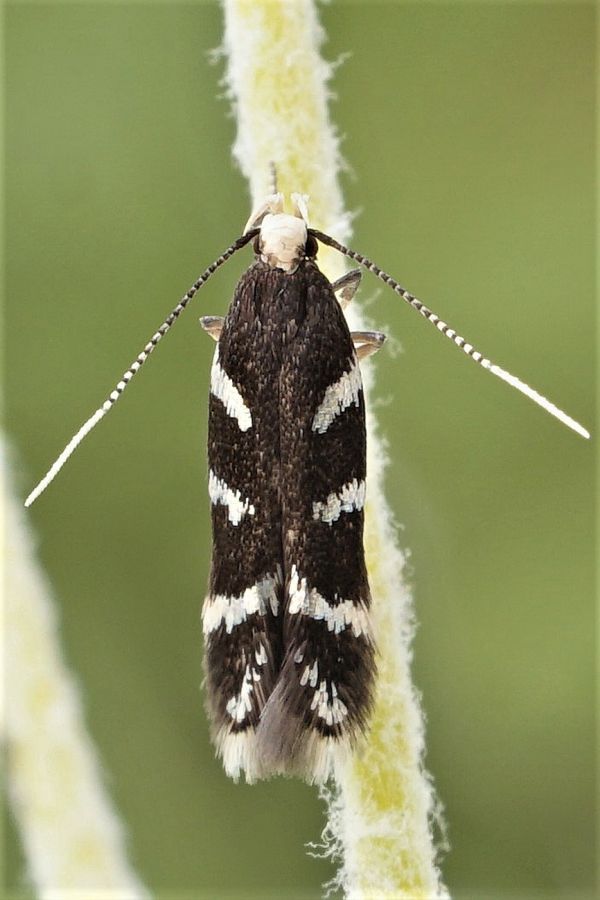
Anmerkung: Am 4. Februar 2023 wurden vier Falter auf Grund eines Barcoding nach Oxypteryx libertinella verschoben: [Forum].
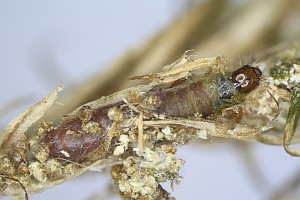
1.2. Raupe
2. Diagnose
2.1. Geschlecht nicht bestimmt
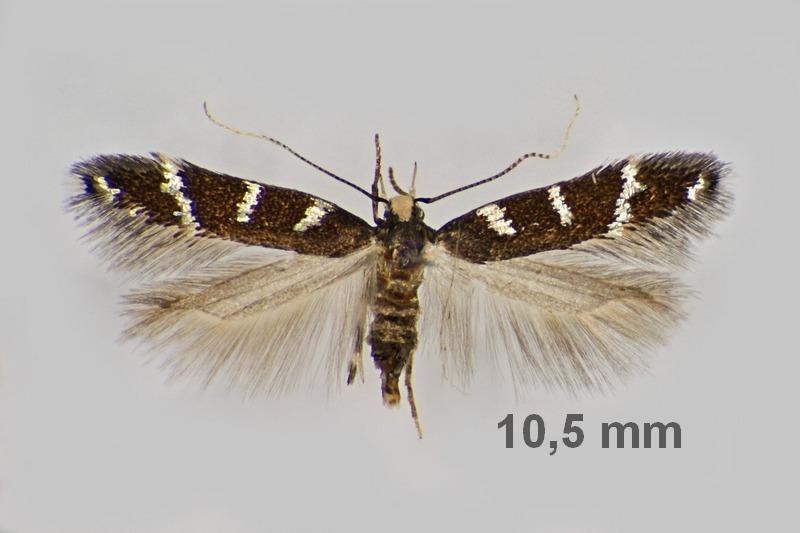
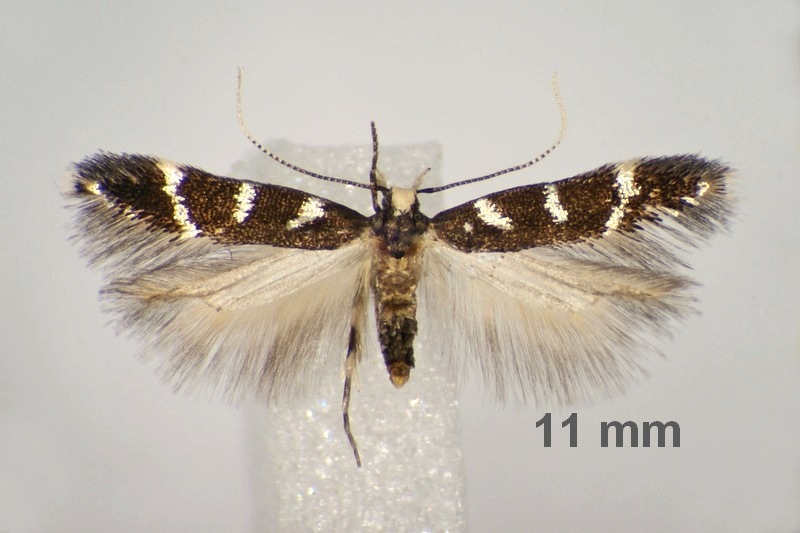
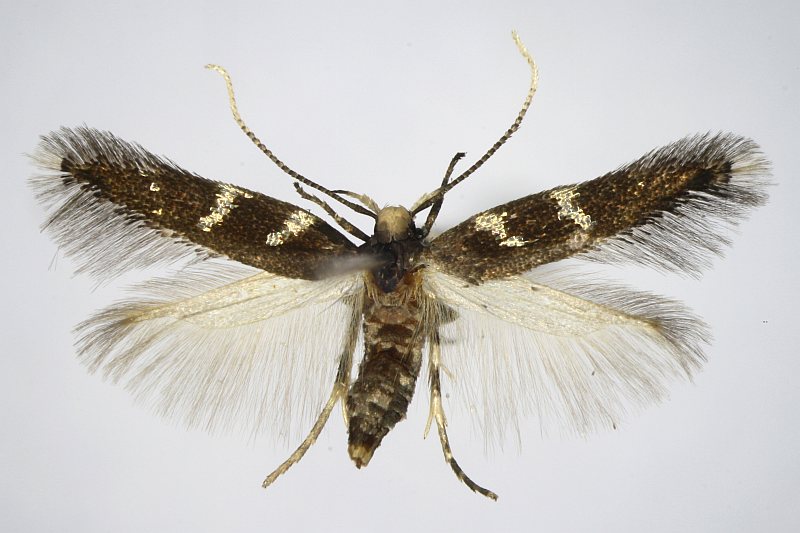
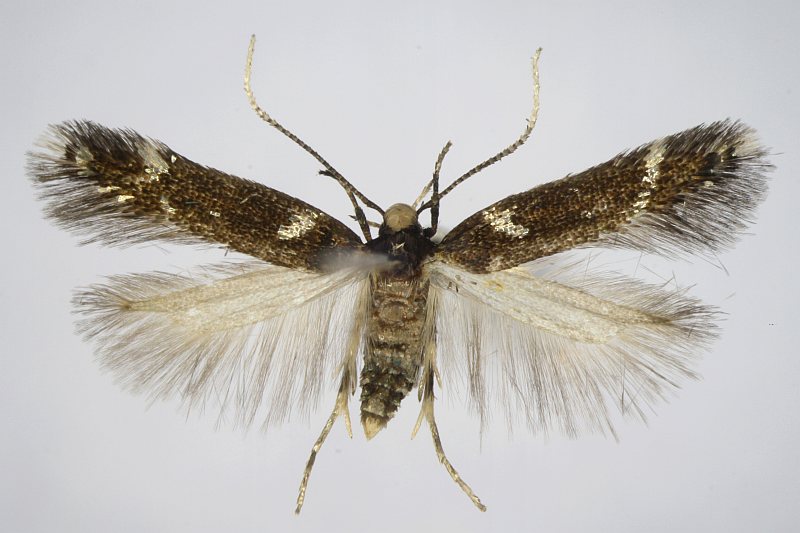
Bei E. wilkella sind die silbrig glänzenden Vorderflügelflecken zu drei Binden verschmolzen. (Helmut Deutsch)
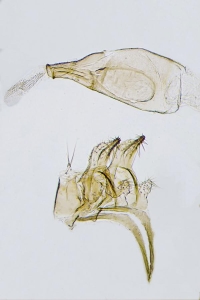
2.2. Genitalien
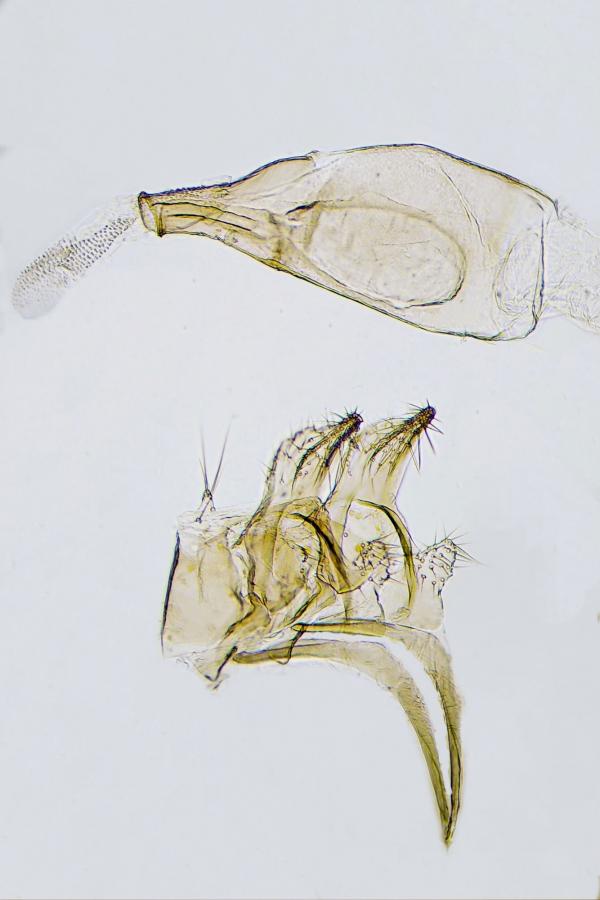
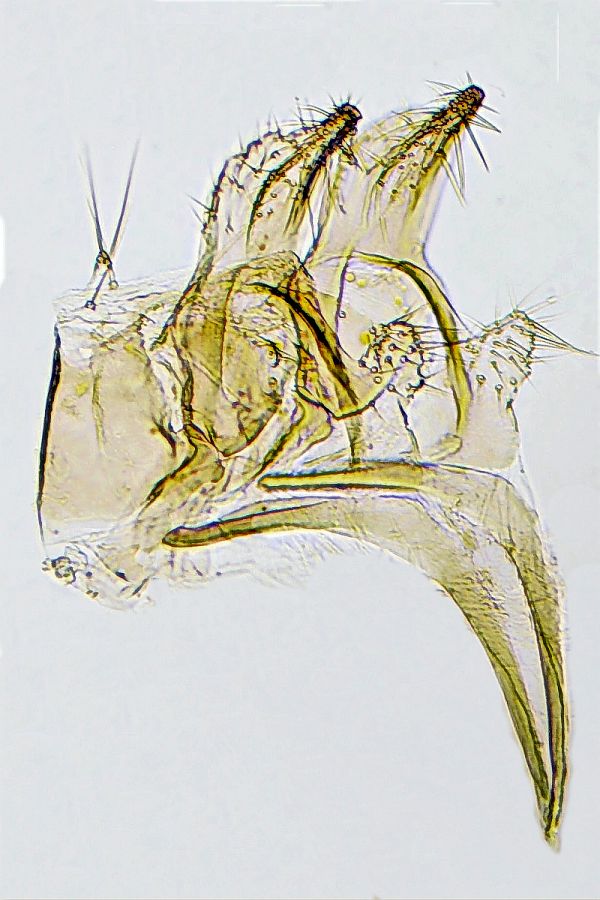
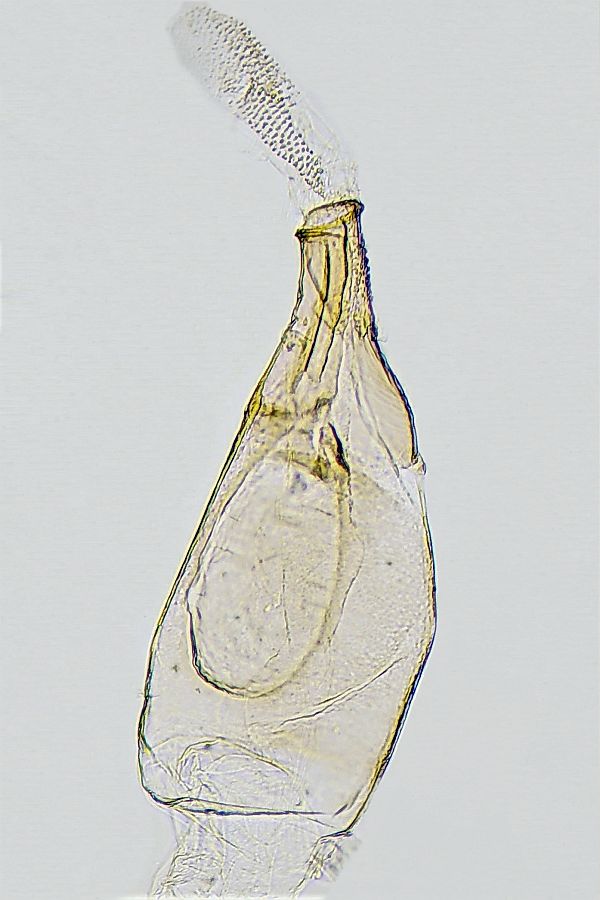
2.2.1. Männchen
2.3. Erstbeschreibung

3. Biologie
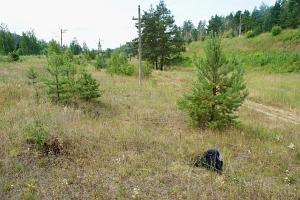
3.1. Habitat
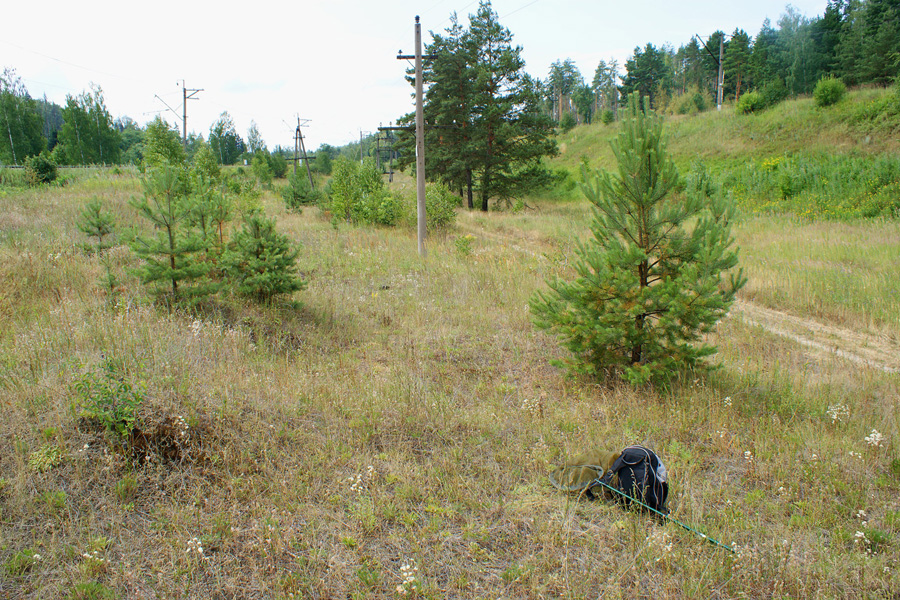
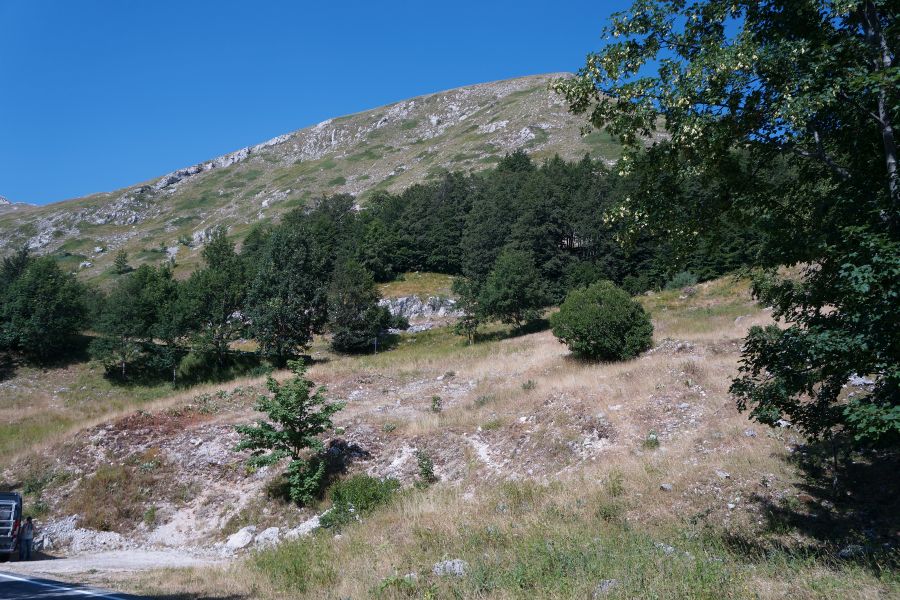
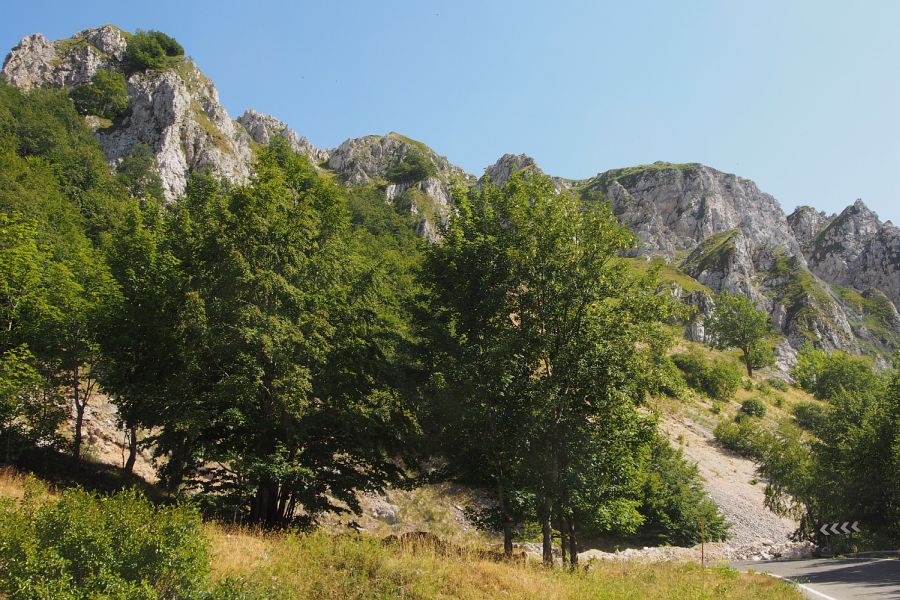
3.2. Nahrung der Raupe
- [Pottiaceae:] Syntrichia ruraliformis (Dach-Drehzahnmoos)
- [Dicranaceae:] Dicranum scoparium (Gewöhnliches Gabelzahnmoos)
- [Hypnaceae:] Hypnum lacunosum (Geschwollenes Zypressen-Schlafmoos)
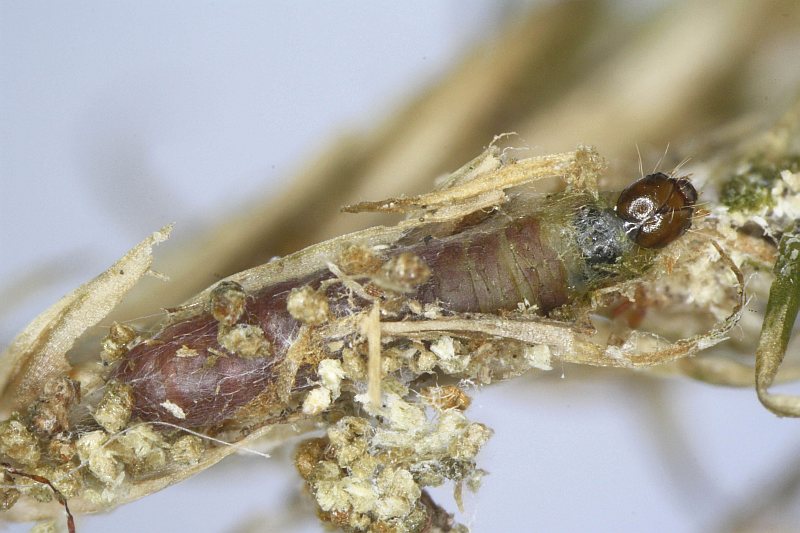
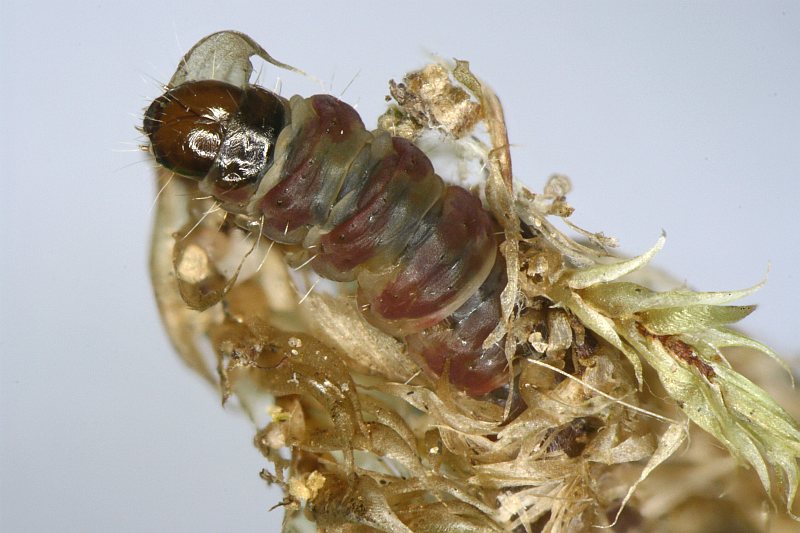
Stainton (1867: 267) hatte beschrieben, wie man die Raupe von "Gelechia pictella" finden kann: "Auffinden der Raupe. Auf sandigen Plätzen, auf denen diese Art vorkommt, wird man im Mai bei der Untersuchung der Pflänzchen von Cerastium triviale manche finden, an denen längs der Stengel und zwischen den Wurzeln seidene Gallerien gezogen sind. Oeffnet man eine solche und findet ein munteres Räupchen von heller Rosenfarbe mit hellgelbbraunem Kopf und gelbbräunlichem zweiten Segment, so hat man die Raupe von Gelechia pictella vor sich." So weit, so gut. Es geht weiter: "Die Raupe lebt vom Cerastium triviale und baut längs der Stengel seidene Gewebe und solche Gallerien zwischen den Wurzeln dieser Pflanze. Sie bringt auf manchen Blättern grosse helle Flecke hervor. Ihr Puppengehause legt unter dem Sande an. Die Raupenzeit ist der Mai, die Schmetterlinge erscheinen im Juni, und da man sie wieder im August antrifft, so glaube ich, dass es eine zweite Raupenbrut im Juli giebt." Das Problem ? In der Zucht wird Cerastium fontanum agg. nicht als Futterpflanze akzeptiert. Es könntesich also um eine Ausnahmenahrung handeln - oder eben um eine ungenaue Beobachtung.
Was fressen die Raupen wirklich ? Gregersen & Karsholt (2022: 338) schreiben: "Host-plant. Moss, Syntrichia ruraliformis(Sterling 2008: 267), Dicranum scoparium and Hypnum lacunosum (Beavan & Heckford 2015a; 2017: 1). The larva constructs a delicate, whitish silken tube among the host-plants incorporating a few chewed moss fragments and leaving orange-brown frass piles at the end of the tube (Sterling op. cit.). Larvae living in the two last mentioned moss species left no frass at the end of the tube which was placed under the earth surface (Beavan & Heckford 2015: 8)."
(Autor: Erwin Rennwald)
4. Weitere Informationen
4.1. Andere Kombinationen
- Phalaena (Tinea) wilkella Linnaeus, 1758 [Originalkombination]
- Eulamprotes wilkella (Linnaeus, 1758) [bis Huemer & Karsholt (2020) übliche Kombination]
4.2. Synonyme
- Phalaena (Tinea) merianella Linnaeus, 1758
- Phalaena gronoviella Scopoli, 1772 [syn. nach Stübner in Gaedike (2009). Andere Autoren sehen in der dürftigen Beschreibung von Scopoli (1772) eher eine Eteobalea-Art und führen den Namen als nomen dubium. Nähere Diskussion unter Eteobalea serratella
- Eulamprotes pictella (Zeller, 1839)
- Gelechia tarquiniella Stainton, 1862
4.3. Taxonomie
Huemer & Karsholt (2020) nehmen die Neukombination mit Oxypteryx vor, schreiben aber auch, dass noch Fragen offen sind: "Oxypteryx. Eulamprotes Bradley, 1971 with the type species E. atrella is shown to be a synonym of Oxypteryx Rebel, 1911 (Bidzilya et al. 2019), resulting in a number of new nomenclatural changes. We here propose the following new combinations: Oxypteryx nigromaculella (Millière, 1872) comb. nov., Oxypteryx wilkella (Linnaeus, 1758) comb. nov.,[...] Despite this new taxonomic approach, the genus is in strong need of revision. DNA barcodes separate into three clades seemingly supported by some morphological characters. For example, species formerly considered to be in the E. wilkella-Group and characterized by the blackish ground colour of the forewings with silvery or whitish markings, form a separate clade. Further, the genus has an extraordinary intraspecific barcode variation with 18 sequenced species belonging to 27 BINs, with at least three yet unidentified species."
Speziell zu O. wilkella ist zu erfahren: "Oxypteryx wilkella. Two specimens from Italy and Hungary respectively are strongly divergent from the large bulk of E. wilkella DNA barcodes and cluster into a separate BIN. The taxonomic status of this cluster requires careful evaluation."
(Autor: Erwin Rennwald)
4.4. Literatur
- Beavan, S. D. & R. J. Heckford (2015): Eulamprotes wilkella (Linnaeus, 1758) (Lepidoptera: Gelechiidae): Further consideration of the larva and its biology, and of the forms of the adult. — Entomologist's Gazette 66 (1): 1-12. [Sekundärzitat]
- Beavan, S. D. & R. J. Heckford (2017): Eulamprotes wilkella (Linnaeus, 1758) (Lepidoptera: Gelechiidae): further observations on the larva. — Entomologist's Gazette 68 (1): 1-2.
- Gaedike, R. (2009): Nachtrag 2008 zum Verzeichnis der Schmetterlinge Deutschlands (Microlepidoptera), — Entomologische Nachrichten und Berichte 53 (2): 75-100.
- Gregersen, K. & O. Karsholt (2022): The Gelechiidae of North-West Europe. — 939 pp., Oslo, Norway (Norwegian Entomological Society).
- Huemer, P. & O. Karsholt (2020): Commented checklist of European Gelechiidae (Lepidoptera). — ZooKeys 921: 65–140. [zur Arbeit und PDF-Download auf zookeys.pensoft.net]
- Koster, S. J. C. & S. Yu. Sinev (2003): Momphidae, Batrachedridae, Stathmopodidae, Agonoxenidae, Cosmopterigidae, Chrysopeleiidae. — In: Huemer, P., Karsholt, O. & L. Lyneborg [ed.]: Microlepidoptera of Europe 5: 1-387. Stenstrup (Apollo Books).
- Erstbeschreibung: Linnaeus, C. (1758): Systema naturae per regna tria naturae, secundum classes, ordines, genera, species, cum characteribus, differentiis, synonymis, locis. Tomus I. Editio decima, reformata. 1-824. Holmiae (Laurentius Salvius).
- Lectotypus-Festlegung: Robinson, G. S. & E. Schmidt Nielsen (1983): The Microlepidoptera described by Linnaeus and Clerck. — Systematic Entomology 8: 191-242.
- SCHÜTZE (1931): 91
- Stainton, H. T. (1867): The natural history of the Tineina 10: I-XI, 1-304, Gelechia pl. IX-XVI. London (John van Voorst) – Paris (Deyrolle) – Berlin (E. S. Mittler und Sohn). — Digitalisat auf archive.org: [266-275], [pl. XVI fig. 1] (unter dem Namen Gelechia pictella).
- Sterling, P.H. (2008): Reappraisal of the life history of Eulamprotes wilkella (Linnaeus, 1758) (Lepidoptera: Gelechiidae), and its association with Sand-hill Screw-moss Syntrichia ruraliformis (Besch.) Cardot. — Entomologist's Gazette 59 (1): 267-270. [Sekundärzitat]