Länder:

 +2Kontinente:AS
+2Kontinente:AS

Neues Layout der Navigation (Beta Test)
LebendfotosFalterDiagnoseWeitere InformationenAndere KombinationenSynonymeFaunistikLiteraturInformationen auf anderen Websites (externe Links)

2. Diagnose
2.1. Männchen
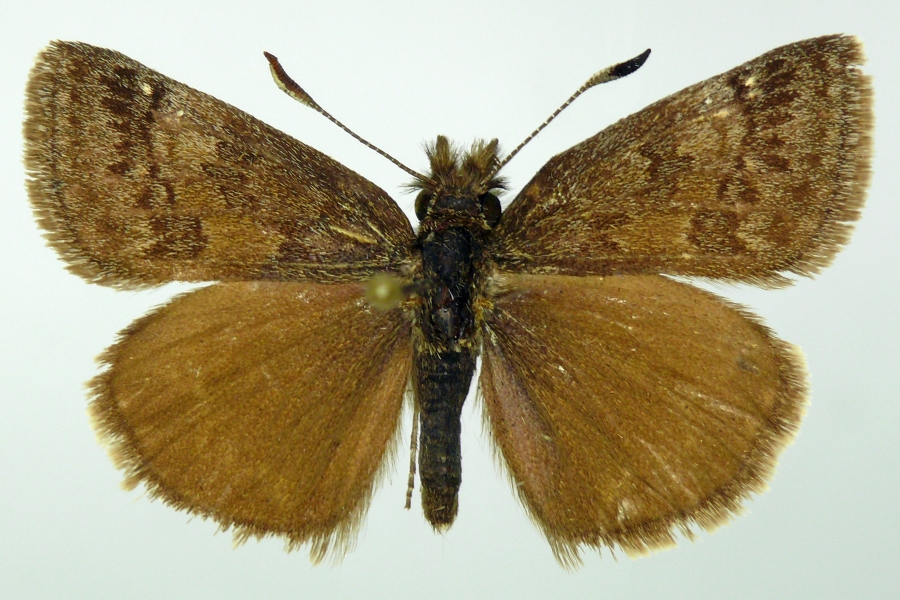
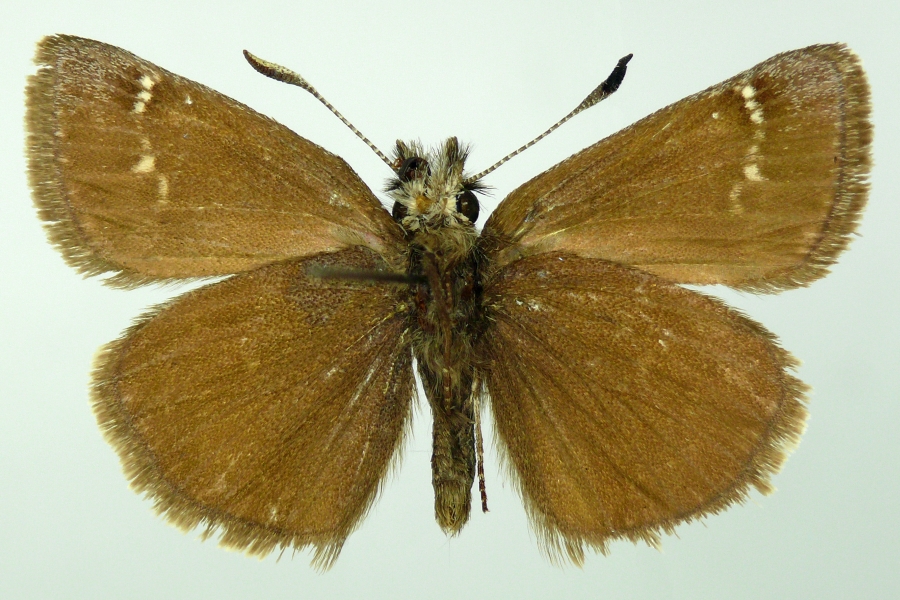
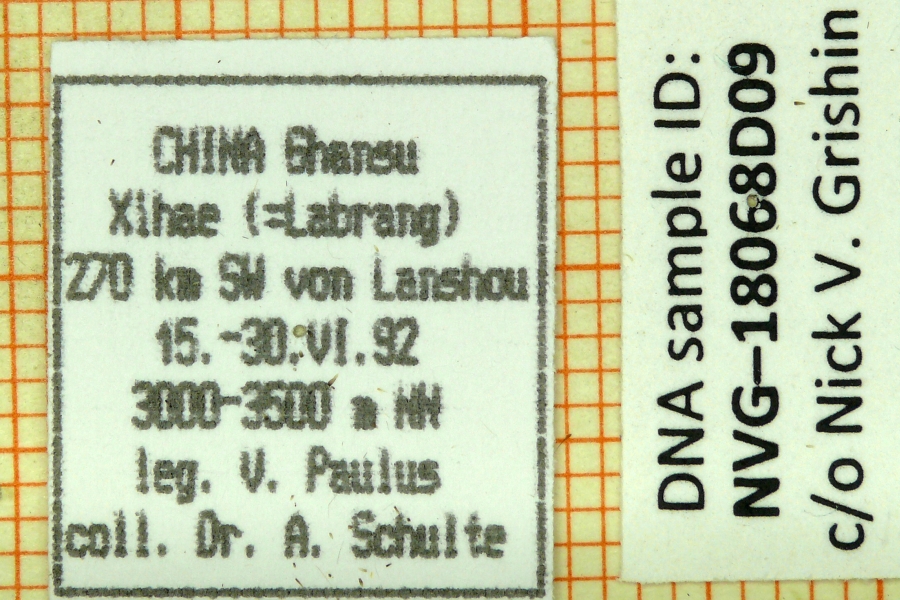

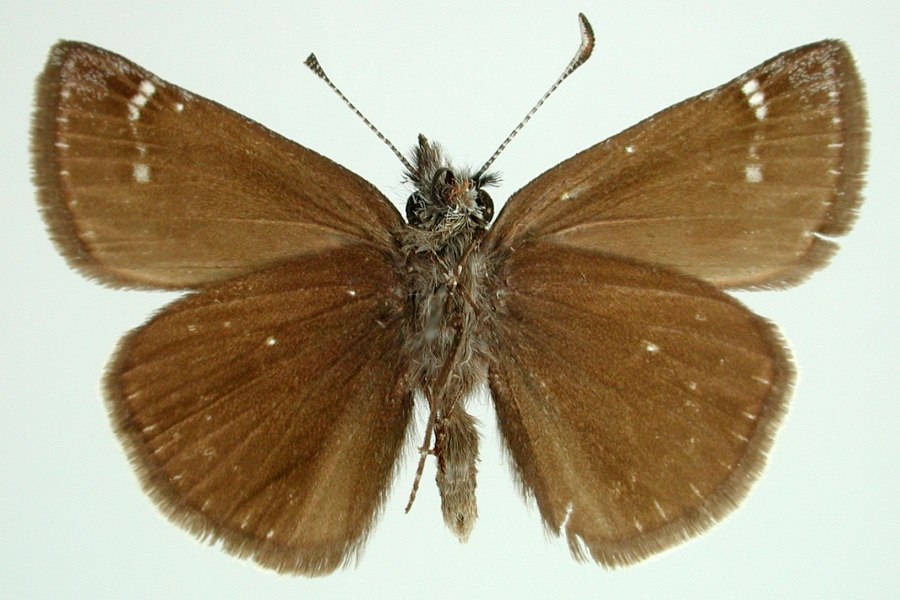


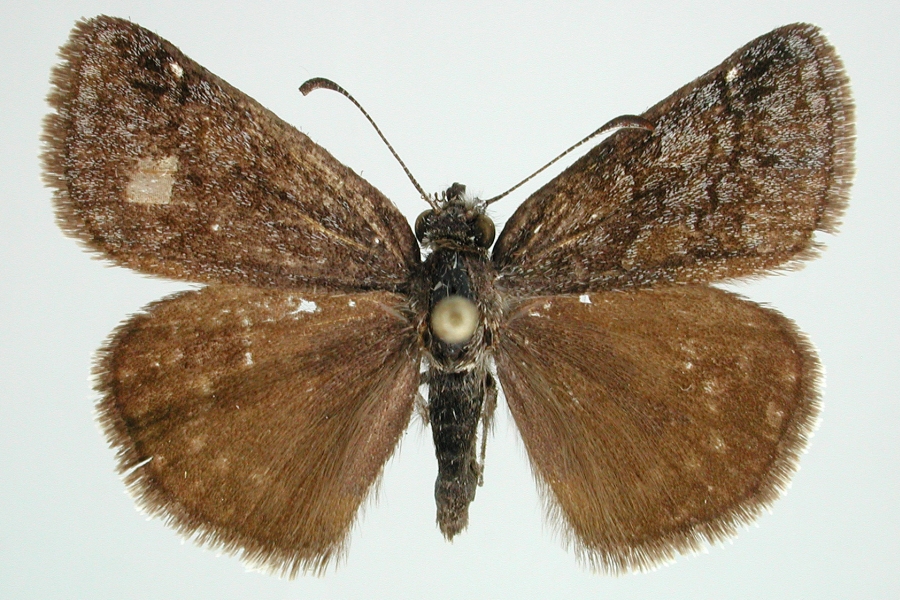


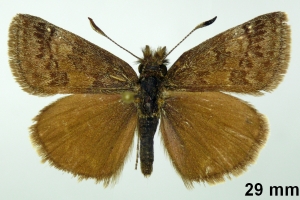
1-3: ♂, Daten siehe Etiketten (coll., det. & fot.: Ernst Brockmann, Fotos bearbeitet: Michel Kettner)
4-6: ♂, Daten siehe Etiketten (coll., det. & fot.: Ernst Brockmann, Fotos bearbeitet: Michel Kettner)
7-9: ♂, Daten siehe Etiketten (coll., det. & fot.: Ernst Brockmann, Fotos bearbeitet: Michel Kettner)
10-12: ♂, Daten siehe Etiketten (coll., det. & fot.: Ernst Brockmann, Fotos bearbeitet: Michel Kettner)
2.2. Weibchen


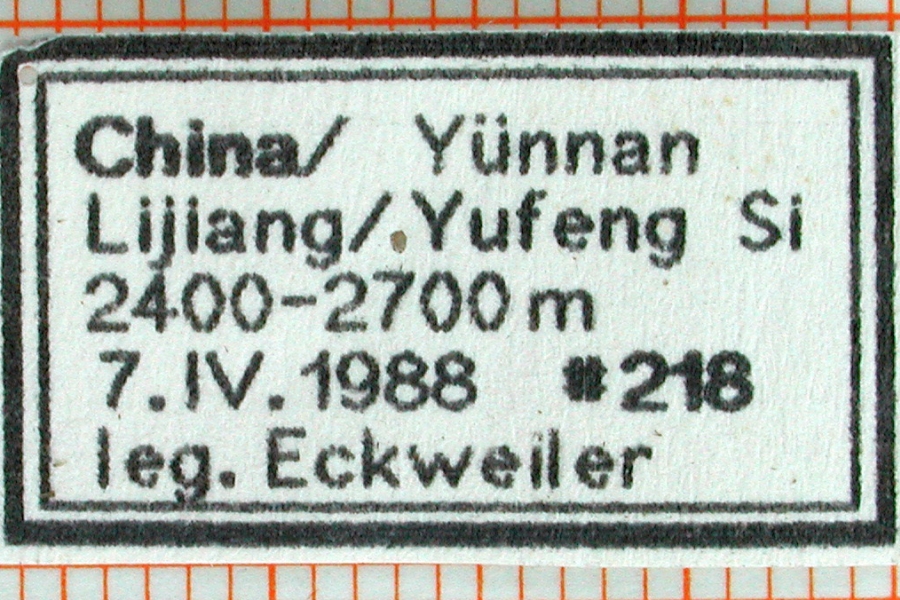
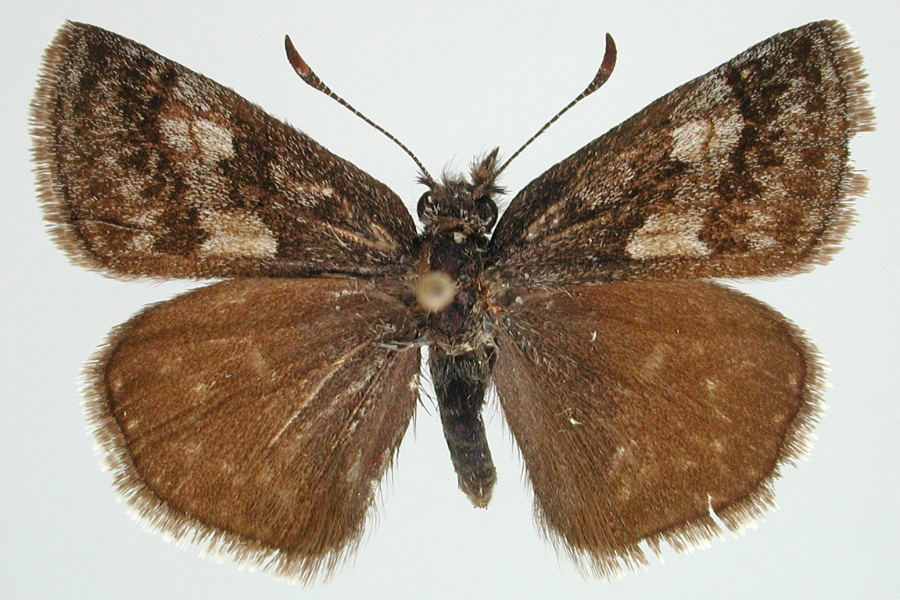


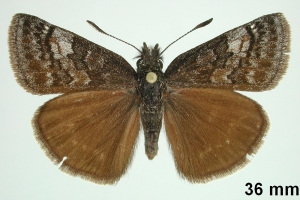
1-3: ♀, Daten siehe Etiketten (coll., det. & fot.: Ernst Brockmann, Fotos bearbeitet: Michel Kettner)
4-6: ♀, Daten siehe Etiketten (coll., det. & fot.: Ernst Brockmann, Fotos bearbeitet: Michel Kettner)
7-9: ♀, Daten siehe Etiketten (coll., det. & fot.: Ernst Brockmann, Fotos bearbeitet: Michel Kettner)
2.3. Erstbeschreibung
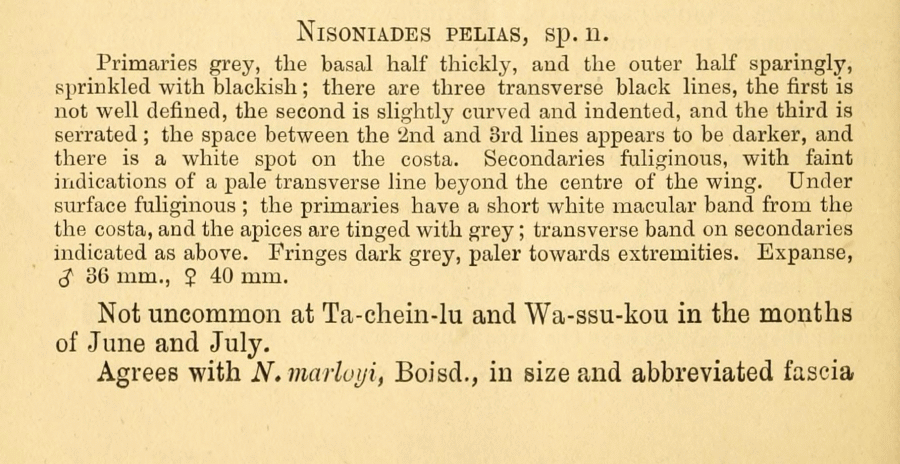
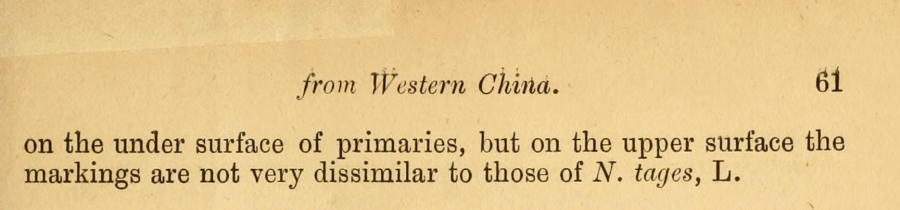
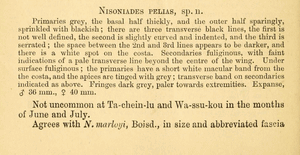
1-2: Leech (1891): 60-61 [nach Copyright-freien Scans auf biodiversitylibrary.org]
3. Weitere Informationen
3.1. Andere Kombinationen
- Nisoniades pelias Leech, 1891 [Originalkombination]
3.2. Synonyme
- Nisoniades erebus Grum-Grshimailo, 1891
3.3. Faunistik
Nach [Global Biodiversity Information Facility] kommt die Art in China, Weißrussland? und Russland vor.
Locus typicus gemäß Erstbeschreibung: Ta-chein-lu and Wa-ssu-kou.
(Autor: Michel Kettner)
3.4. Literatur
- Cao, C., Huang, S., Xu, Y., Wu, H., Chen, T., Wang, M., Da, W. & X. Fan (2019): New records and their associated DNA barcodes of the butterfly family Hesperiidae in Tibet, China. — Zootaxa 4674 (4): 426-438.
- Erstbeschreibung: Leech, J. H. (1891): New Species of Rhopalocera from Western China. — Supplement to the Entomologist 24: 57-61. — Digitalisat auf biodiversitylibrary.org: [60]