+16Kontinente:EU


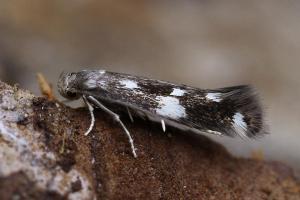
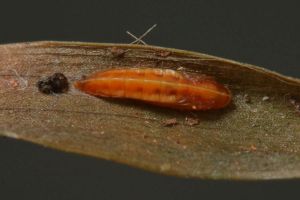
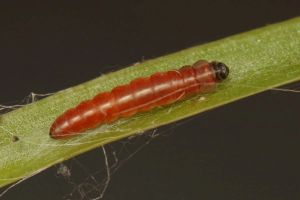
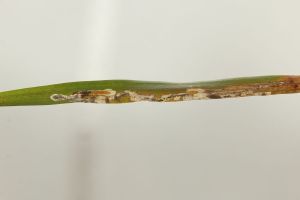
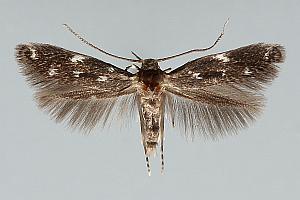
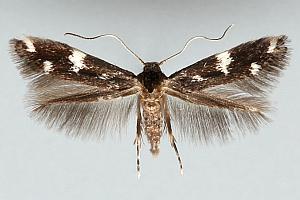
1. Lebendfotos
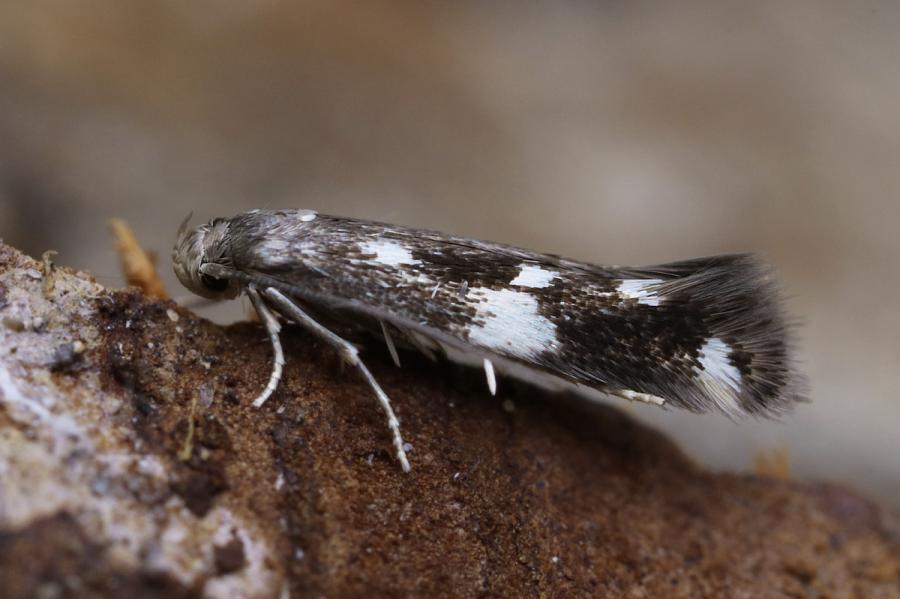
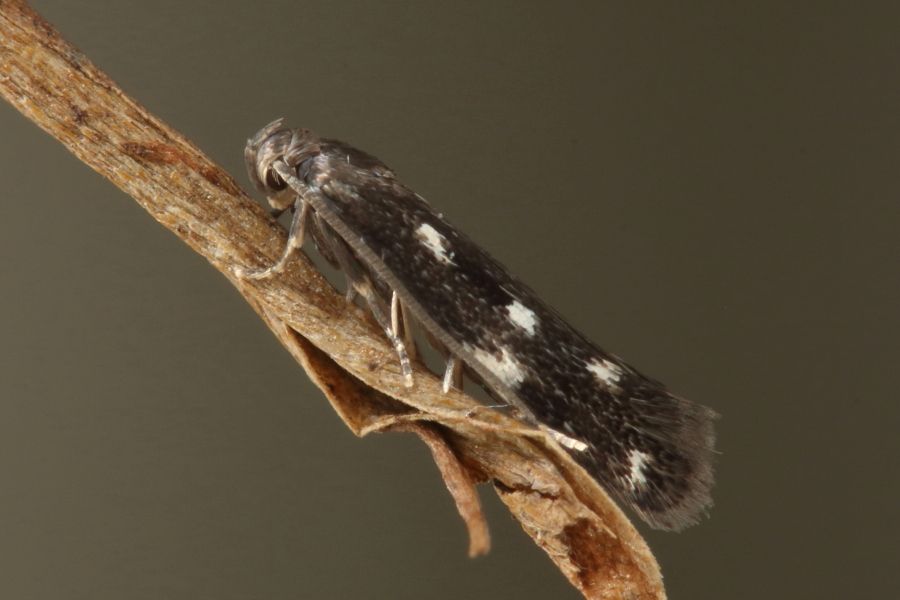
1.1. Falter
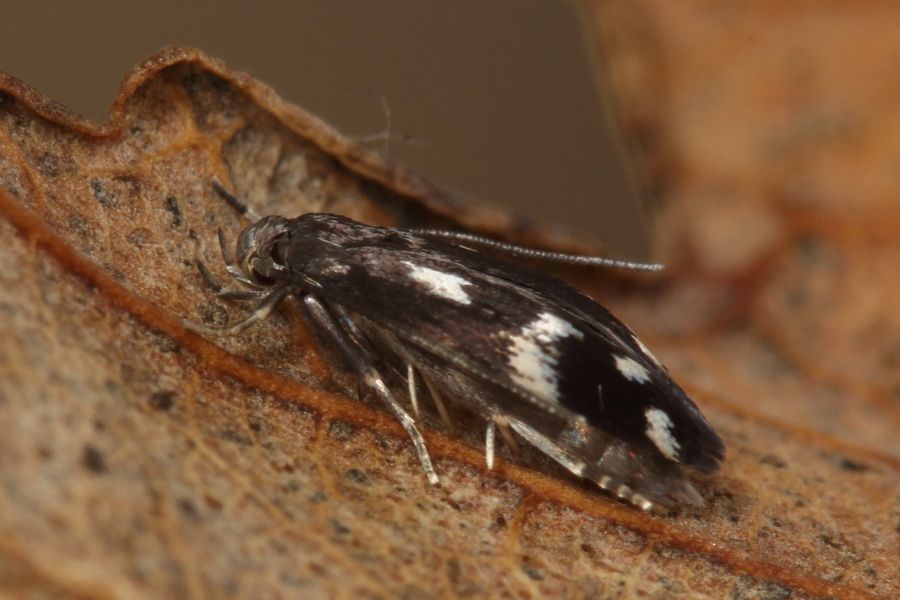
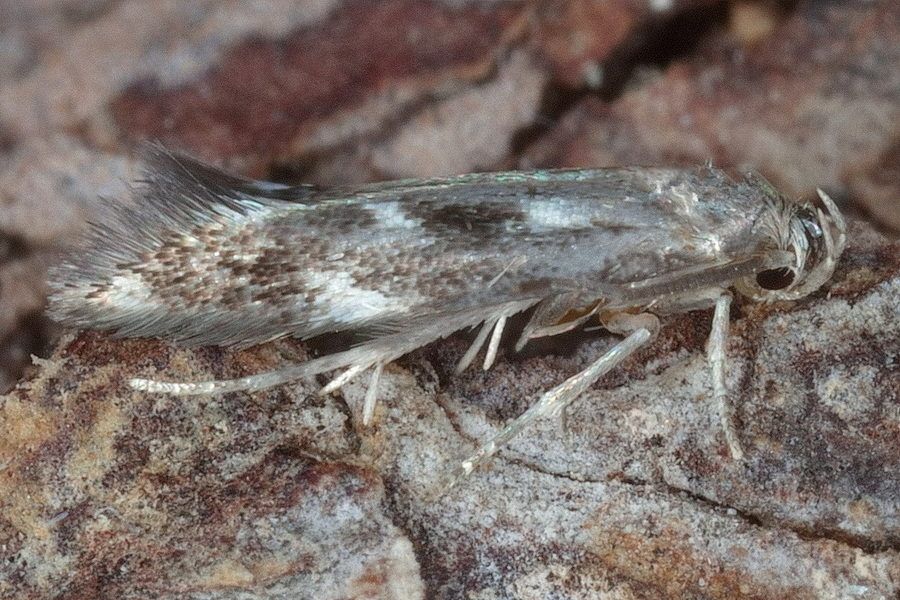
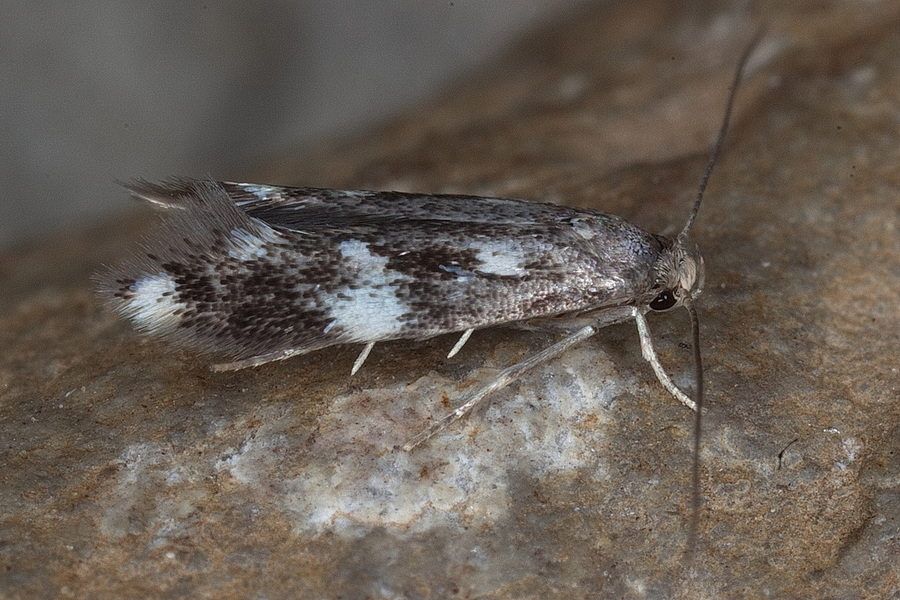
1.2. Puppe
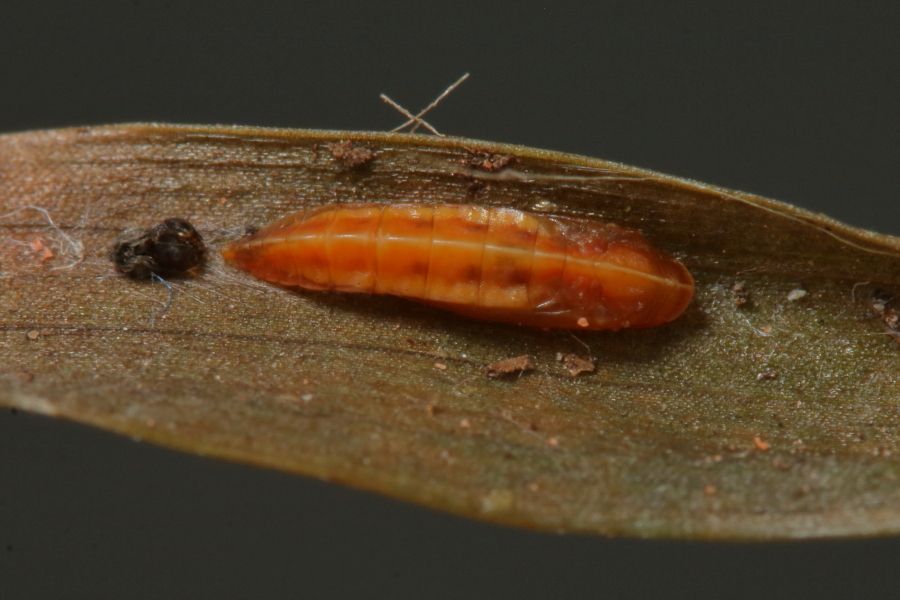
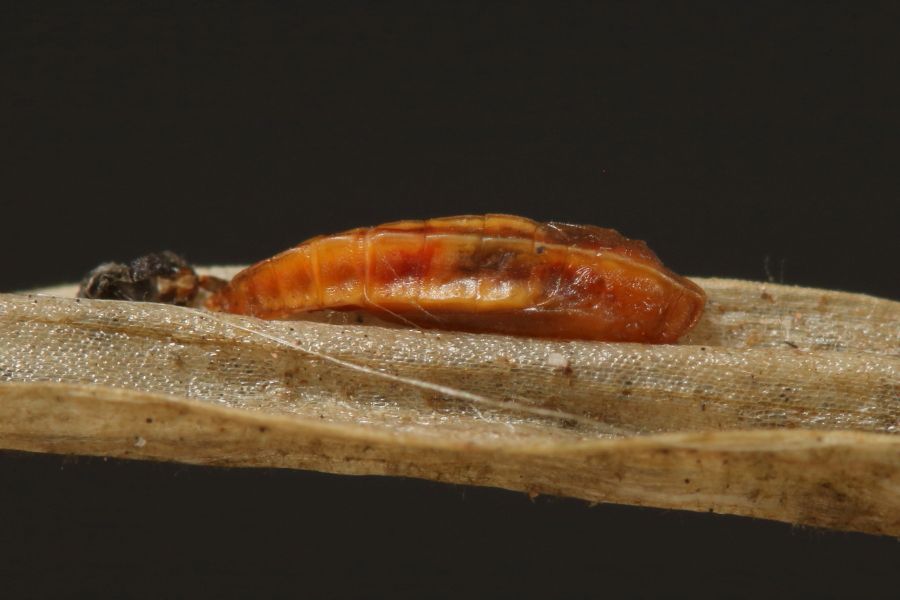
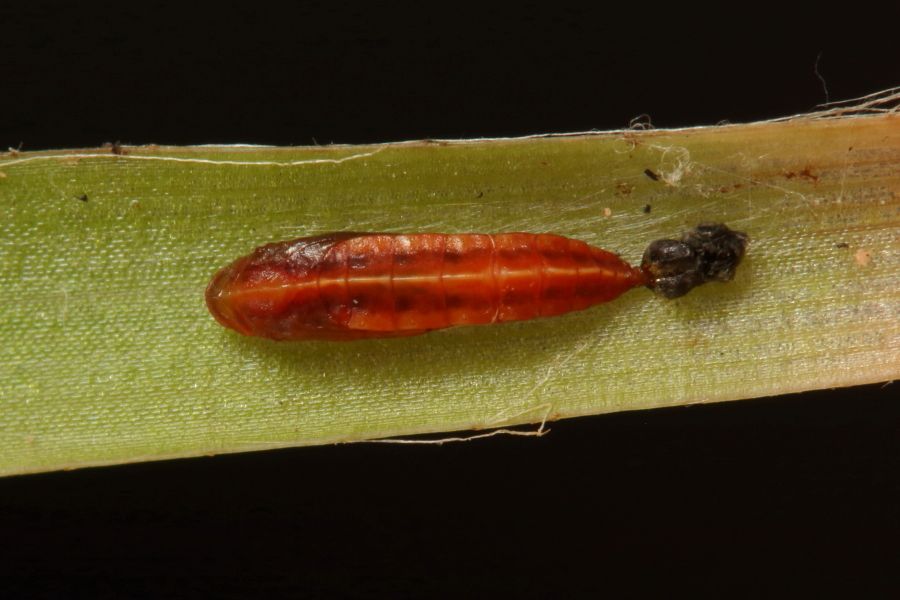
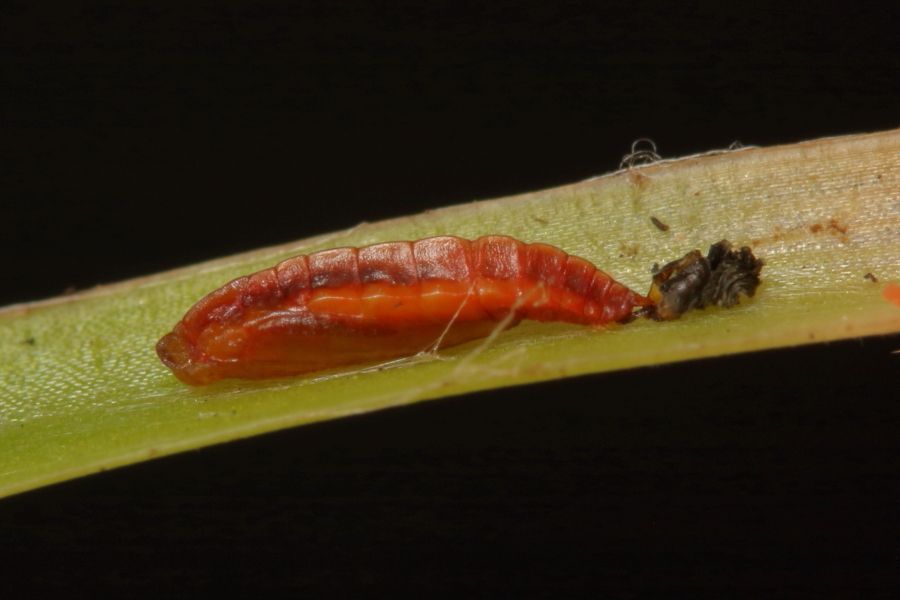
1.3. Raupe
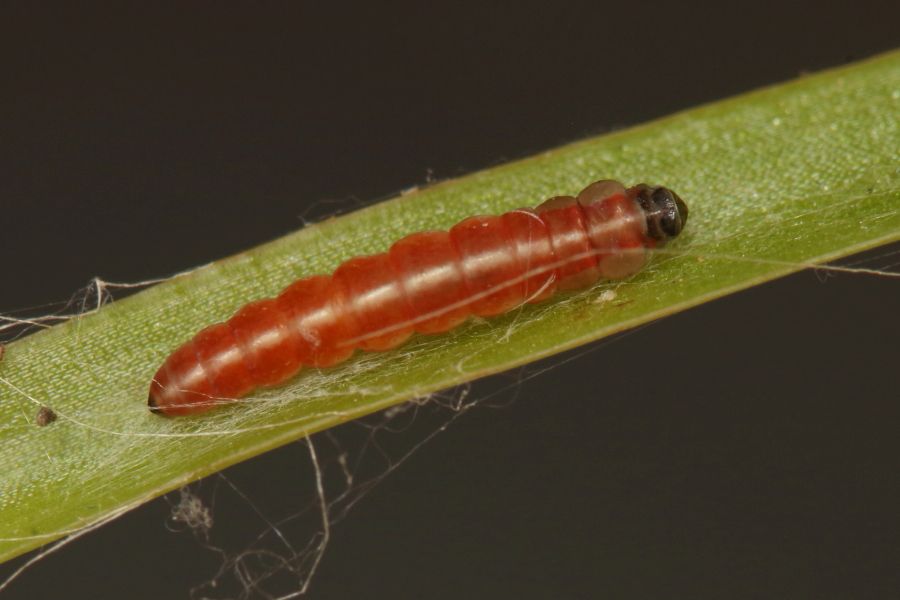
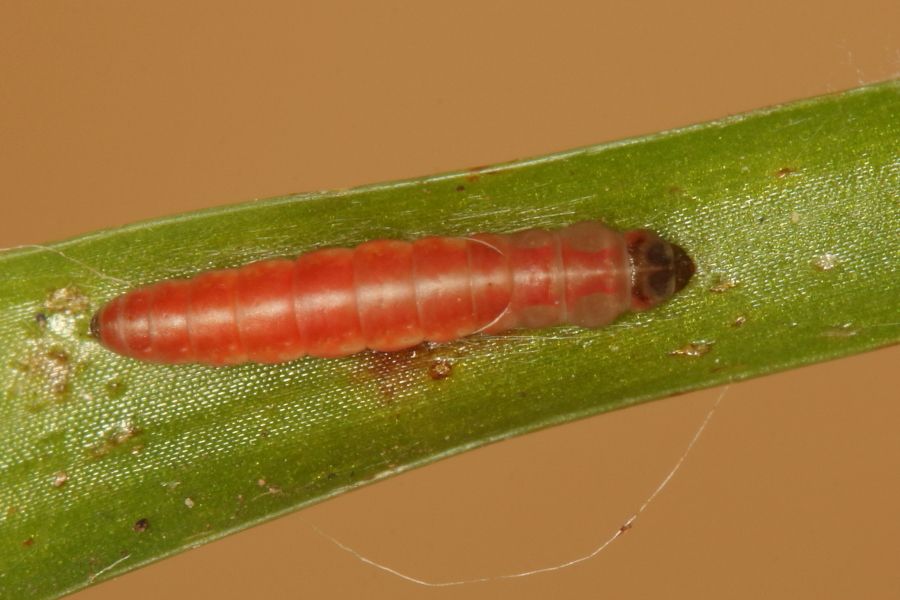
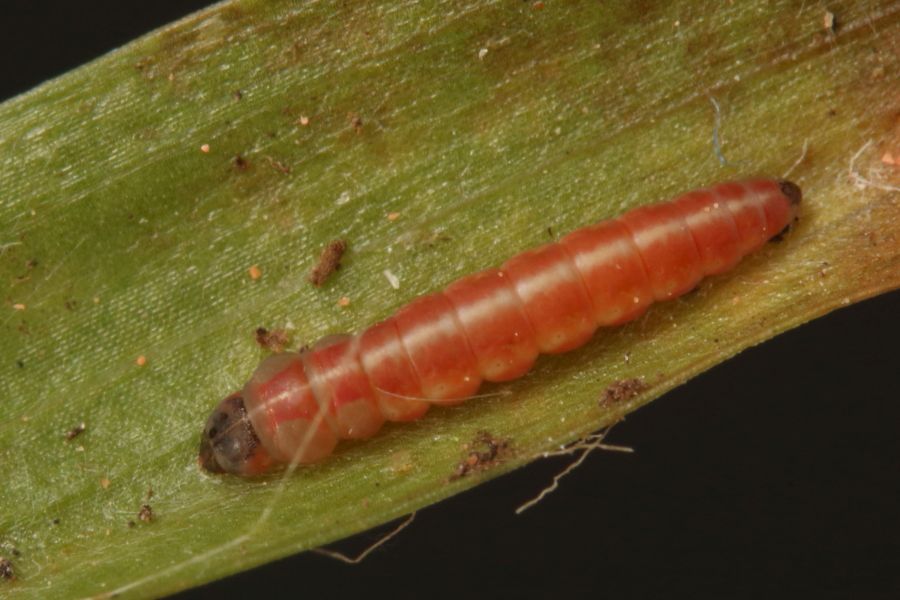

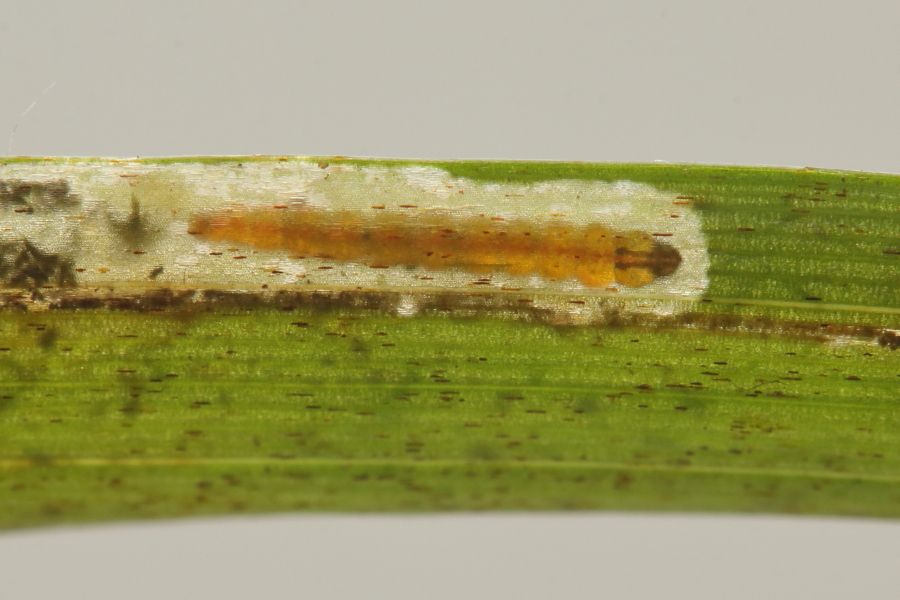
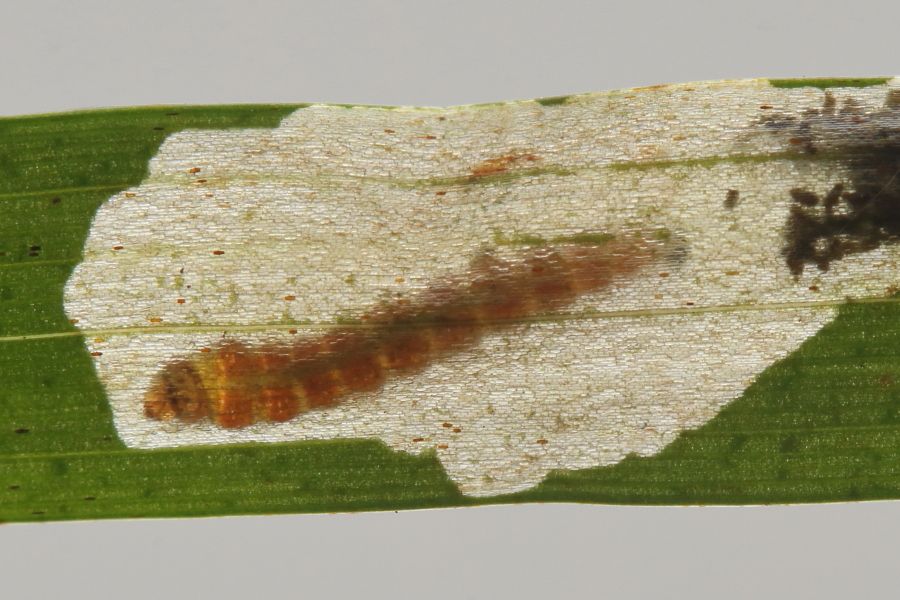
1.4. Mine
2. Diagnose
2.1. Männchen
2.2. Weibchen
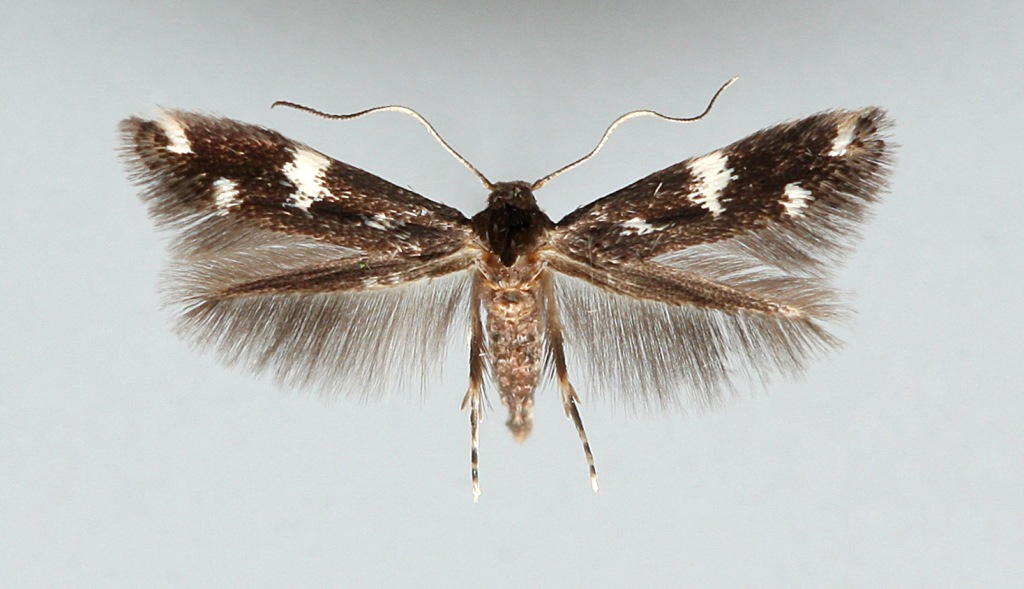
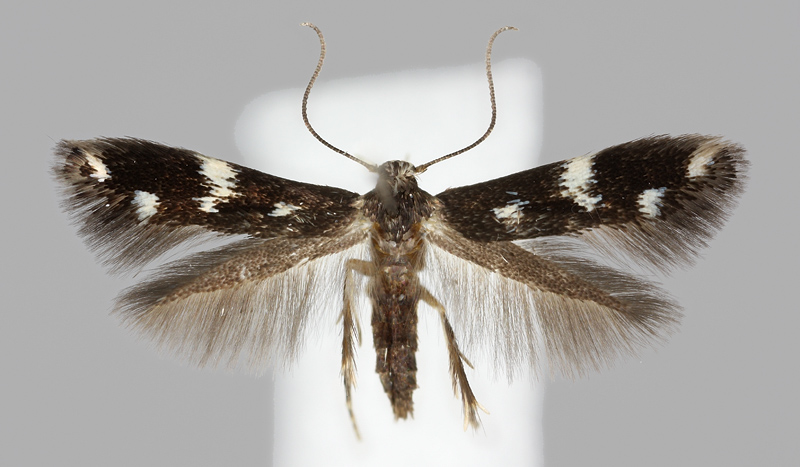
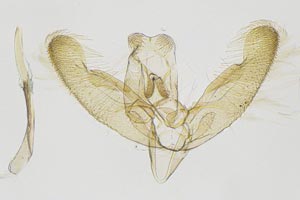
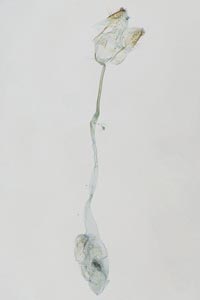
2.3. Genitalien
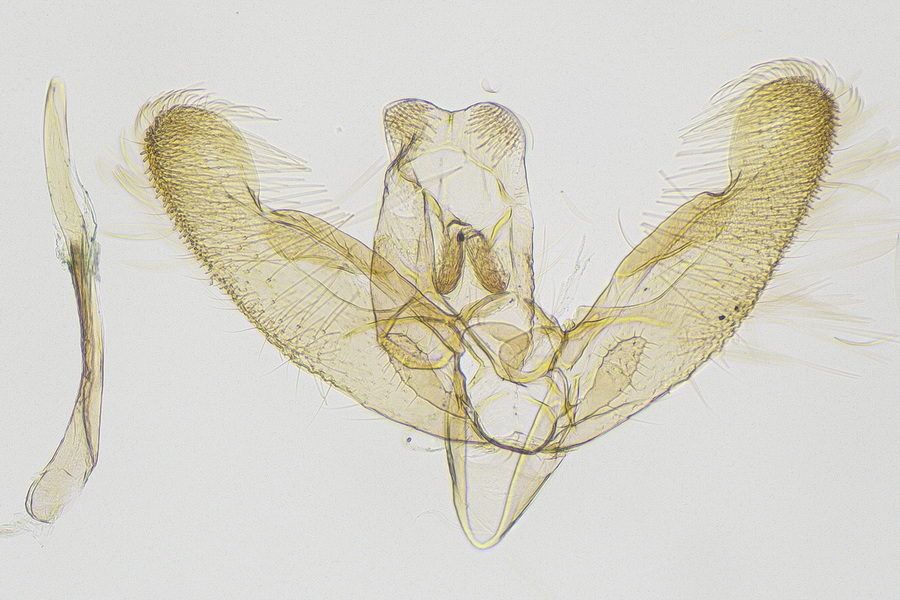
2.3.1. Männchen
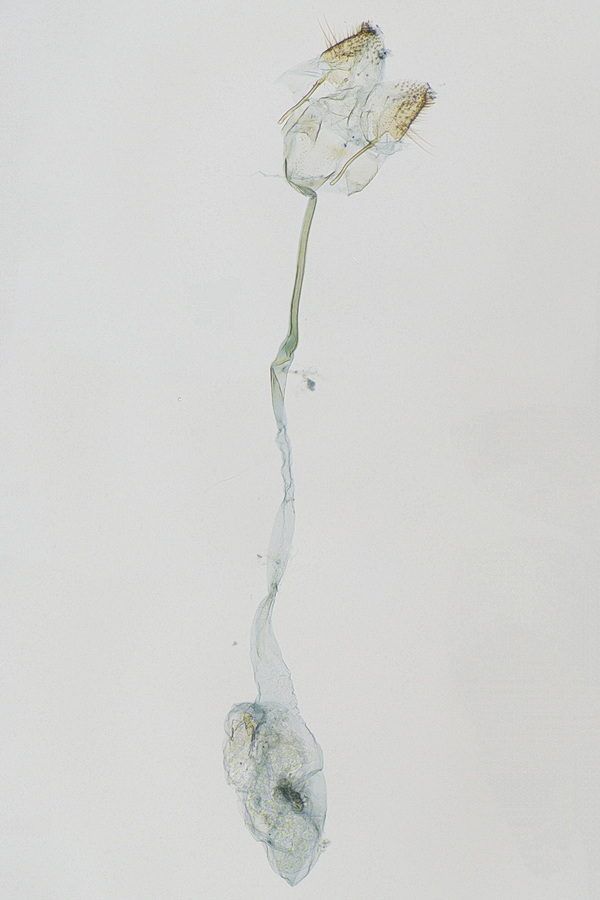
2.3.2. Weibchen

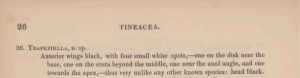
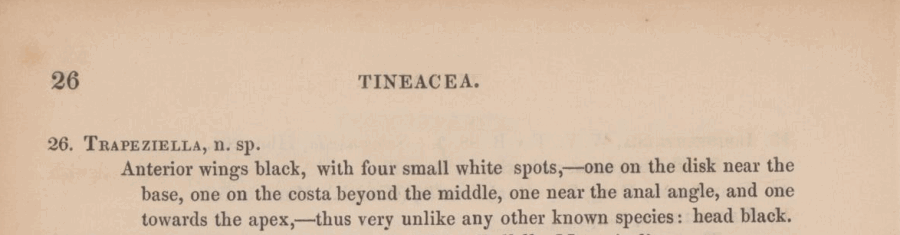
2.4. Erstbeschreibung
3. Biologie
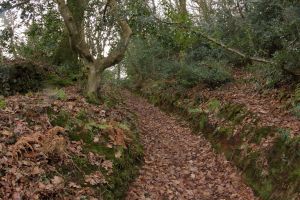
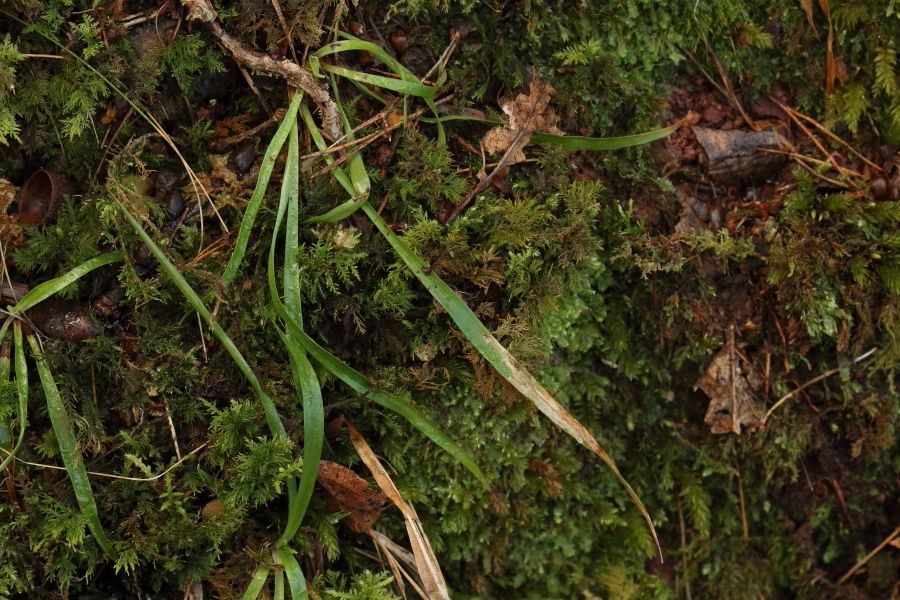
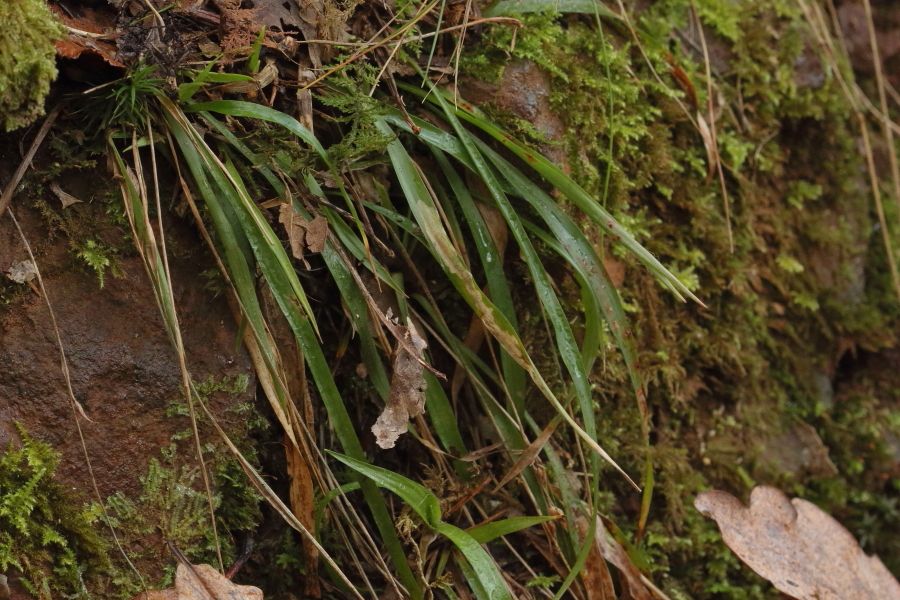
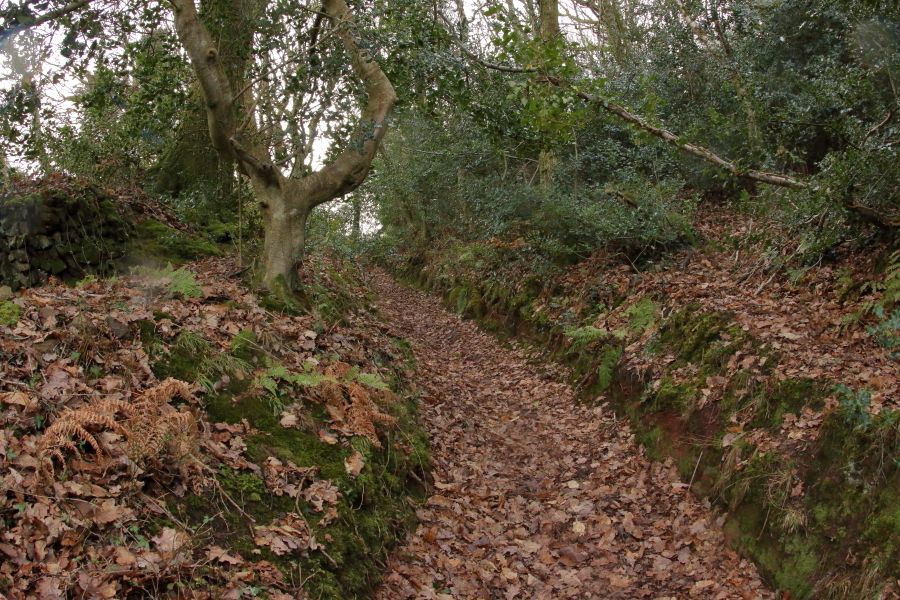
3.1. Habitat
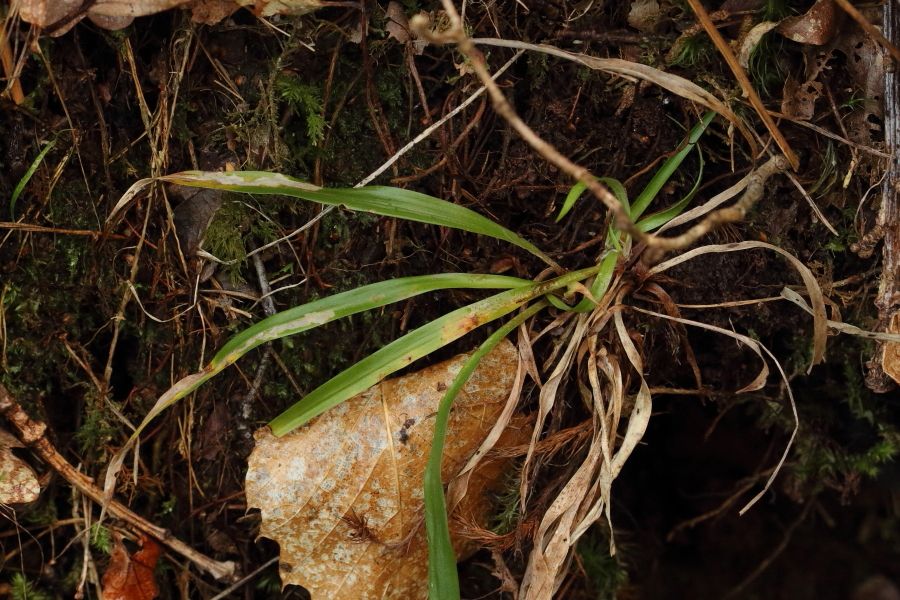
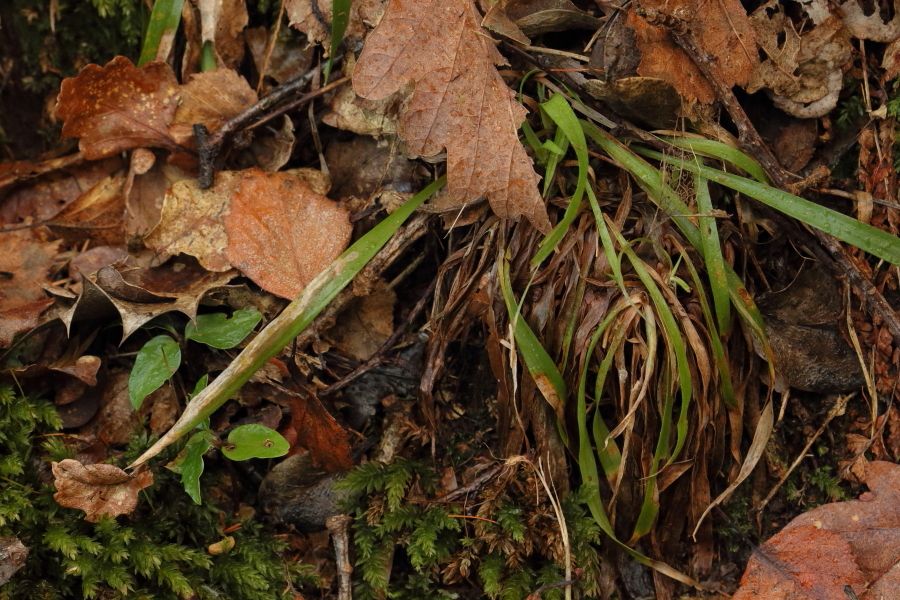
3.2. Nahrung der Raupe
- [Juncaceae:] Luzula pilosa (Behaarte Hainsimse)
- [Juncaceae:] Luzula sylvatica (Wald-Hainsimse)
- [Juncaceae:] Luzula luzuloides [= Luzula albida, Luzula nemorosa] (Weiße Hainsimse, Weißliche Hainsimse)
Hering (1891: 199) hatte berichtet: "War hier stets eine recht seltne Art, die auf dem Julo allmählig auszusterben scheint, dafür aber lokal in einiger Anzahl in der Mühlenbecker Forst wieder auftritt. Die Raupe hat in den vorjährigen, meist unter Laub verborgenen Blättern von Luzula pilosa eine verhältnißmäßig lange Erscheinungszeit, von Ende März bis nach Mitte Mai. Sie leidet ungemein an Parasiten, wie sonst noch E. Diederichsiella, apicipunctella und triatomea."
Bei Schütze (1931: 45) war dann zu lesen: "Die rote Raupe in schattigen Nadelwäldern hauptsächlich in Luzula pilosa, sehr selten Luzula nemorosa. Mine abwärts, flach, groß und breit, weißlich (Schütze)." Und Parenti & Pizzolato (2015: 545) fassten dann zusammen: "Host plants. Juncaceae: Luzula luzuloides, L. pilosa, L. sylvatica.
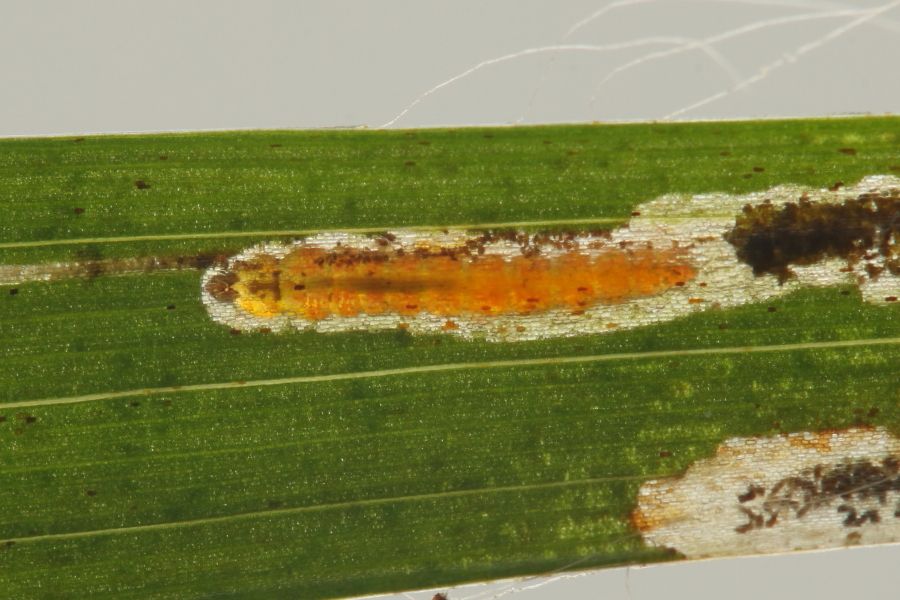
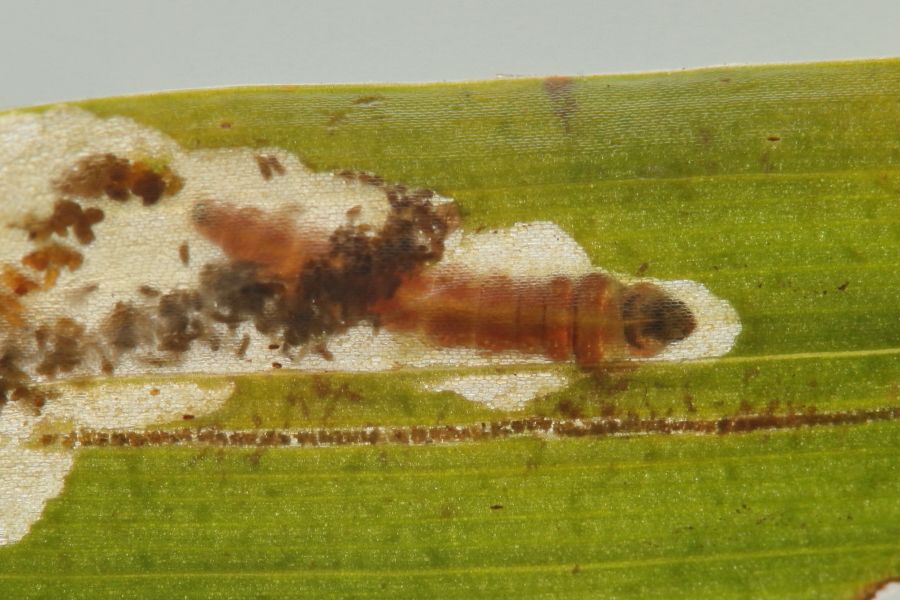
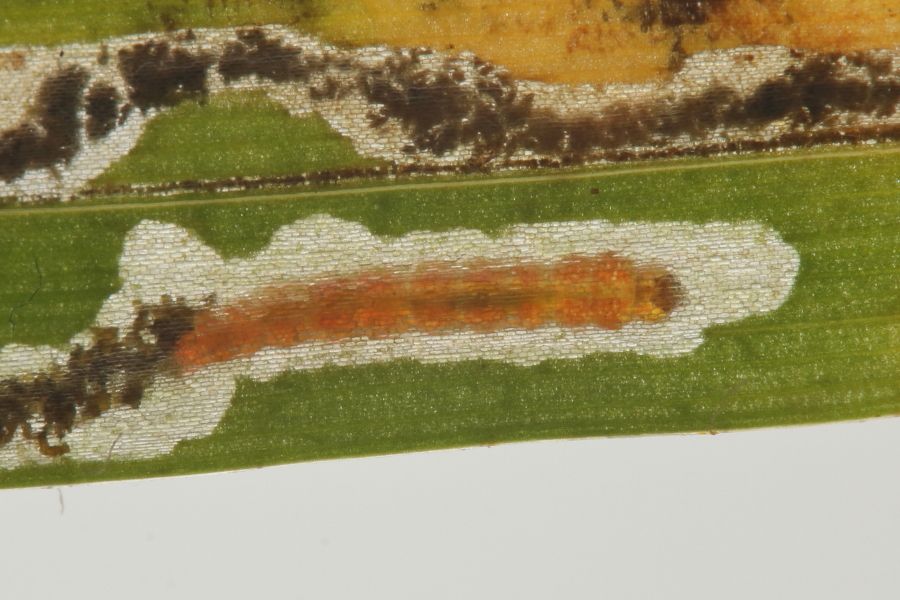
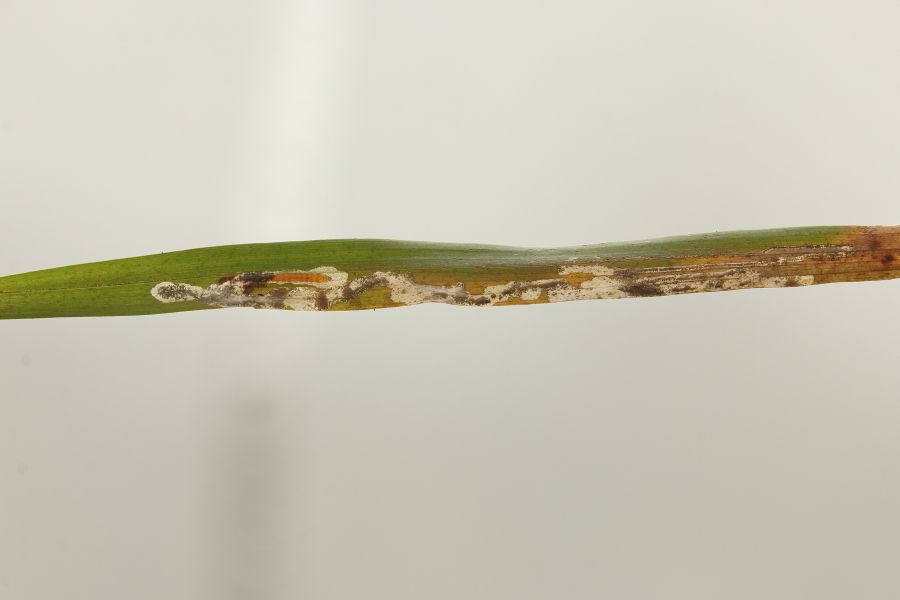
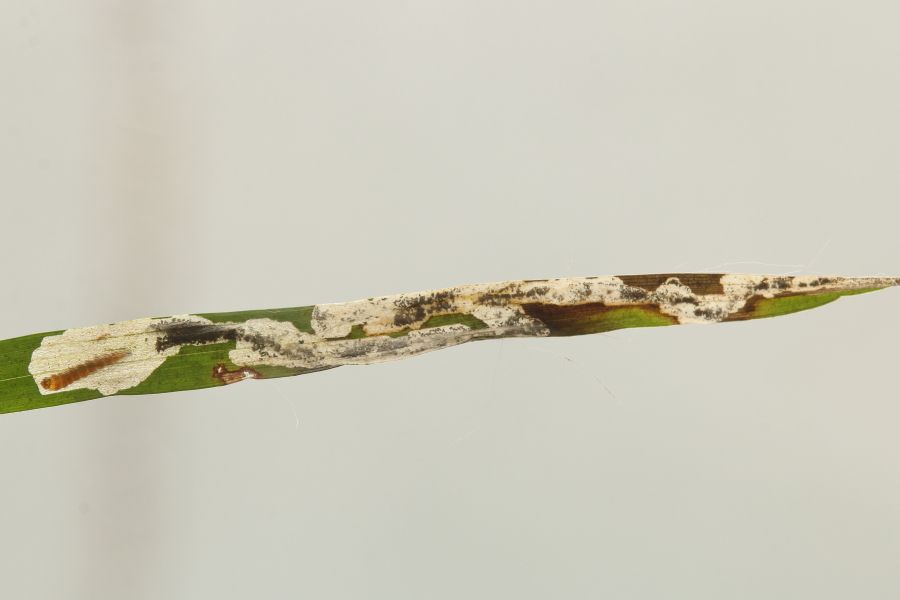
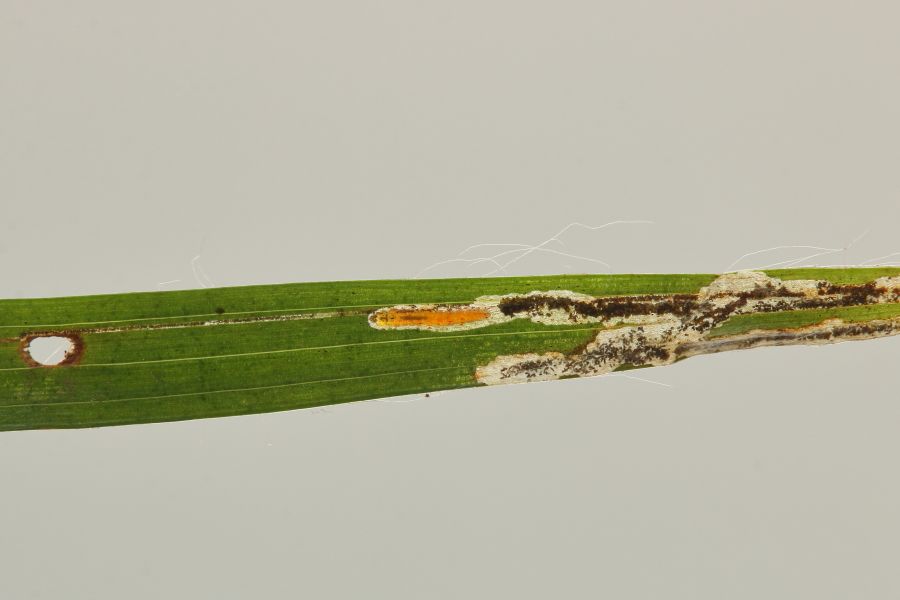
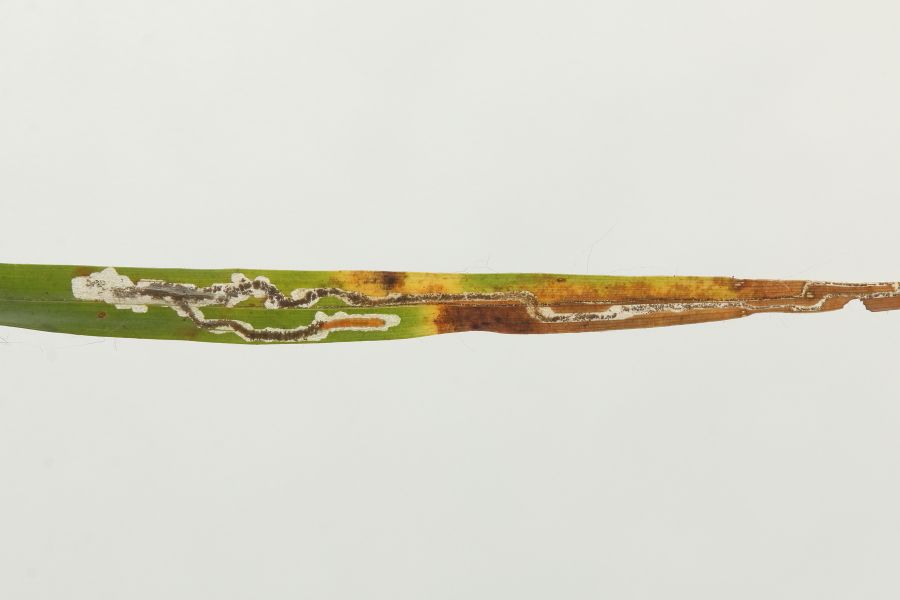
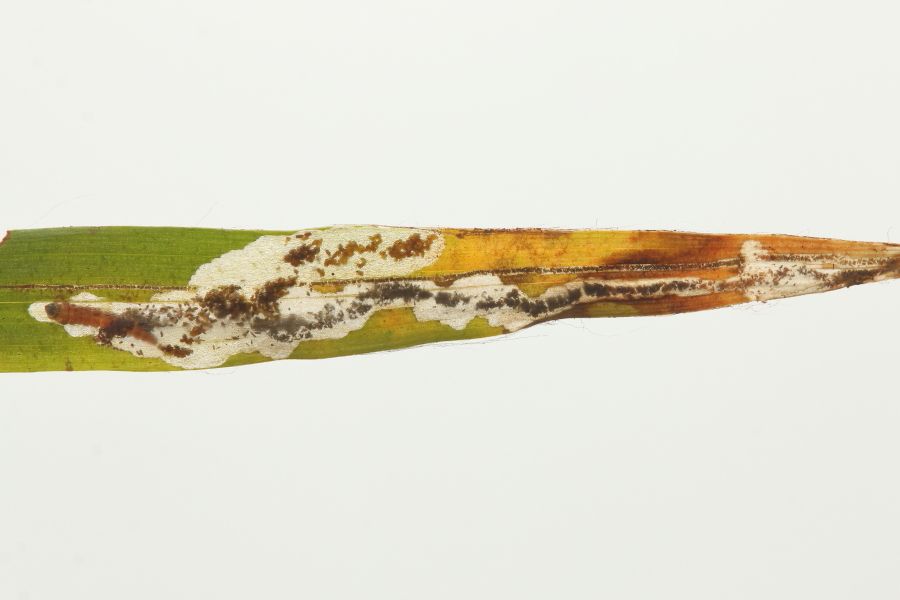
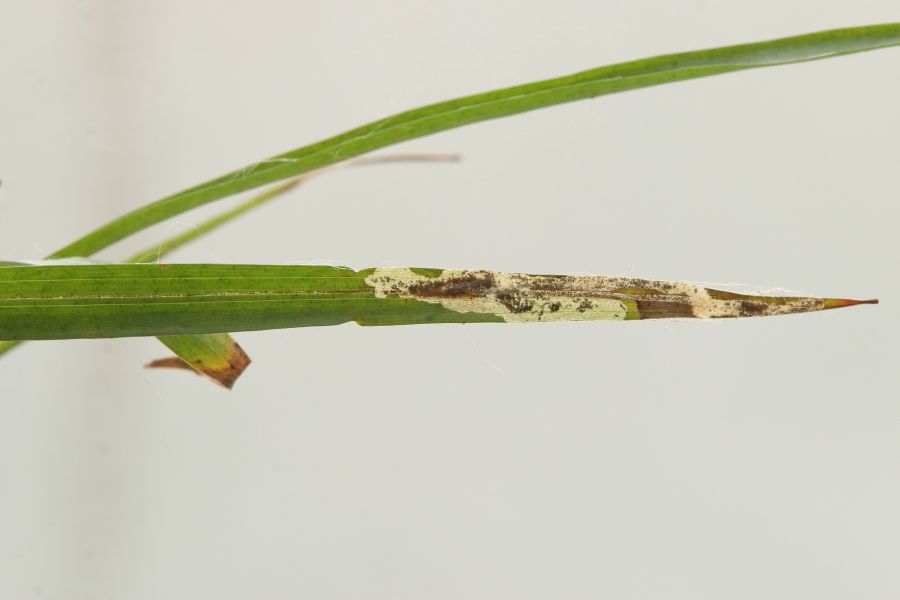
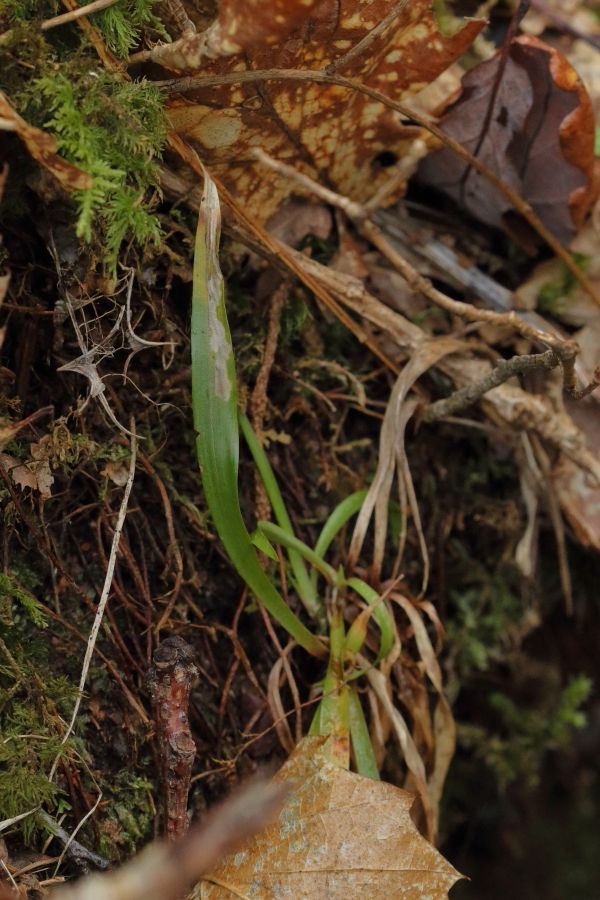
Näher studiert wurde die Art von Bland & Knill-Jones (1988) in Schottland in ihrer Studie über die Elachistidae an Luzula sylvatica. Sie starteten: "So far we have reared three species of elachistid from Luzula sylvatica in Scotland, namely Elachista regificiella, E. gleichenella and Biselachista trapeziella. As the description of the mine of B. trapeziella in L. sylvatica is incorrect in Traugott-Olsen & Nielsen (1977) and Emmet (1979), and as the three species can easily be separated by the characteristics of their mines in this plant, the following observations will help to put the record right. All three mines are under the epidermis of the leaf of Luzula sylvatica growing in deciduous woodland.". Dann folgt die Literaturkritik: "Traugott-Olsen & Nielsen (1977) reiterate Frey's description of the early stages of this species by saying "The mine starts from the tip of the leaf, and is flat and wide; whitish. The larva starts mining in the autumn and leaves this mine in the following spring in late April - beginning of May." Und weiter: "In Emmet (1979) the description has become modified to "In a broad, flat gallery; mines a fresh leaf after hibernation."". Dann folgen die eigenen Beobachtungen: Neither of theses descriptons is suitable for B. trapeziella in L. sylvatica and would more closely fit the mines of E. gleichenella in this plant (see above). However, these descriptions are acceptable for B. trapeziella mining Luzula pilosa - an alternative foodplant from which it has also been reared in southern Scotland. Its main pabulum, however, appears to be Luzula sylvatica." Dann folgt die Minenbeschreibung: "In our experience the mine of B. trapeziella in L. sylvatica is only rarely at the leaf-tip, being usually halfway down the leaf-blade and well clear of the winter / spring leaf-tip dieback. The autumn mine typically consists of a long straigt slender gallery following one of the leaf-veins. The mine is no wider than the larva and the frass is scattered evenly down the centre of the gallery The larva may mine either towards or away from the leaf-tip. In the spring the mine is continued as a broad elongated gallery with the frass irregularly placed." Die Autoren zeigen dann drei Beispiele, die die Variationsbreite veranschaulichen sollen.
(Autor: Erwin Rennwald)
4. Weitere Informationen
4.1. Andere Kombinationen
- Biselachista trapeziella (Stainton, 1849) [Kombination mit Biselachista zuletzt bei Parenti & Pizzolato (2015)]
4.2. Taxonomie
Hinweis: Die Ausgliederung von Biselachista aus der Gattung Elachista blieb auch nach dem Erscheinen der Arbeit von Parenti & Pizzolato (2015) heftig umstritten. Wesentlicher Grund war, dass dann Elachista als Paraphylum übrig geblieben wäre, also in mehrere weitere Gattungen aufgespalten werden müsste. Selbst der gewählte Gattungsname Biselachista ist aber wohl nicht prioritätsberechtigt. Hier war also von vorneherein mit einer Rückkehr zu Elachista zu rechnen. Dazu äußert sich Kaila (2019: 6) so: “If subgenus Elachista was further split to preserve, e.g., the established generic name Biselachista Traugott-Olsen & Nielsen or Cosmiotes Clemens, up to ten new genera would need to be established, including several new ones and acceptance of the paraphyly of the E. bifasciella species group. [...] The present author sees such splitting pointless and causing more harm than good.” Er kehrt in seinem "annotated catalogue of Elachistinae of the World" daher wieder zu Elachista zurück.
(Autor: Erwin Rennwald)
4.3. Literatur
- Bland, K.P. & R.P. Knill-Jones (1988): The Elachistid species (Lepidoptera: Elachistidae) mining Luzula sylvatica in Scotland. — Entomologist's Gazette, 39 (8): 277-281. [zum PDF auf researchgate.net]
- Hering, E. (1891): Ergänzungen und Berichtigungen zu F. O. Büttner's Pommerschen Mikrolepidopteren (Stett. ent. Ztg. 1880 pag. 383-473). — Entomologische Zeitung, Stettin, 52: 135-227. Stettin. [Digitalisat auf biodiversitylibrary.org]
- Kaila, L. (2019): An annotated catalogue of Elachistinae of the World (Lepidoptera: Gelechioidea: Elachistidae). — Zootaxa 4632 (1): 1-231. [PDF (open access) auf mapress.com]
- Parenti, U. & F. Pizzolato (2015): Revision of European Elachistidae. The genus Biselachista Traugott-Olsen & Nielsen, 1977, stat. rev. (Lepidoptera: Elachistidae). — SHILAP Revista de Lepidopterología 43 (172): 537-575. [Zugang zum PDF auf redalyc.org]
- SCHÜTZE (1931): 45
- Erstbeschreibung: Stainton, H. T. (1849): An attempt at a systematic catalogue of the British Tineidæ & Pterophoridæ: I-IV, 1-32. London (John van Voorst).
4.4. Informationen auf anderen Websites (externe Links)
- [BOLD Systems]
- [svenska_fjarilar]
- [UKMoths] dort unter Biselachista trapeziella zu finden.
- [insects.fi]