+28Kontinente:EU


1. Lebendfotos
1.1. Falter

2. Diagnose
2.1. Männchen

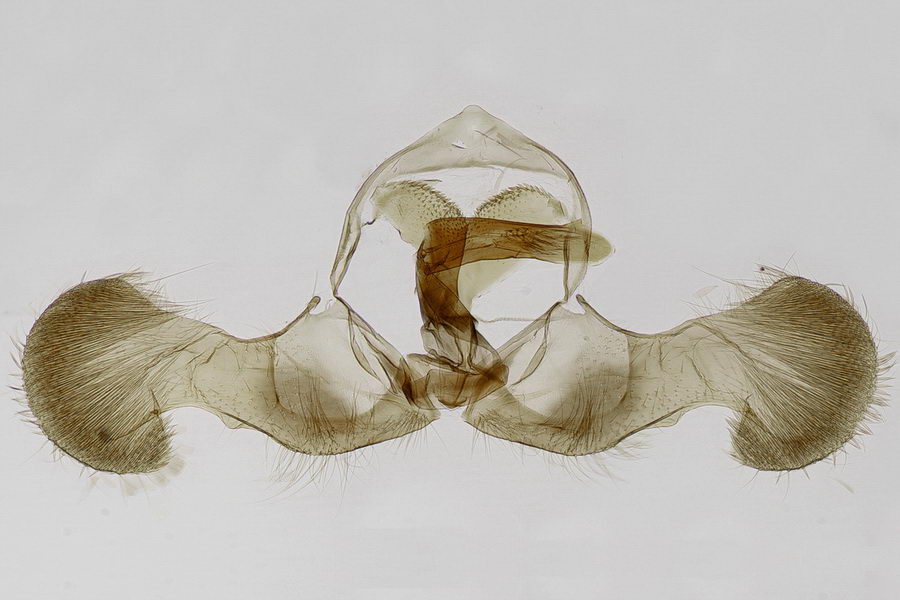
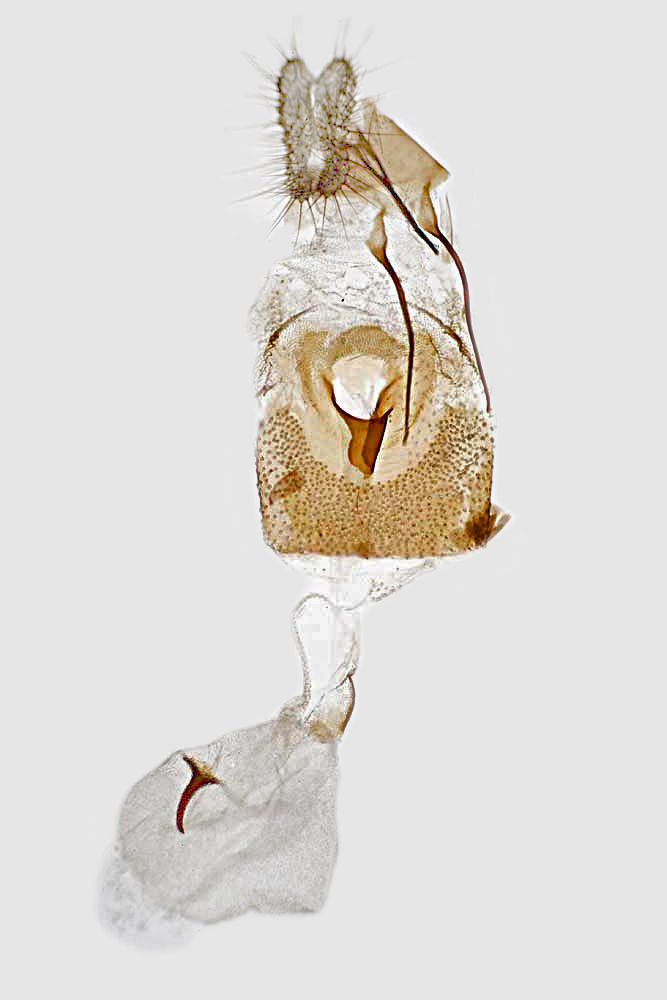
2.2. Genitalien
2.2.1. Männchen
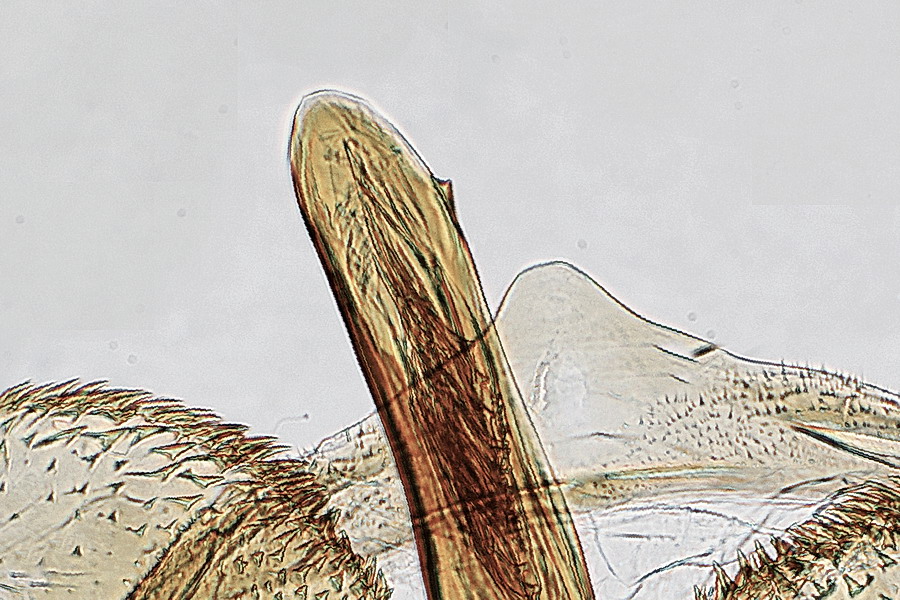
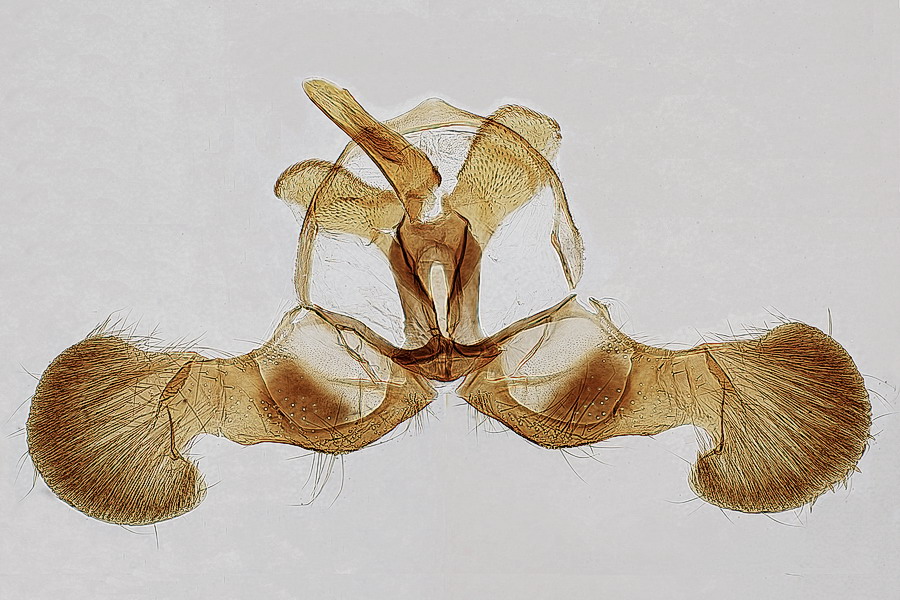
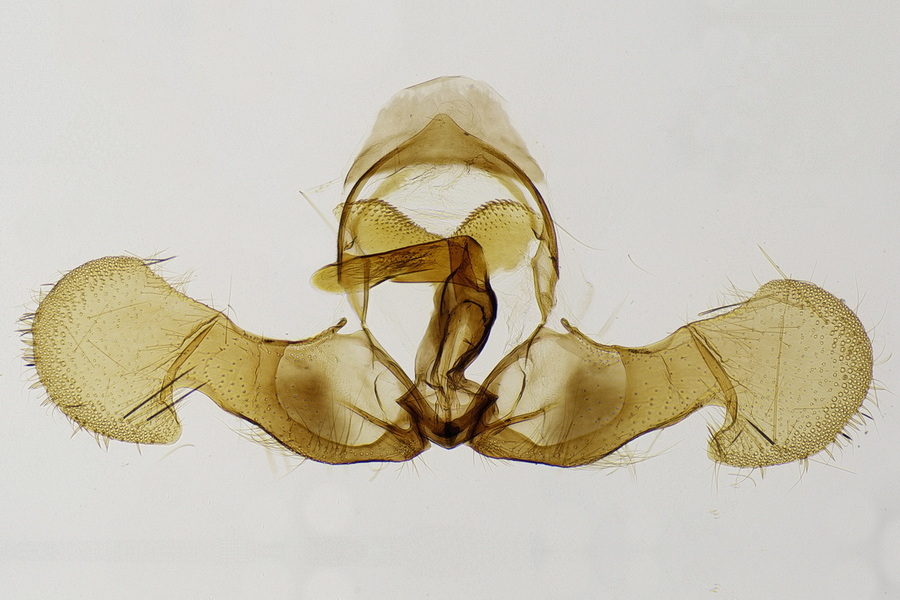
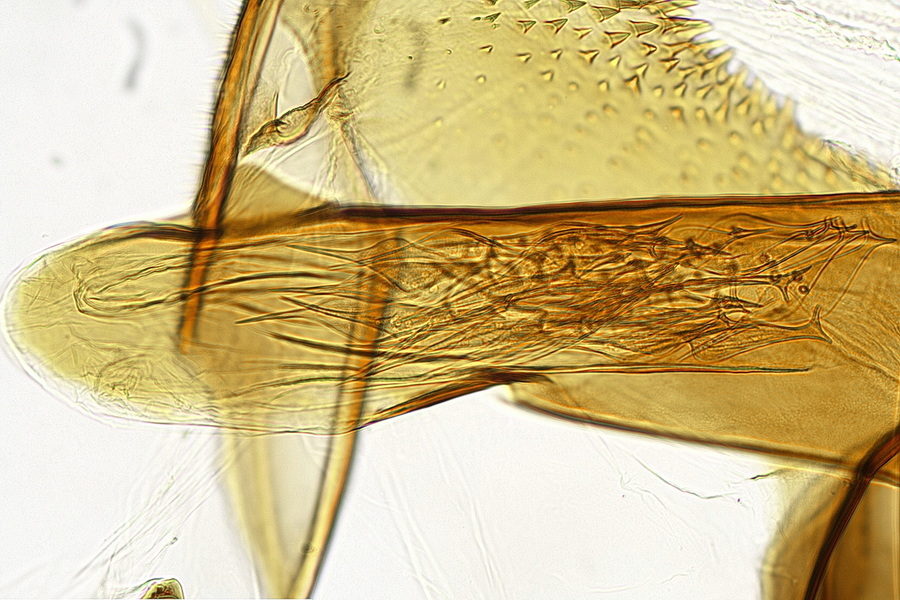
2.2.2. Weibchen
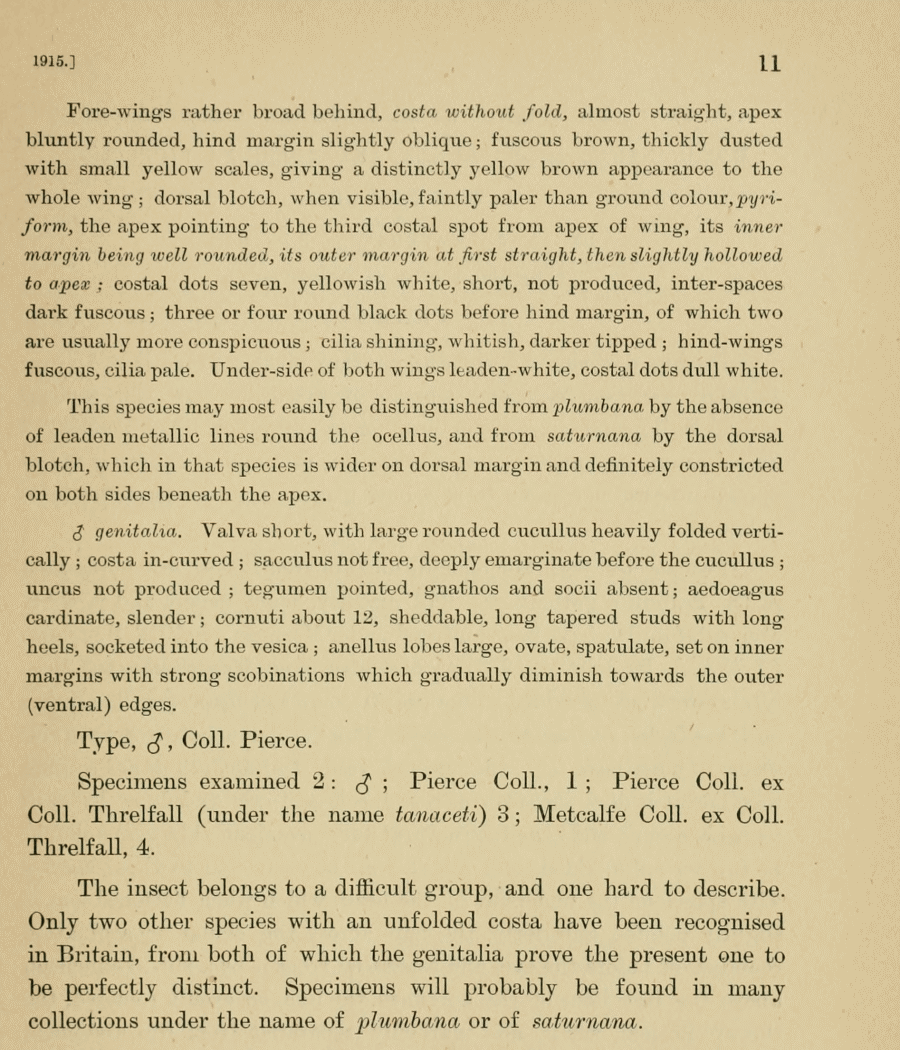
2.3. Erstbeschreibung

3. Biologie
3.1. Nahrung der Raupe
- [Asteraceae:] Leucanthemum vulgare agg. [= Chrysanthemum leucanthemum] (Margerite)
- [Asteraceae:] Tanacetum vulgare [= Chrysanthemum vulgare] (Rainfarn)
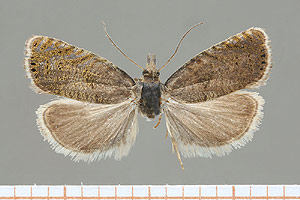
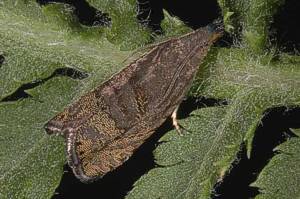
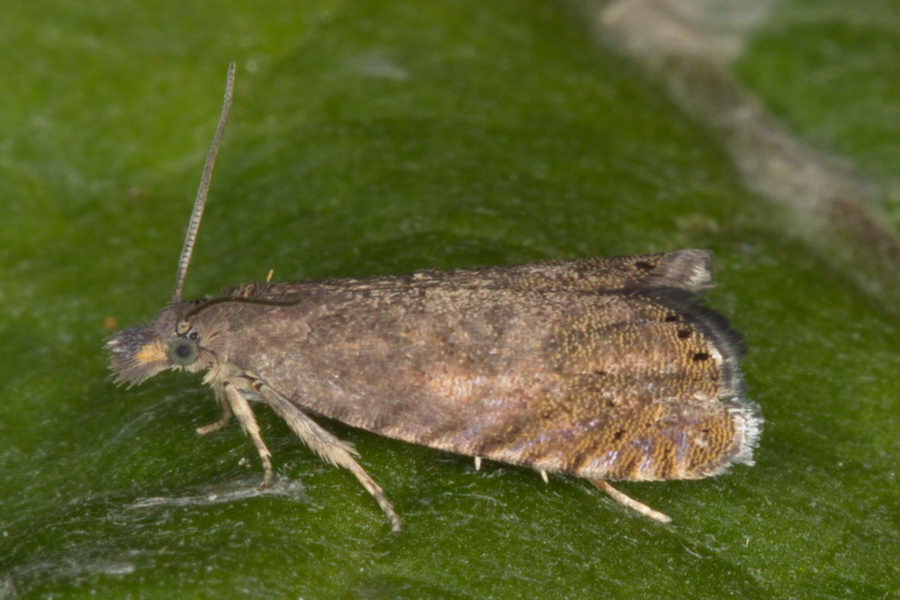
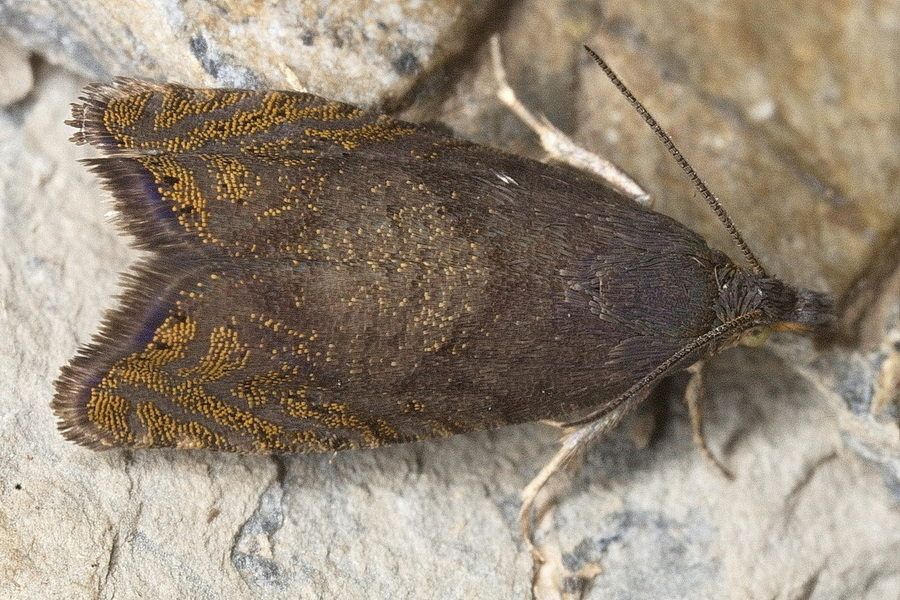
Razowski (2001: 99) führt als einzige Raupennahrungspflanzen Wurzeln von Chrysanthemum leucanthemum an. Leucanthemum vulgare agg. ist sicher die wichtigste Eiablagepflanze, wobei hier sicher auch Leucanthemum ircutianum mit dazugehört. R. Bryner züchtete den oben gezeigten Falter von Fribourg aus einer Raupe im Wurzelstock von Tanacetum vulgare. Die Nutzung von T. vulgare überrascht aber doch etwas und ist wahrscheinlich als Ausnahme anzusehen.
Die Pflanzenliste bei Muus (2026: 417) ist deutlich länger: "W: Margriet (Leucanthemum vulgare), grootbloemige margriet (L. x superbum, oneoorde margriet (L. ircutianum) en kleine margriet (Mauranthemum paludosum). De soort stapt incidenteel over op on der andere boerenwormkruid (Tanacetum vulgare) en stinkende kamille (Anthemis cotula)." Als Quelle für den Rainfarn wird obiger Lepiforums-Eintrag genannt, als Quelle für die anderen Pflanzen der Aufatz von Stutz et al. (2021). Stutz et al. (2021) hatten in einer umfangreichen Studie versucht, das Potenzial von D. aeratana zur Bekämpfung der dort neophytischen Leucanthemum vulgare für Nordamerika und Australien abzuschätzen. Dazu führten sie verschiedene Tests durch: "No-Choice Larval Development Tests" ergaben, dass 11 der 74 getesteten Asteraceen von L1-Raupen angenommen wurden: "All of these plants belong to the tribe Anthemideae. Larvae were found on all of the tested Shasta daisy (L. × superbum) cultivars. [...] A few larvae were also found on the North American native species Matricaria discoidea D.C. and M. occidentalis Greene, on the Australian native species Cotula cotuloides (Steetz) Druce, on the South African variety C. vulgaris var. vulgaris, which was tested in place of the Australian variety australasica, on the medicinal plants Matricaria chamomilla L., and Tanacetum parthenium (L.) Sch.-Bip., on the minor ornamental species Ismelia carinata (Schousboe) Sch.-Bip., Leucanthemella serotina (L.) Tzvelev, and Mauranthemum paludosum (Poir.) Vogt & Oberprieler, as well as on the introduced weed Anthemis cotula L. (Table 1)." Doch die Einschränkung folgte unmittelbar: "Complete development to adult was observed on several Shasta daisy cultivars, on A. cotula, L. serotina, and on T. parthenium. All other non-target species that supported partial larval development senesced before development could be completed and only 3rd or 4th instar larvae and no 5th instar larvae were recovered. On M. discoidea larvae were only found in plants dissected in August, but not in plants dissected in September of the same year." Bemerkenswert: Tanacetum vulgare wurde in diesem Experiment überhaupt nicht angenommen ! Bei "Multiple-Choice Oviposition and Larval Development Tests in Field Cages" ergab sich eine nur kleine Liste von Pflanzen, in denen später Raupen gefunden wurden: "In the remaining tests, larvae were found on 33–100% of the exposed L. vulgare plants, on 25% of the M. paludosum (creeping daisy) plants, and on single plants of I. carinata, L. serotina, and M. occidentalis (Table 2)." Und "Multiple-Choice Oviposition and Larval Development Tests under Open-Field Conditions" - bei der die Falter wenige Meter von den Pflanzen freigelassen wurden - ergab eine weitere Einengung des genutzten Spektrums: "In the open-field tests where individual plants of target and non-target species were randomly arranged (2014–2019, Figure 1c), six times more larvae were found on L. vulgare rosettes than on the simultaneously exposed L. vulgare with stems and nine times more than on L. × superbum ‘Silver Princess’ [...] Larvae found on L. × superbum ‘Silver Princess’ were on average 35% lighter compared to those found on L. vulgare [...] and while all of the larvae found on L. vulgare rosettes were in their fourth instar, 75% of the larvae from L. × superbum ‘Silver Princess’ were still in their third instar [...]. Two larvae were also found on one M. paludosum plant, but no larvae were found on any of the other nine non-target species." Daraus ist abzuleiten, dass Gartenformen von Margeriten wahrscheinlich nicht geeignet sind, Populationen aufrecht zu erhalten. Und konkrete Angaben aus dem echten Freiland fehlen bislang zu allen diesen Gartenpflanzen ganz.
(Autor: Erwin Rennwald)
4. Weitere Informationen
4.1. Andere Kombinationen
- Lipoptycha aeratana Pierce & Metcalfe, 1915 [Originalkombination]
4.2. Literatur
- Muus, T. (2026): Handboek Motten: Alle Microvlinders van Nederland en België. [Deel 1 & Deel 2]. — 788 S.; Utrecht (KNNV Uitgeverij).
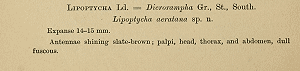
- Erstbeschreibung: Pierce, F. N. & J. W. Metcalfe (1915): Descriptions of three new species of British Tortricidae. — The Entomologist's Monthly Magazine 51: 8-11. London (Gurney & Jackson).
- Razowski, J. (2001): Die Tortriciden (Lepidoptera, Tortricidae) Mitteleuropas. Bestimmung - Verbreitung - Flugstandort - Lebensweise der Raupen. — 319 S.; Bratislava.
- Razowski, J. (2003): Tortricidae (Lepidoptera) of Europe, Vol. 2: Olethreutinae. — Bratislava (Slamka).
- Stutz, S., Clerck-Floate, R. de, Hinz, H.L., McClay, A., McConnachie, A.J. & U. Schaffner (2021): Host Range and Impact of Dichrorampha aeratana, the First Potential Biological Control Agent for Leucanthemum vulgare in North America and Australia. — Insects, 12 (438): 1-22. https://doi.org/10.3390/insects12050438. [zum PDF-Download auf researchgate.net]