+31Kontinente:ASAF


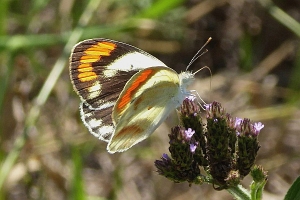
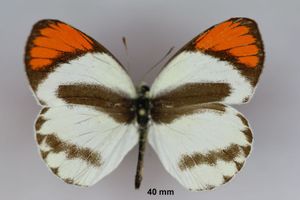
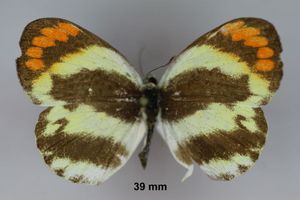
1. Lebendfotos
1.1. Ssp. omphale
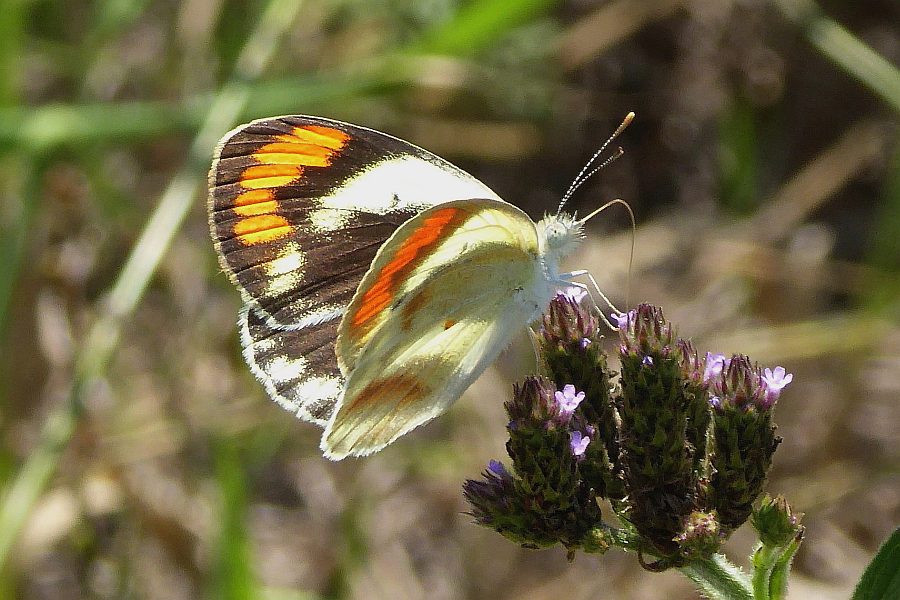

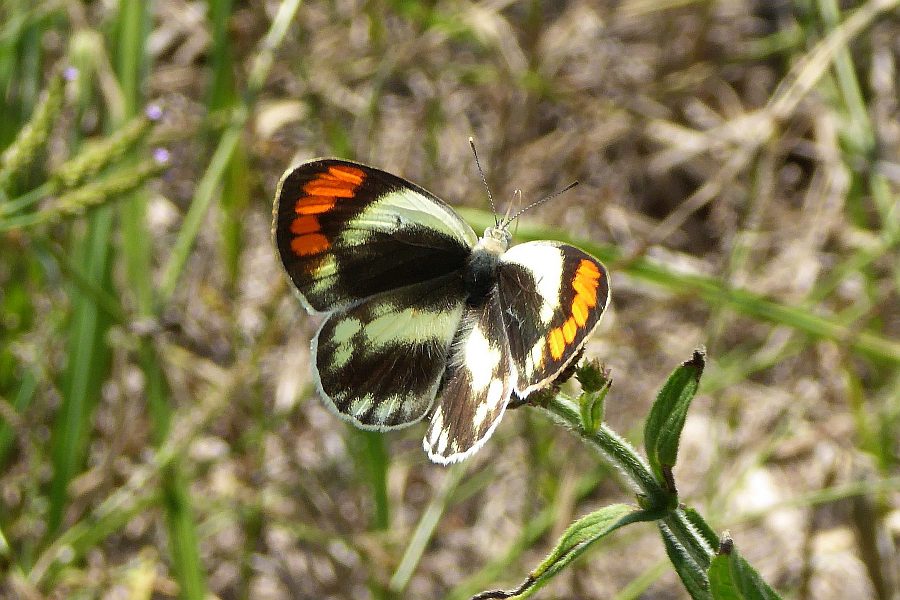
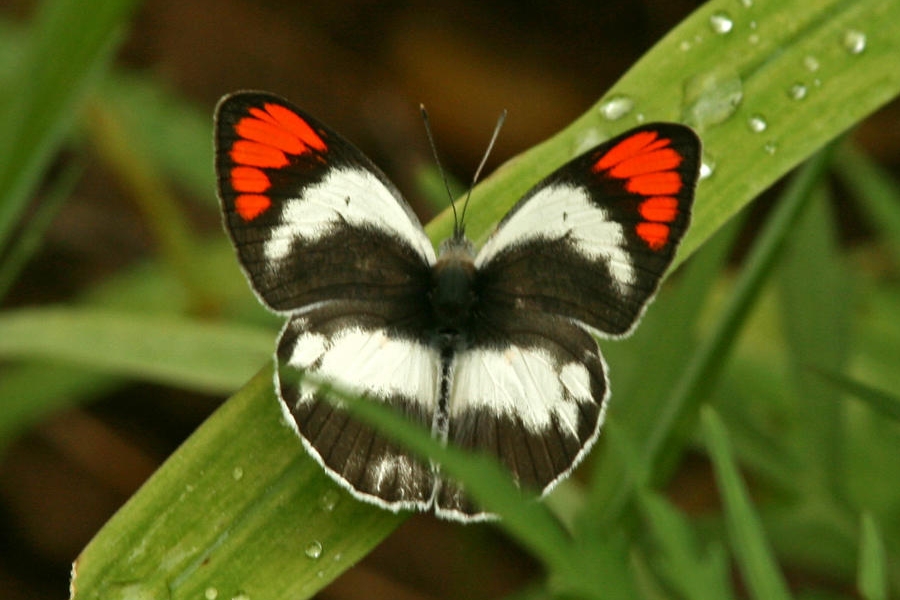
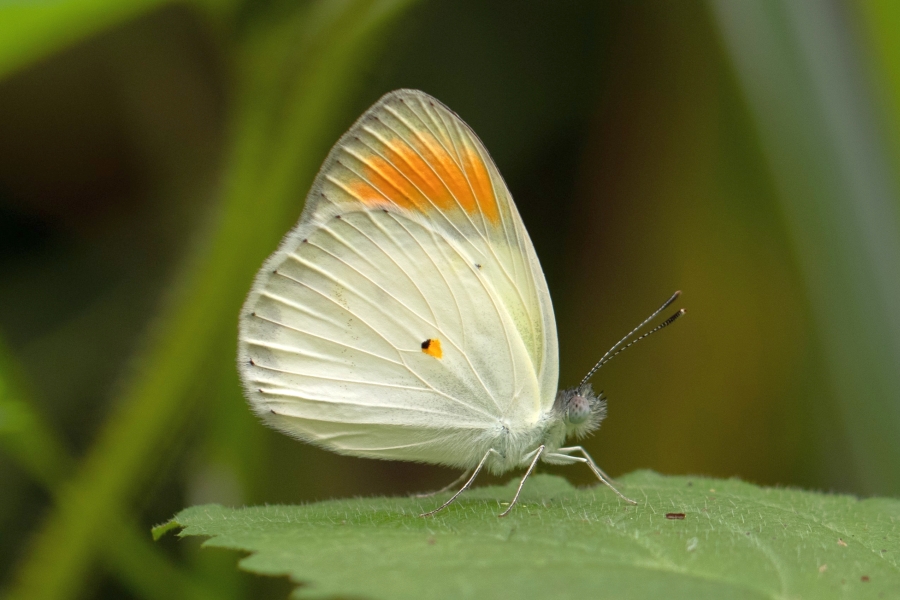

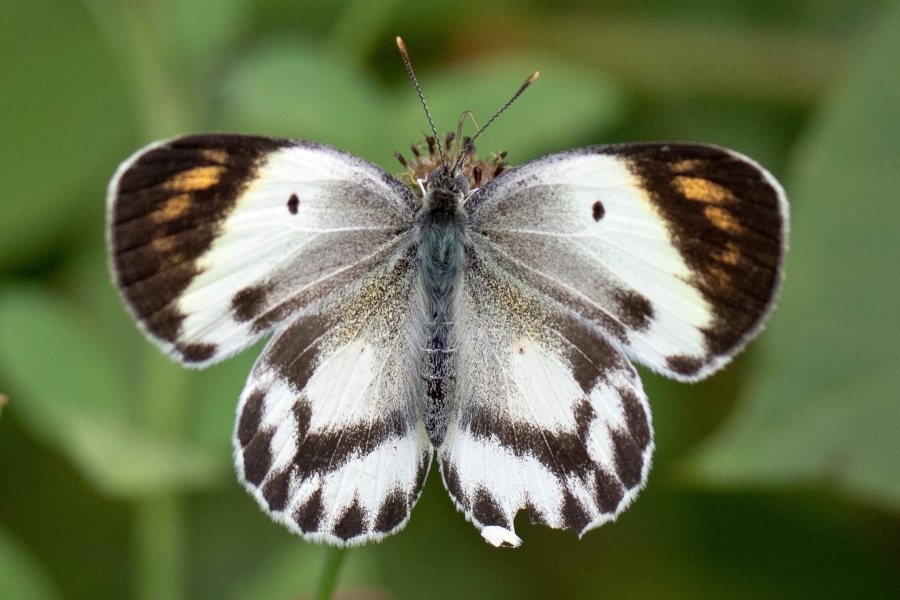

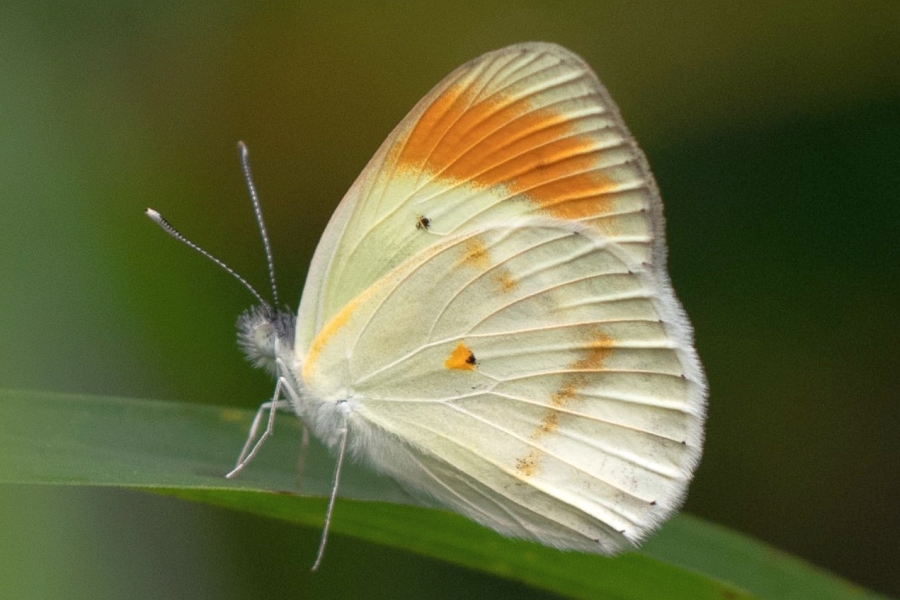
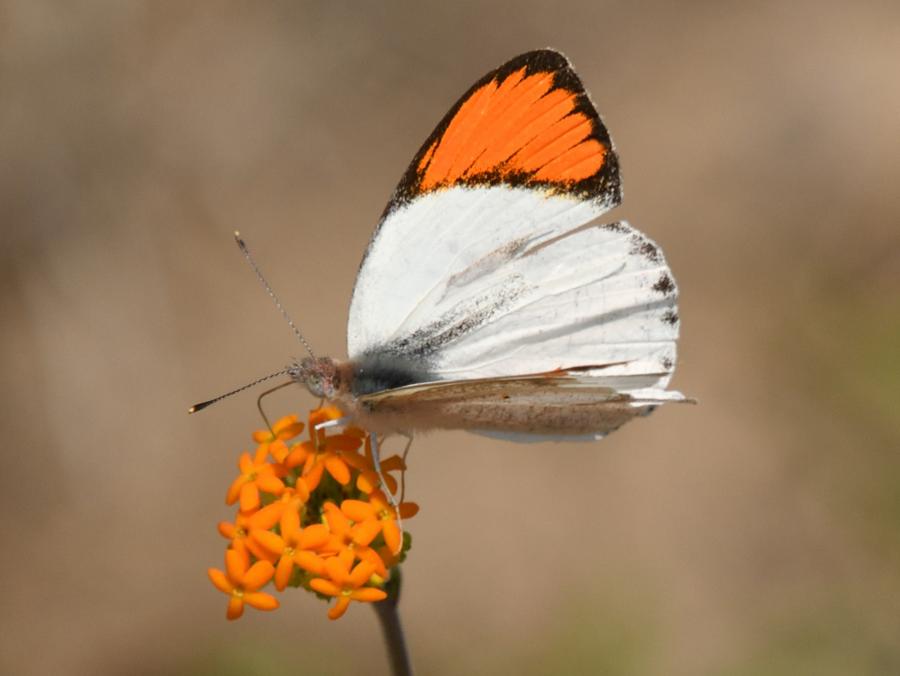
Anmerkung: am 24. Februar 2026 wurde ein Falter aus Südafrika nach Colotis antevippeverschoben [Forum].
2. Diagnose
2.1. Männchen
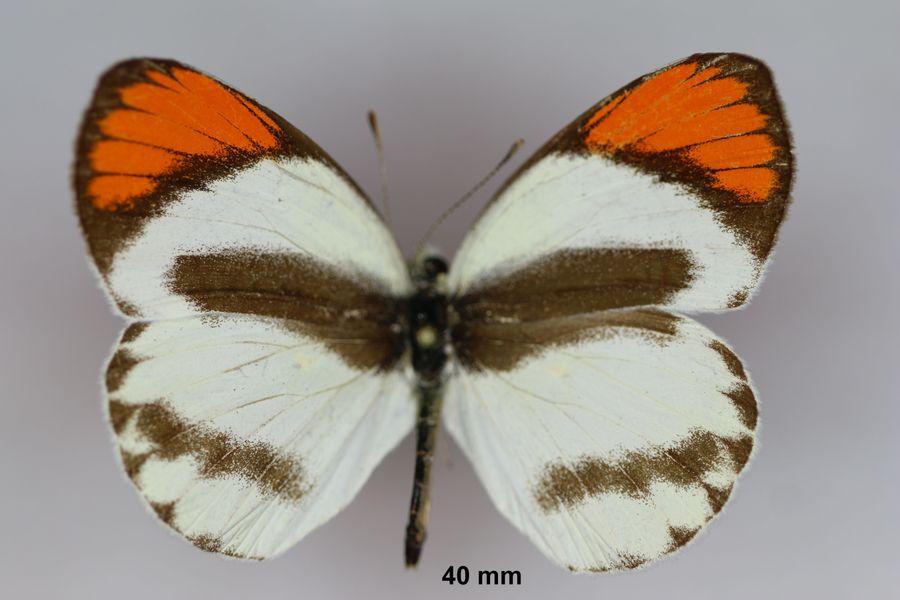
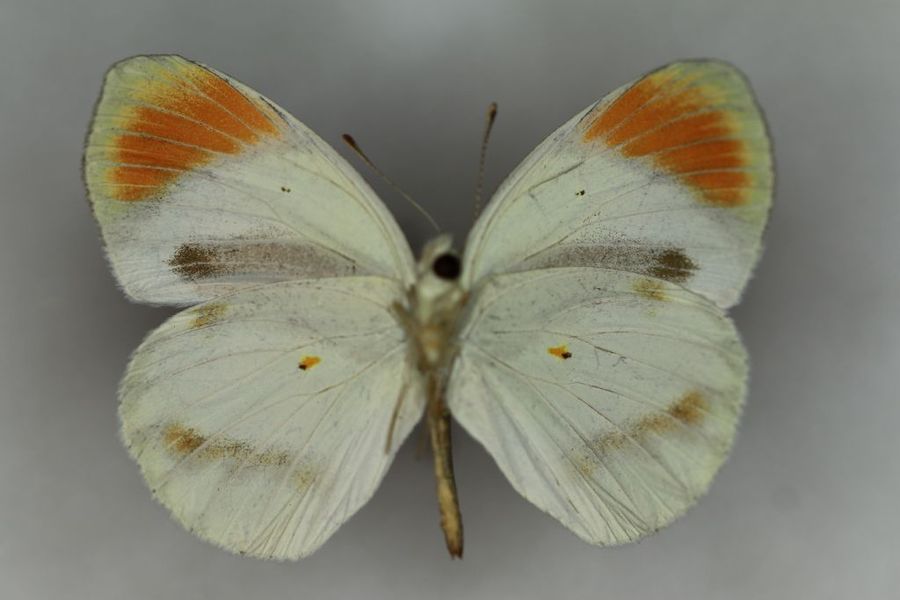
2.2. Weibchen
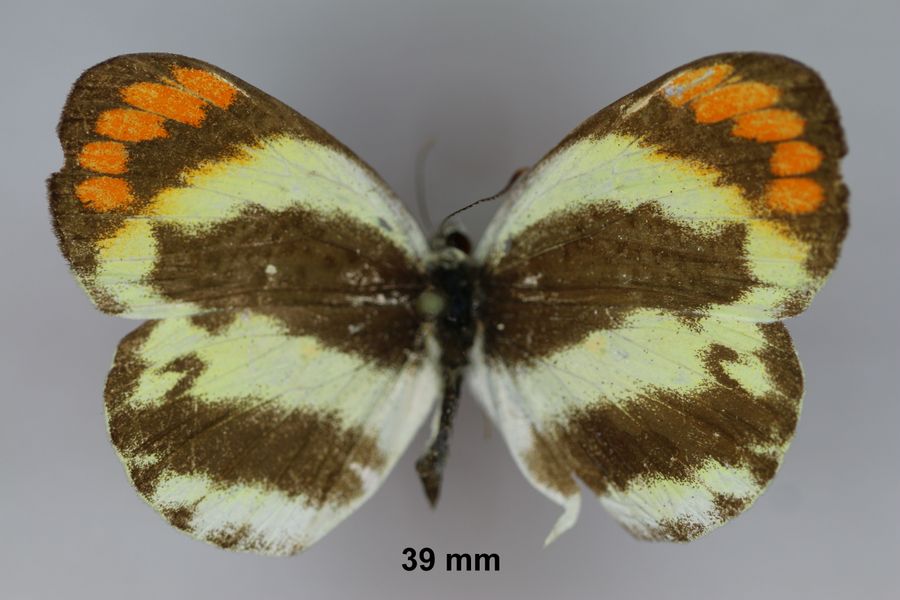
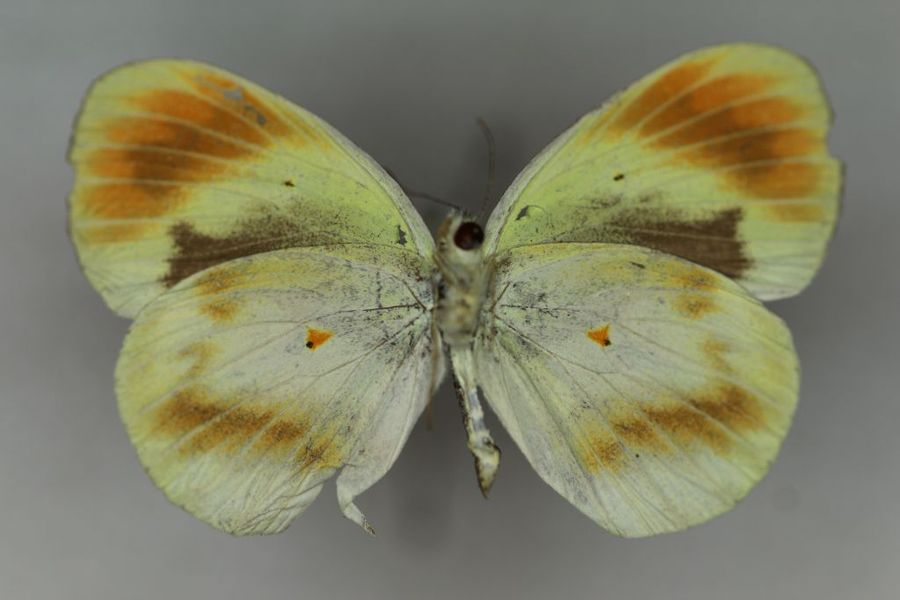
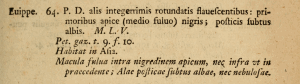
2.3. Erstbeschreibung

3. Biologie
3.1. Nahrung der Raupe
- [Capparaceae:] Cadaba aphylla
- [Capparaceae:] Cadaba sp.
- [Capparaceae:] Boscia sp. ?
- [Capparaceae:] Capparis sp. ?
- [Capparaceae:] Maerua sp. ?
Terblanche (2023) legt einen Artikel vor mit Titel: "Colotis lais (Butler, 1876) and Colotis euippe omphale (Godart, [1819]) use Cadaba aphylla (Thunb.) Wild LC as a host-plant at Tswalu Kalahari, Northern Cape Province, South Africa". Er schreibt im Text: "Larvae of C. lais and C. euippe omphale were found in the field on the host plant Cadaba aphylla (Thunb.) Wild LC at Tswalu Kalahari during surveys undertaken from December 2021 to September 2022. They were collected and carefully reared to adulthood." Und er beobachtete genau: "Notes were taken of ovipositing behaviours and the feeding behaviours of the larvae of C. lais and C. euippe omphale at individually GPS-marked C. aphylla plants." Während die Raupennahrung von Colotis lais zuvor noch unbekannt war, gab es für C. euippe Angaben zu verschiedenen Gattungen von Capparaceae (Kaperngewächse). Wie immer ist dabei meist unklar, was sich auf Zuchtbeobachtungen bezieht und was auf Freilanderfahrungen. Dass Cadaba aphylla in Gegenden mit deutlich unter 500 mm Jahresniederschlag eine größere Rolle auch für diese Art spielt, kann als Überraschung gelten.
Terblanche (2023) vermerkt zu C. euippe: "In contrast to C. lais, a wealth of information about host-plant species, early stages and general habitat preferences of C. euippe omphale exists. Clark vide Van Son (1949) reports host-plant species among four genera: Boscia, Cadaba, Capparis and Maerua, all of which are Capparaceae." Und auch er bemängelt, dass meist nicht zwischen Zucht- und Freiland-Beobachtungen unterschieden wurde. Weil dem so ist, habe ich an alle Gattungen ein Fragezeichen angehängt - das meiste dürfte aber schon auch für das Freiland stimmen.
(Autor: Erwin Rennwald)
4. Weitere Informationen
4.1. Andere Kombinationen
- Papilio euippe Linnaeus, 1758 [Originalkombination]
4.2. Synonyme
- Papilio arethusa Drury, 1773 [Synonym nach funet.fi]
- Papilio hanna Herbst, 1792 [Synonym nach funet.fi]
- Anthocharis cebrene Boisduval, 1836 [Synonym nach funet.fi]
- Anthocharis ocale Boisduval, 1836 [Synonym nach funet.fi]
- Anthopsyche epigone Felder & Felder, [1865] [Synonym nach funet.fi]
- Teracolus pseudocale Butler, 1876 [Synonym nach funet.fi]
- Teracolus angolensis Butler, 1876 [Synonym nach funet.fi]
- Teracolus microcale Butler, 1876 [Synonym nach funet.fi]
4.3. Unterarten
- Colotis euippe amytis (Godart, 1819) [Unterart nach funet.fi]
- Colotis euippe omphale (Godart, 1819) [Unterart nach funet.fi]
- Colotis euippe exole (Reiche, 1849) [Unterart nach funet.fi]
- Colotis euippe complexivus (Butler, 1886) [Unterart nach funet.fi]
- Colotis euippe mediata Talbot, 1939 [Unterart nach funet.fi]
- Colotis euippe mirei Bernardi, 1960 [Unterart nach funet.fi]
4.4. Faunistik
Nach [Global Biodiversity Information Facility] kommt die Art in Südafrika, Kenia, Tansania, Demokratische Republik Kongo, Malawi, Sambia, Mosambik, Namibia, Angola, Zentralafrikanische Republik, Uganda, Benin, Ghana, Botswana, Simbabwe, Swasiland, Nigeria, Äthiopien, Kamerun?, Liberia, Eritrea?, Gambia, Mayotte, Komoren, Niger?, Ruanda?, Somalia, Burkina Faso, Deutschland?, Algerien?, Guinea, Indien?, Mali, Sierra Leone, Togo und Yemen vor.
Locus typicus gemäß Erstbeschreibung: Asia.
(Autor: Michel Kettner)
4.5. Literatur
- Erstbeschreibung: Linnaeus, C. (1758): Systema naturae per regna tria naturae, secundum classes, ordines, genera, species, cum characteribus, differentiis, synonymis, locis. Tomus I. Editio decima, reformata. 1-824. Holmiae (Laurentius Salvius).
- Nazari, V., Larsen, T.B., Lees, D.C., Brattström, O., Bouyer, T., Van de Poel, G. & P.D.N. Hebert (2011): Phylogenetic systematics of Colotis and associated genera (Lepidoptera: Pieridae): evolutionary and taxonomic implications. - Journal of Zoological Systematics and Evolutionary Research, 49 (3): 204–215. doi: 10.1111/j.1439-0469.2011.00620.x. [zum PDF-Download auf researchgate.net]
- Terblanche, R.F. (2023): Colotis lais (Butler, 1876) and Colotis euippe omphale (Godart, [1819]) use Cadaba aphylla (Thunb.) Wild LC as a host-plant at Tswalu Kalahari, Northern Cape Province, South Africa. — Metamorphosis 34: 104–112. [zum Artikel mit PDF-Download auf researchgate.net]