+24Kontinente:ASAF


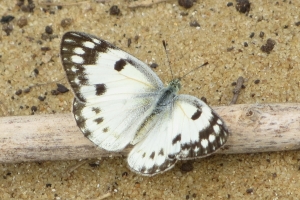
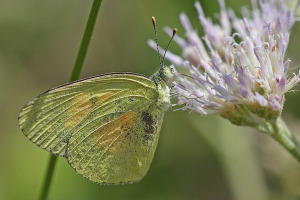
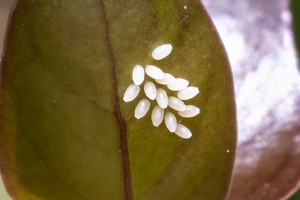
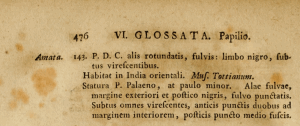
1. Lebendfotos
1.1. Falter, Ssp. crowleyi
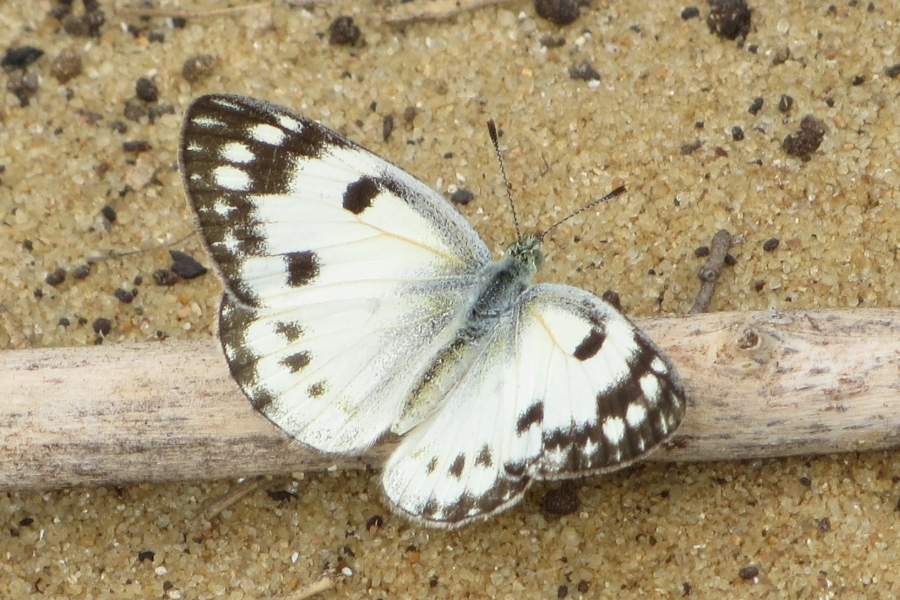

1.2. Ssp. modesta


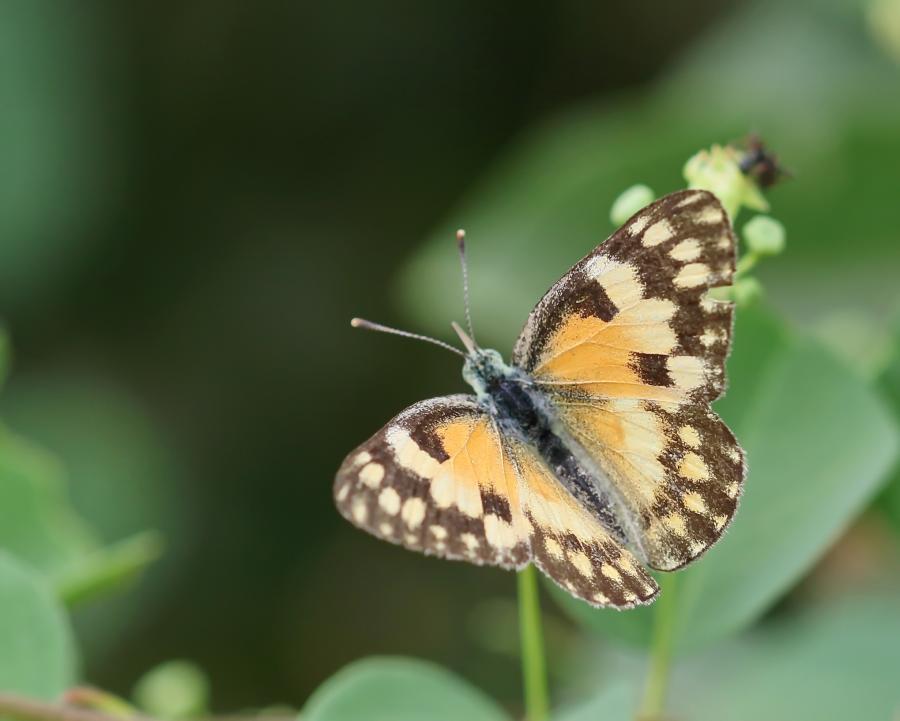
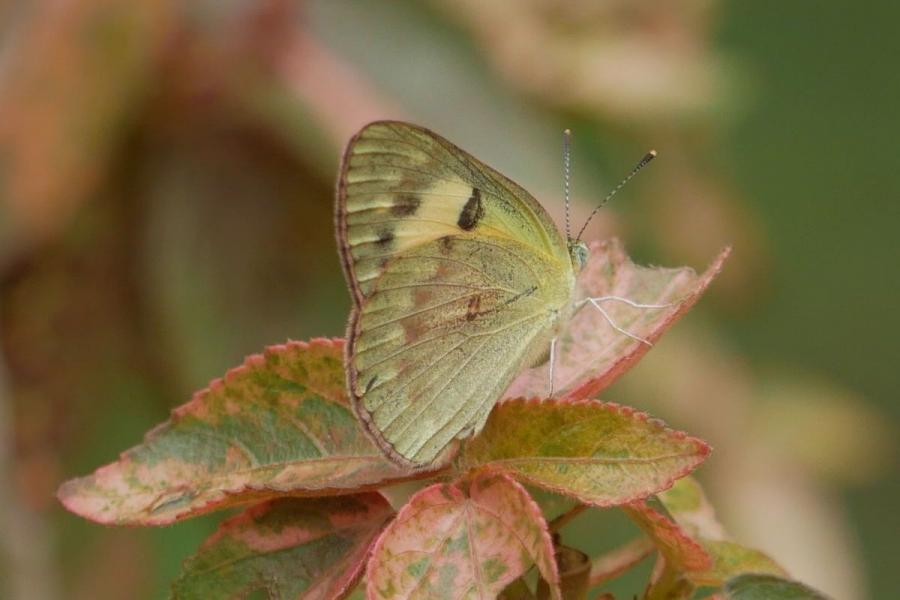
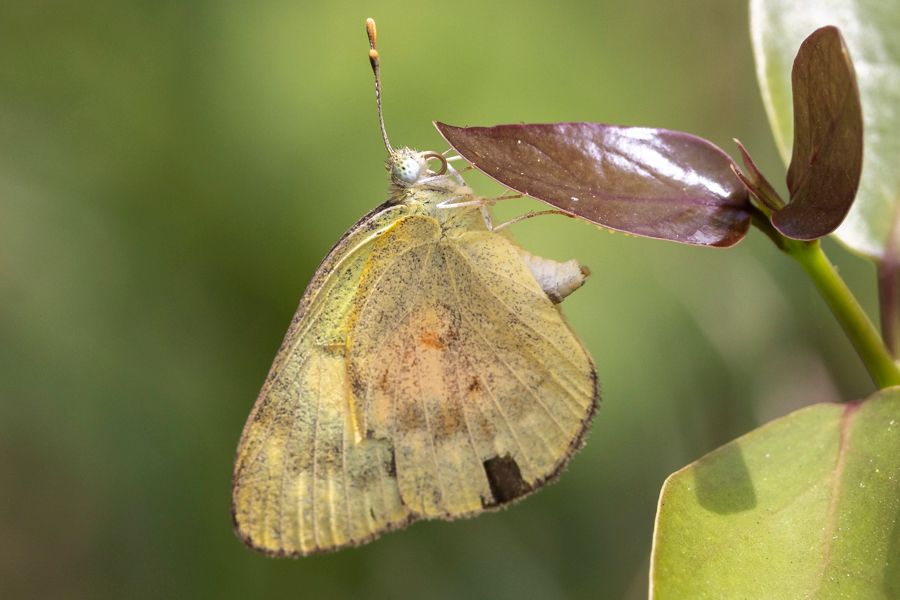
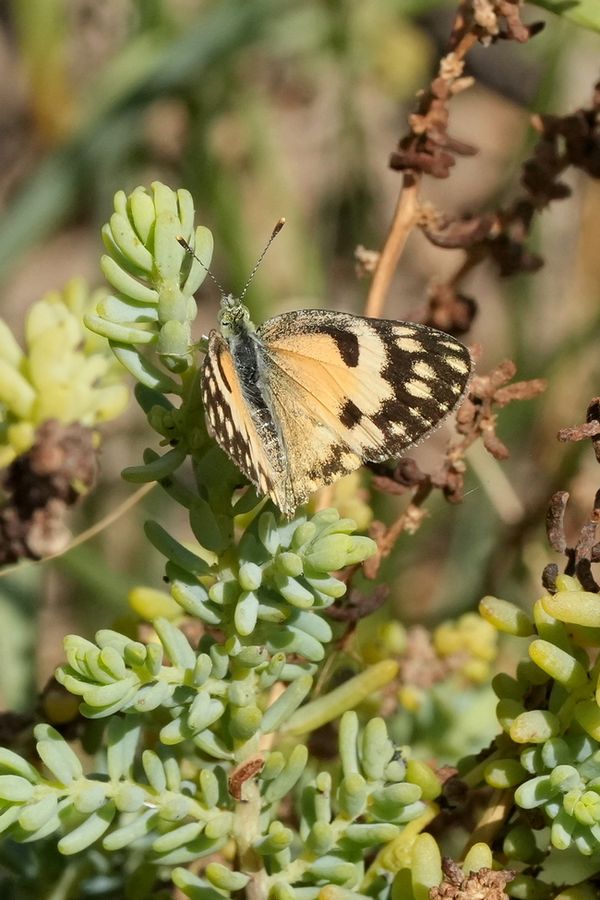
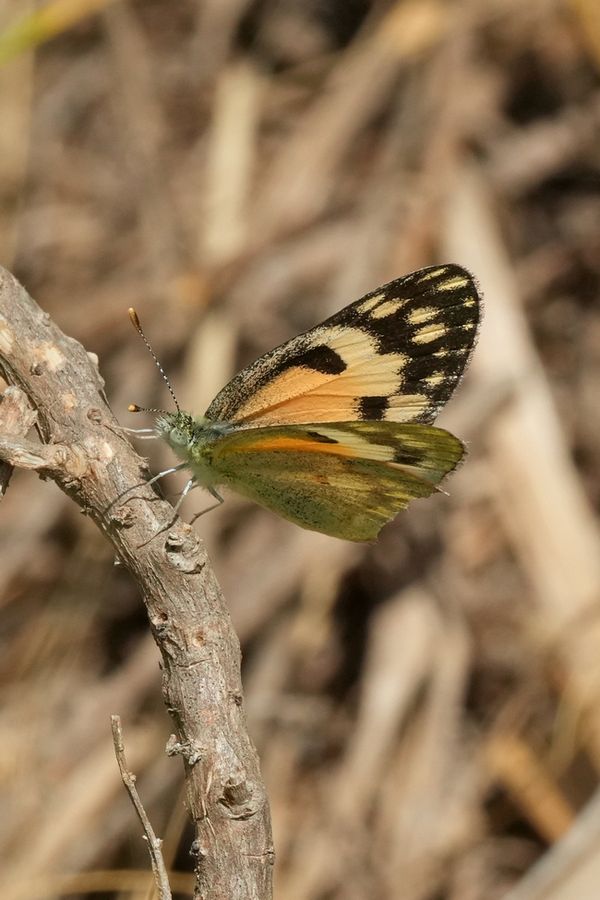
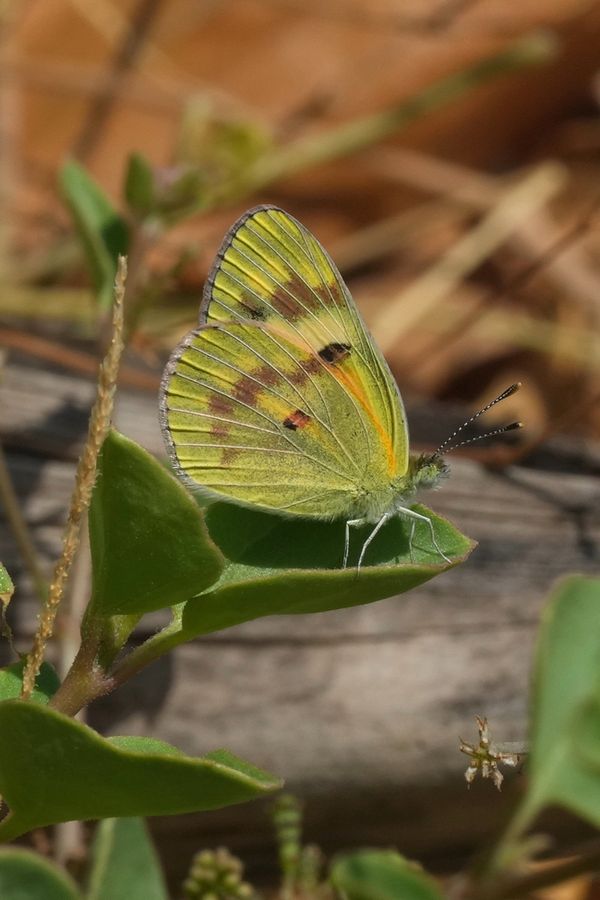
1.3. Ei

2. Diagnose
2.1. Erstbeschreibung

3. Biologie
3.1. Nahrung der Raupe
- [Salvadoraceae:] Salvadora persica (Zahnbürstenbaum)
- [Capparaceae:] Maerua apetala
Haldhar et al. (2015) berichteten aus dem Nordwesten Indiens: "An infestation of the small salmon Arab, Colotis amata (F.) (Lepidoptera: Pieridae), on pilu (Salvadora persica L.; Capparales: Salvadoraceae) plants was first noticed in 2012 at the Experimental Farm of the Central Institute for Arid Horticulture and other fields of Bikaner District, Rajasthan, India. The maximum incidence (80%) was observed on 18 Dec and the minimum (13%) on 4 Sep. The average numbers of insects ranged between 6.2 and 22.3 larvae per 3 leaves. Adults of this small butterfly were salmon-pink in color. Eggs were laid singly on leaves or young shoots and were 0.58–0.72 mm in length, 0.38–0.43 mm in width, and white in color when first laid, later developing red blotches." Und weiter: "Salvadora persica is a popular chewing stick commonly known as “miswak” and is one of the most popular medicinal plants throughout the Indian subcontinent as well as other parts of Asia and the Middle East". Dazu: "Furthermore, defoliating larvae of several beetles and of Colotis ephyia (Klug) (Lepidoptera: Pieridae) often attack the tree",
Dazu passt der erste Nachweis des Falters für den Norden Afrikas, über den Bougaham et al. (2024: 560) berichten: "On November 2, 2022, at Timiaouine, Hadoun Abdellah photographed a Colotis amata (Fabricius,1775) perched on the Salvadora persica L. plant while visiting Bordj Badji Mokhtar region of Southern Algeria (Figure 1). Throughout its distribution range, this species mainly consumes the same plant stated there (Larsen, 2005a)."
Bhagyasree & Venkata Ramana (2025) berichten über die Nutzung von Maerua apetala im östlichen Gath. Dort läuft der gesamte Entwicklungszyklus innerhalb von 24-28 Tagen ab, so dass eine Vielzahl an Generationen pro Jahr möglich sind.
(Autor: Erwin Rennwald)
4. Weitere Informationen
4.1. Andere Kombinationen
- Papilio amata Fabricius, 1775 [Originalkombination]
4.2. Synonyme
- Papilio cypraea Fabricius, 1787 [Synonym nach funet.fi]
- Pontia dynamene Klug, 1829 [Synonym nach funet.fi]
- Teracolus carnifer Butler, 1876 [Synonym nach funet.fi]
- Teracolus kennedii Swinhoe, 1884 [Synonym nach funet.fi]
4.3. Unterarten
- Colotis amata calais (Cramer, [1775]) [Unterart nach funet.fi]
- Colotis amata modesta (Butler, 1876) [Unterart nach funet.fi]
- Colotis amata crowleyi (Sharpe, 1898) [Unterart nach funet.fi]
- Colotis amata williami Henning & Henning, 1994 [Unterart nach funet.fi]
4.4. Faunistik
Nach [Global Biodiversity Information Facility] kommt die Art in Indien, Südafrika, Kenia, Madagaskar, Oman, Namibia, Malawi, Sri Lanka, Vereinigte Arabische Emirate, Tansania, Angola, Mosambik, Sambia, Pakistan, Eritrea, Somalia, Jemen, Äthiopien, Iran, Simbabwe, Botswana, Republik Kongo und Saudi-Arabien vor. Bougaham et al. (2024) melden die Art erstmals für einen Maghreb-Staat (im Eremial: Bordj Badji Mokhtar region, Süd-Algerien).
Locus typicus gemäß Erstbeschreibung: India orientali.
(Autoren: Michel Kettner, Hermann Falkenhahn)
4.5. Literatur
- Bhagyasree, K.V. & S.P. Venkata Ramana (2025): Life history and seasonal distribution of the small salmon arab Colotis amata (Fabricius, 1775) on its larval host plant Maerua apetala in the eastern ghats of Andhra Pradesh - India. — Journal of Advance Multidisciplinary Research, 4 (3): 8-12. [zum PDF-Download auf synstojournals.com]
- Bhatnagar, S., Goran , P., & S. Singh (2014): Life cycle of Small Salmon Arab Colotis amata (Lepidoptera: Pieridae). — The Bioscan, 9 (3): 1059–1062. [zum open-access-Artikel mit PDF-Download]
- Bougaham, A. F., Hadoun, A., Seddiki, F., Soukkou, W. (2024): First record of Colotis amata (Fabricius, 1775) in North Africa (Lepidoptera: Pieridae). — SHILAP Revista de lepidopterología 52 (207): 559-562. [PDF auf shilap.org]
- Erstbeschreibung: Fabricius, J. C. (1775): Systema entomologiae, sistens insectorum classes, ordines, genera, species, adiectis synonymis, locis, descriptionibus, observationibus. 1-832 (Flensburg und Leipzig: Officina Libraria Kortii).
- Chowdhury, S. & R. Soren (2009): Rediscovery of Small Salmon Arab Colotis amata Fabricius (Lepidoptera: Pieridae) from saline and semi-saline areas of West Bengal, India. [zum PDF-Download auf researchgate.net]
- Haldhar, S.M., Bhargava, R., Singh, R.S., Krishna, H. & S.K. Sharma (2015): First Report of Colotis amata (Lepidoptera: Pieridae) on Salvadora persica (Capparales: Salvadoraceae) in Rajasthan, India: Incidence and Morphometric Analysis. — Florida Entomologist, 98 (2): 442-445. https://doi.org/10.1653/024.098.0208. [zum open-access-Artikel mit PDF-Download auf bioone.org/journals]