+34Kontinente:ASAF


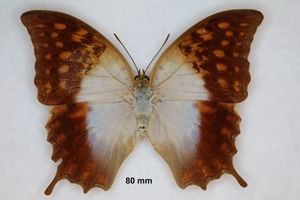


2. Diagnose
2.1. ssp. vologeses
2.1.1. Weibchen
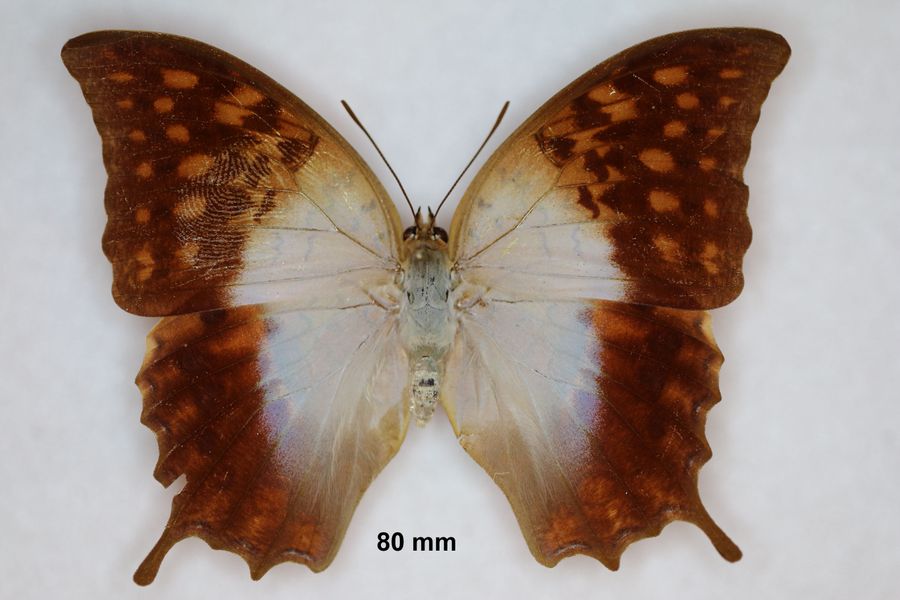
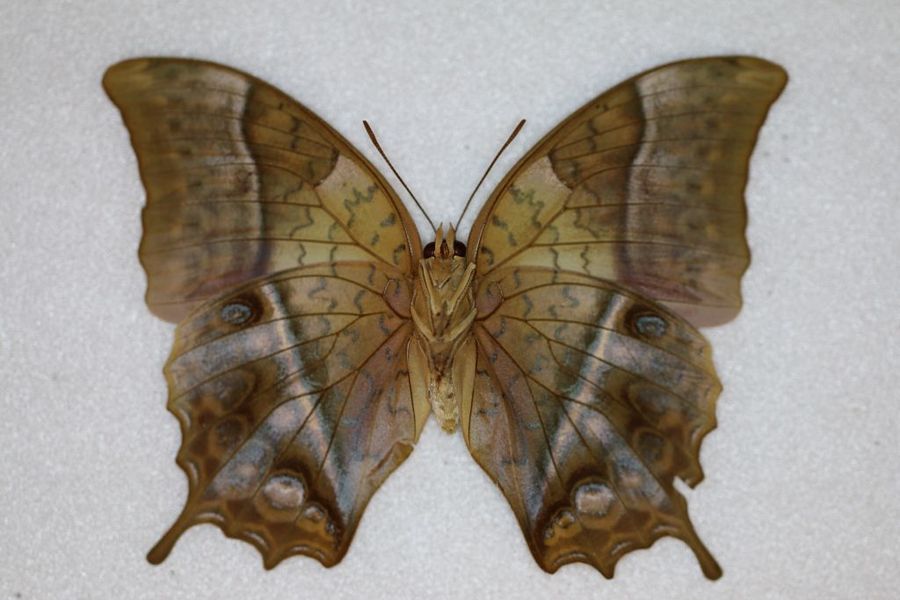
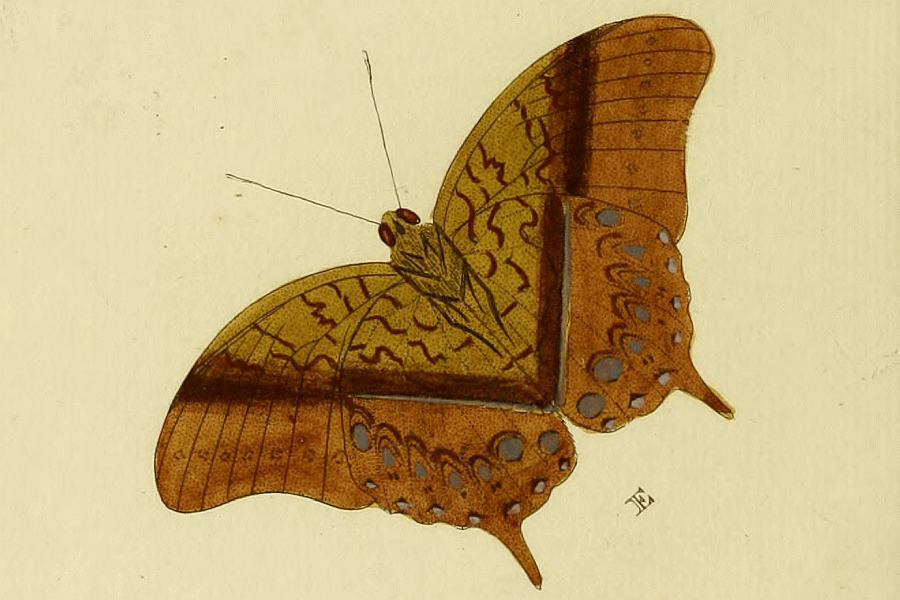
2.2. Erstbeschreibung, darin indizierte Abbildungen und Text zu diesen


3. Weitere Informationen
3.1. Andere Kombinationen
- Papilio varanes Cramer, [1777] [Originalkombination]
3.2. Synonyme
- Charaxes austrina Rothschild, 1900 [nach Global Biodiversity Information Facility]
- Coea vanesse Hübner, 1819 [nach Global Biodiversity Information Facility]
3.3. Unterarten
- Charaxes varanes varanes Cramer, 1764 [nach Global Biodiversity Information Facility]
- Charaxes varanes brachycauda Le Cerf, 1923 [nach Global Biodiversity Information Facility]
- Charaxes varanes bertrami Riley, 1931 [nach Global Biodiversity Information Facility]
- Charaxes varanes defulvata Joicey & Talbot, 1926 [nach Global Biodiversity Information Facility]
- Charaxes varanes vologeses (Mabille, 1876) [nach Global Biodiversity Information Facility]
3.4. Faunistik
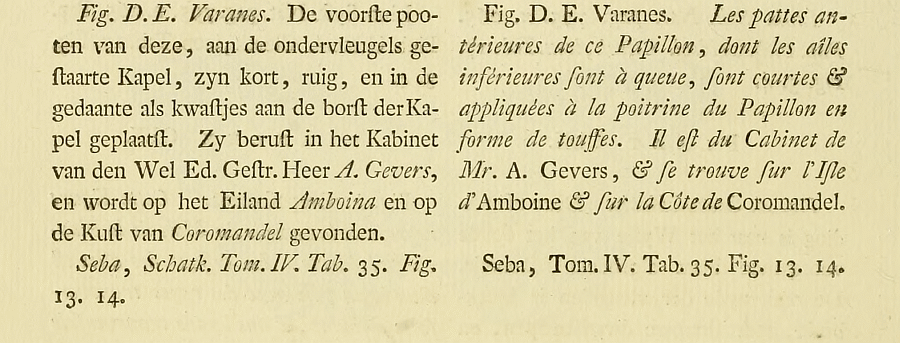
Bei Cramer ([1777]: 100) ist zu lesen: "Il est du Cabinet de Mr. A. Gevers & se trouve sur l'Isle d'Amboine & sur la Côte de Coromandel." Das ist falsch, und anders als bei Charaxes tiridates wurde das auch nicht umgehend korrigiert. C. varanes ist eine fast rein Subsahara-afrikanisch verbreitete Art, die gerade noch den Süden der Arabischen Halbinsel erreicht. So gibt Kopij (2006: 150) für die Unterart "Charaxes jasius saturnus Butler, 1866" an: "Records from Lesotho: Roma, 03.05.1979, Keller et al. (1997). Distribution: KwaZulu-Natal, Transvaal, Swaziland, Zimbabwe, Botswana, Namibia, Mozambique." Bei GBIF ist zu lesen: "Charaxes varanes (Cramer, 1777), which occurs throughout almost the whole of Africa, is divided into three named subspecies: one occurs only in southern Arabia, the nominate race occurs in Botswana, Mozambique and most of South Africa, while C. v. vologeses occupies a vast range, north to Yemen (Henning 1989, p. 36 – 40; Ackery et al. 1995, p. 460). However, the Yemeni population appears distinct, and has since been named as a further subspecies (Turlin 1999)."
Nach [Global Biodiversity Information Facility] kommt die Art in Südafrika, Kenia, Uganda, Zimbabwe, der Demokratischen Republik Kongo, Zambia, Tansania, Malawi, Gambia, Mozambique, Angola, Liberia, Nigeria, Ruanda, der Elfenbeinküste, dem Tchad, Ghana, Botswana, der Zentralafrikanischen Republik und Oman vor.
Auf der [Artseite von Sáfián & Siklósi (2026)] wird gelistet: "Angola; Benin; Botswana; Burkina Faso; Cameroon; Central African Republic; Equatorial Guinea; Ethiopia; Gambia; Ghana; Guinea; Guinea-Bissau; Ivory Coast; Kenya; Liberia; Mozambique; Namibia; Nigeria; Senegal; Sierra Leone; South Sudan; Sudan; Tanzania; Togo; Uganda; Zambia; Zimbabwe".
(Autoren: Harald Lahm & Erwin Rennwald)
3.5. Publikationsjahr der Erstbeschreibung
Nach Hemming (1958: 41) wurde der gesamte Band 1777 publiziert.
(Autor: Jürgen Rodeland)
3.6. Literatur
- Erstbeschreibung: Cramer, P. („1779“) [1777]: De uitlandsche kapellen voorkomende in de drie waereld-deelen Asia, Africa en America 2: 1-151, pl. XCVII-CXCII. Amsteldam (S. J. Baalde), Utrecht (Barthelemy Wild).
- Hemming, F. (1958): Opinion 516. — Opinions and Declarations Rendered by the International Commission on Zoological Nomenclature 19 (1): 1-44. London.
- Kopij, G. (2006): Lepidoptera fauna of Lesotho. — Acta zoologica cracoviensia, 49B (1-2): 137-180. [zum PDF-Download auf researchgate.net]