+3Kontinente:NAMA



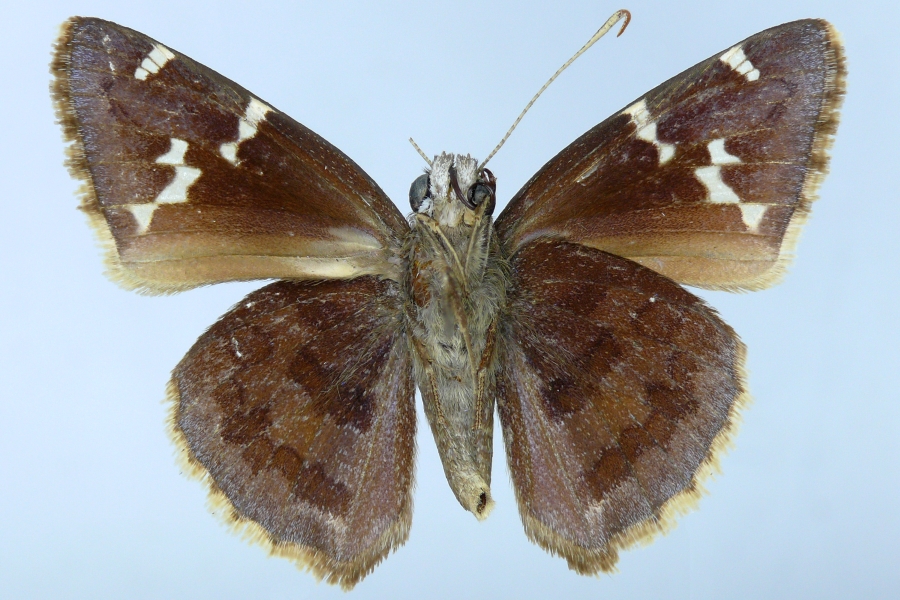
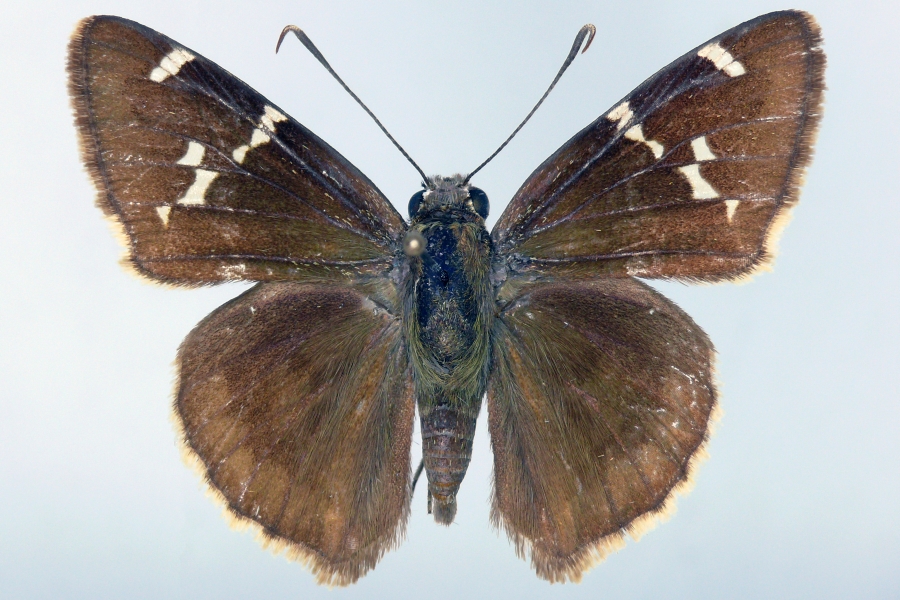
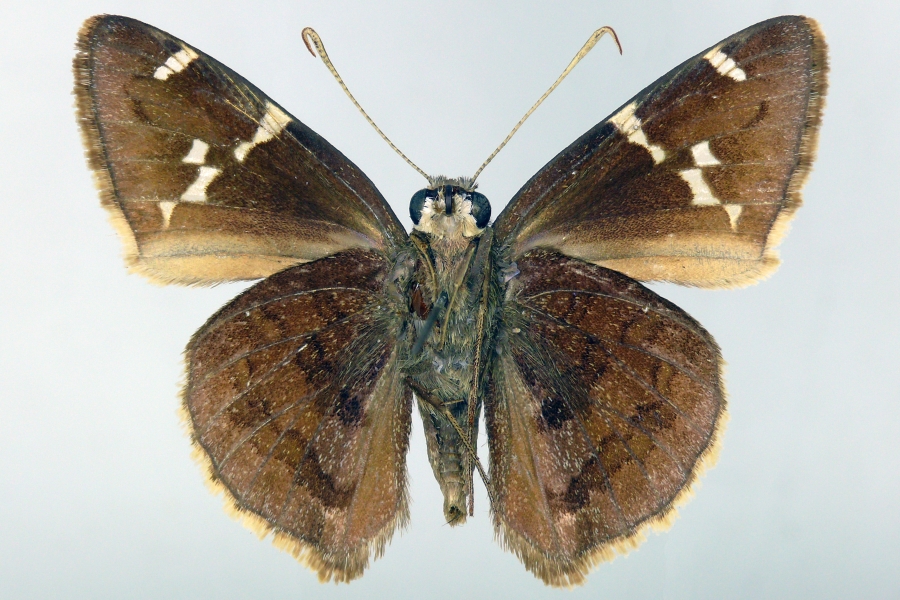
2. Diagnose
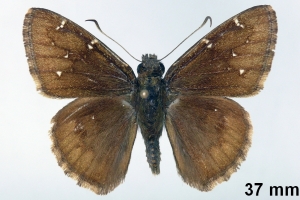
2.1. Männchen
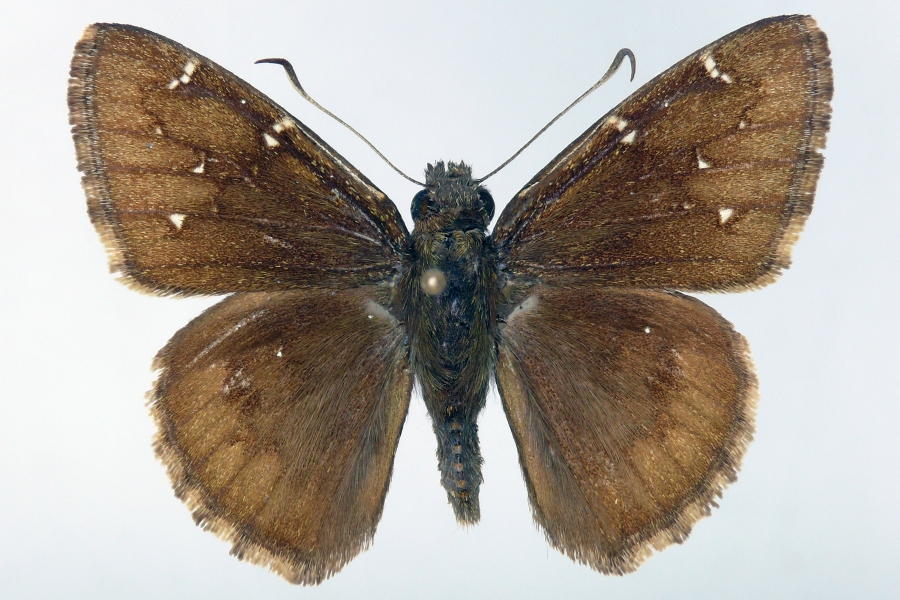

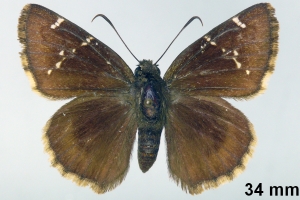
2.2. Weibchen



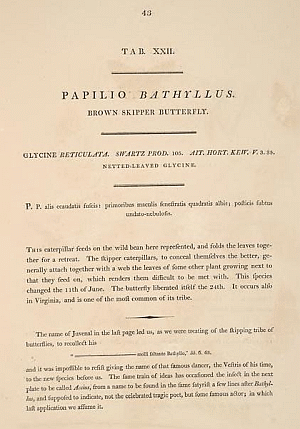
2.3. Erstbeschreibung

3. Weitere Informationen
3.1. Andere Kombinationen
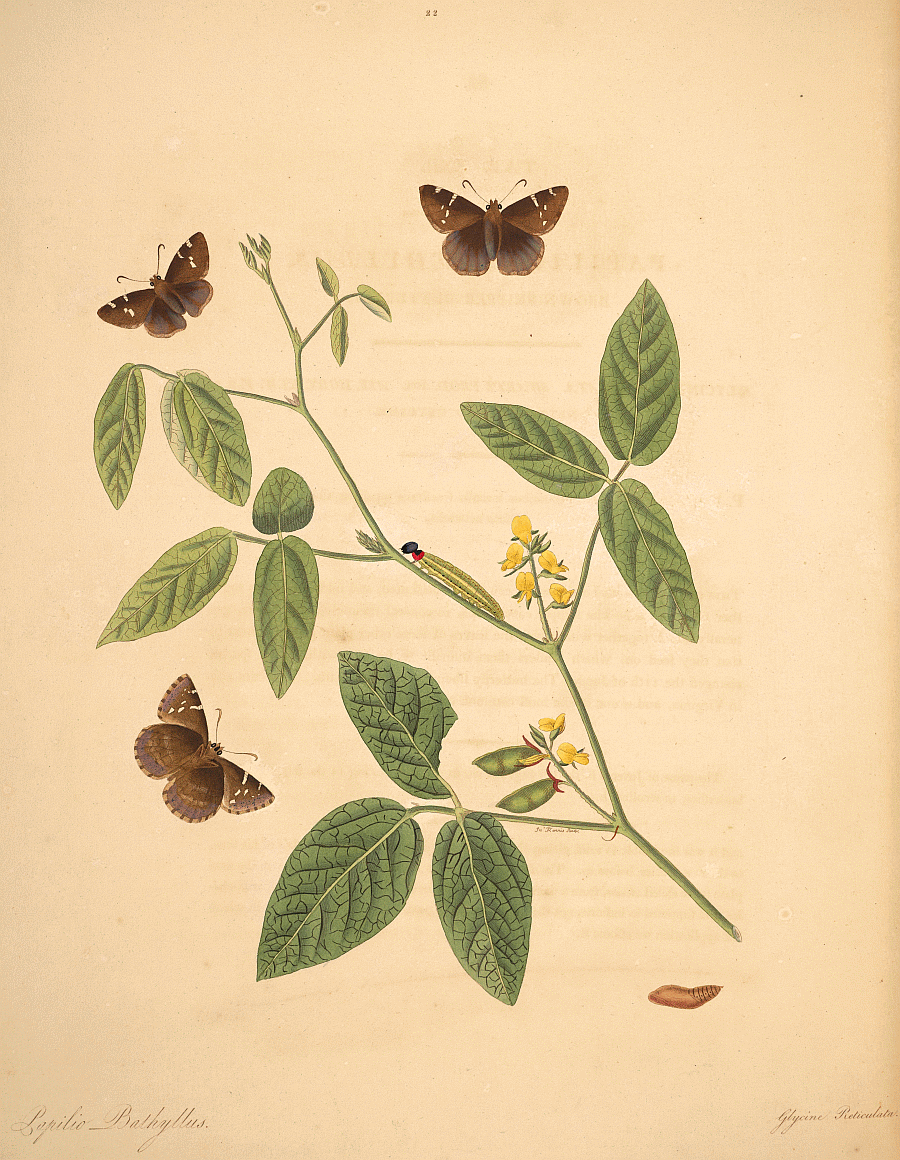
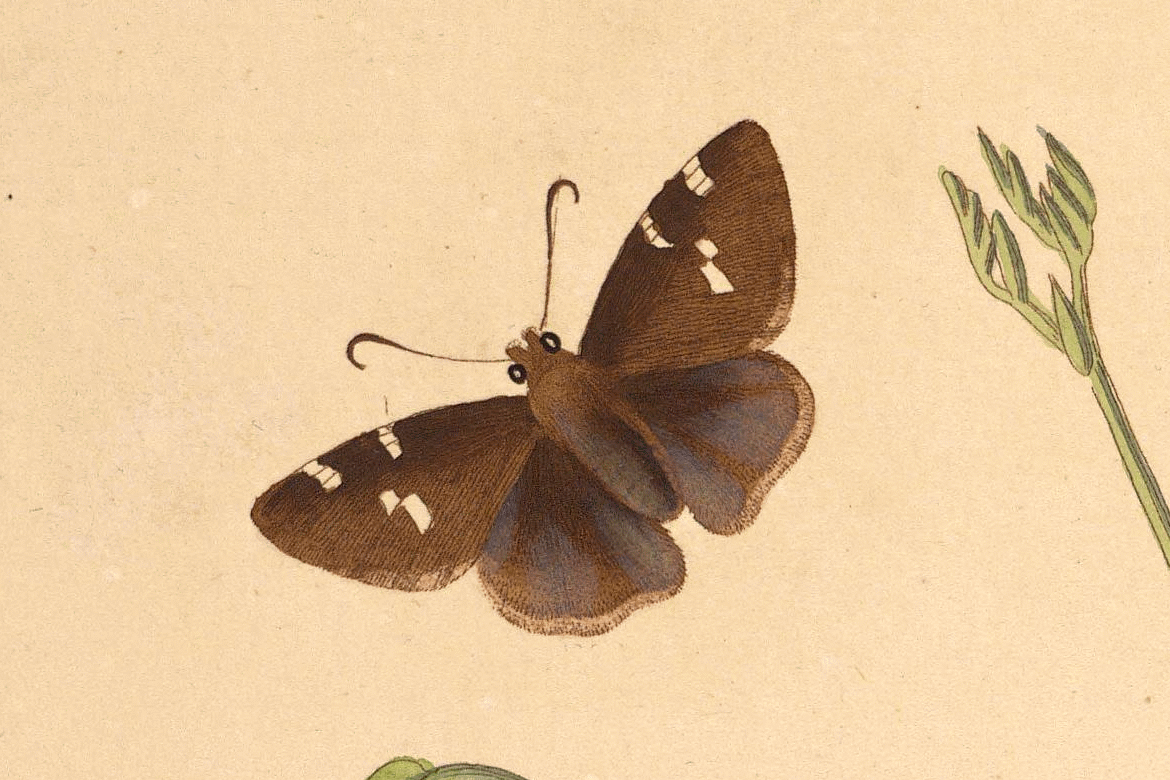
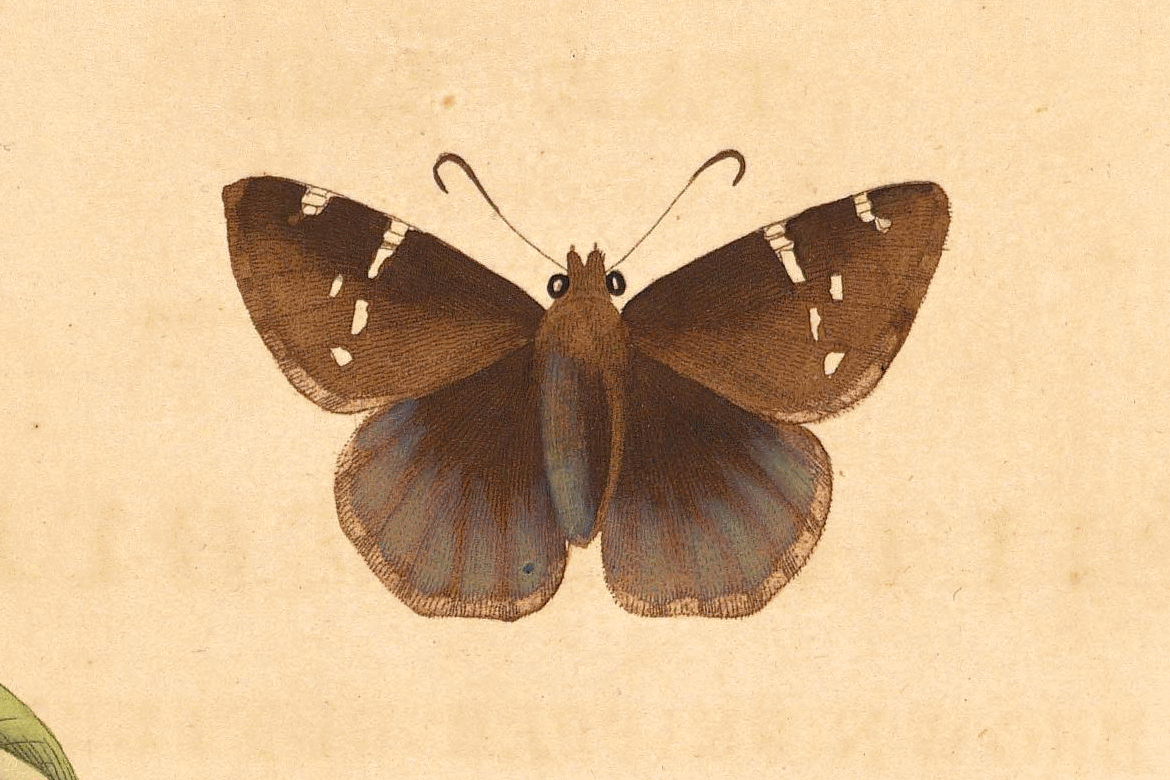
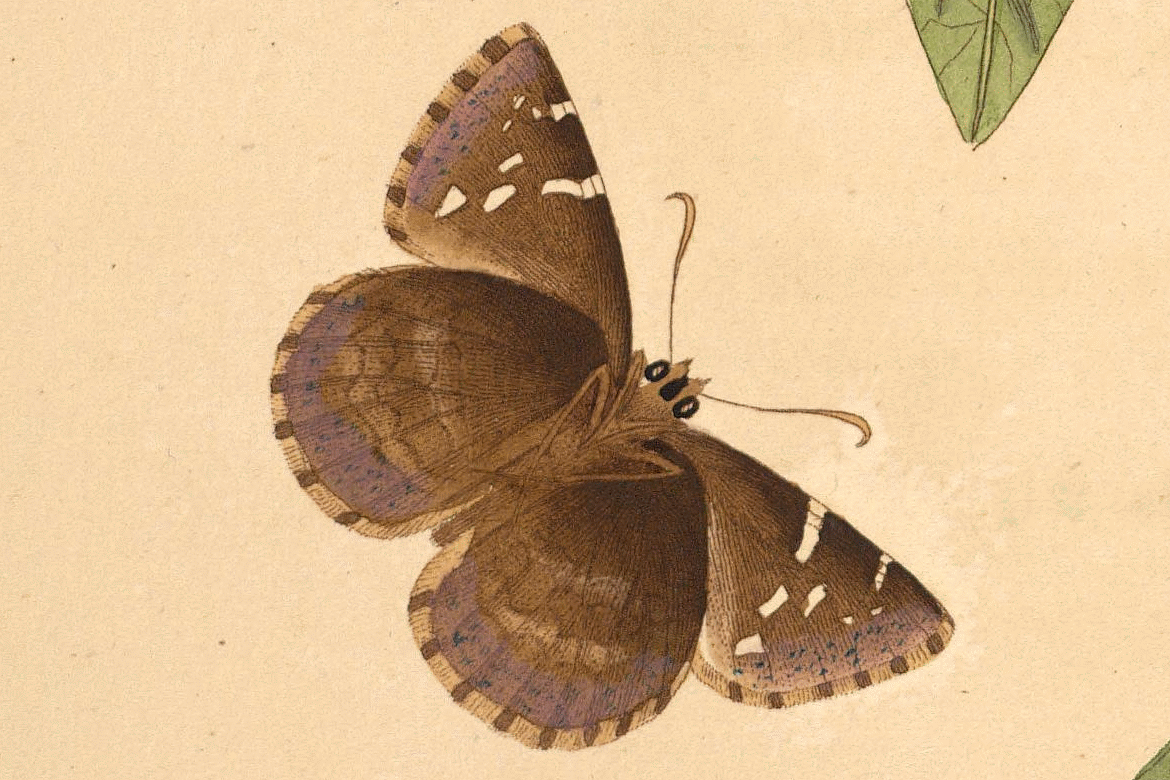
- Papilio bathyllus Smith, 1797 [Originalkombination]
- Thorybes bathyllus (Smith, 1797)
3.2. Nomenklatur
Hier wurde mehrfach diskutiert, ob Papilio daunus Cramer, 1777 älteres Synonym von Papilio bathyllus Smith, 1797 ist. Doch Calhoun (2007) kam bei einer gründlichen Nachuntersuchung - auch der von Cramer (1777) verwendeten Originalgemälde - zum Schluss, dass keine sichere Entscheidung möglich ist, ob das alte Bild Thorybes bathyllus [jetzt Cecropterus bathyllus] oder Thorybes confusis Bell, 1923 [jetzt Cecropterus confusis] zeigt. "Papilio daunus Cramer, 1777" bleibt damit ein nomen dubium. Calhoun (2007) wirbt sehr dafür, den Namen trotzdem nicht komplett als ungültig zu verwerfen, denn dann wäre "Papilio daunus Boisduval, 1836" plötzlich aus der Homonymie befreit und würde den fest eingeführten Namen "Papilio multicaudata" wieder in die Synonymie verbannen. Calhoun (2007: 110) fasst daher zusammen und empfiehlt: "As shown by the detailed synopsis in Mielke (2005), prevailing usage has strongly favored Papilio bathyllus for over two centuries. Thorybes confusis has been applied without dispute to the same species for over 80 years. Neither name should be upset by a priority replacement involving Papilio daunus Cramer, including the designation of a neotype to objectively identify this taxon. The evidence is insufficient to ensure that such a neotype would be consistent with the missing holotype. Furthermore, it could be undesirable to pursue the suppression of Papilio daunus Cramer, as it is a primary homonym of Papilio daunus Boisduval, 1836 (Papilionidae). This action would force a priority replacement of Papilio multicaudata W. F. Kirby, 1884, by Papilio daunus Boisduval. To preserve nomenclatural stability, Papilio daunus Cramer is best considered a nomen dubium." Dem kann nur zugestimmt werden.
(Autor: Erwin Rennwald)
3.3. Faunistik
Nach [Global Biodiversity Information Facility] kommt die Art in USA, Kanada und Mexiko vor.
Locus typicus gemäß Erstbeschreibung: USA, Georgia.
(Autor: Michel Kettner)
3.4. Literatur
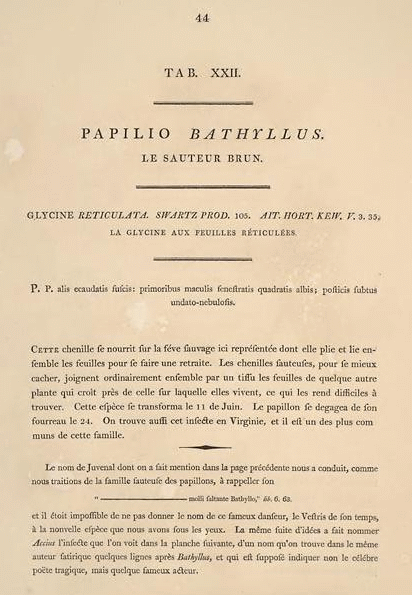
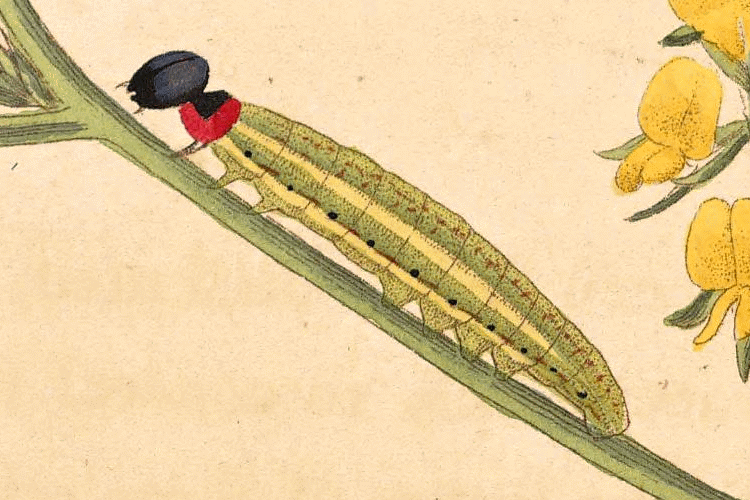
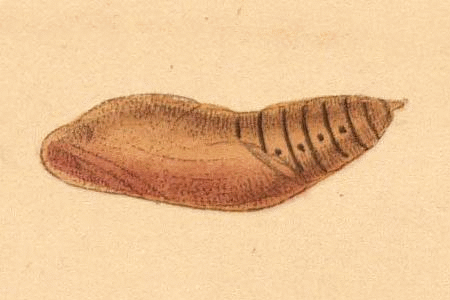
- Erstbeschreibung: Smith, J. E. (1797): The Natural History of the rarer Lepidopterous Insects of Georgia. Including their Systematic Characters, the Particulars of their several Metamorphoses, and the Plants on which they Feed. Vol. I: i-xv, 1-100, pl. I-L. London (T. Bensley).