+11Kontinente:EUAS


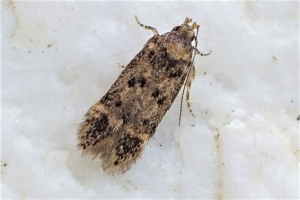
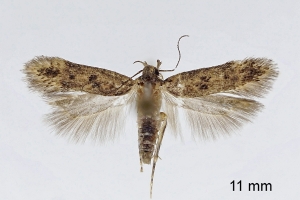
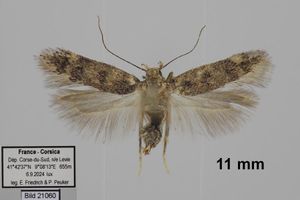

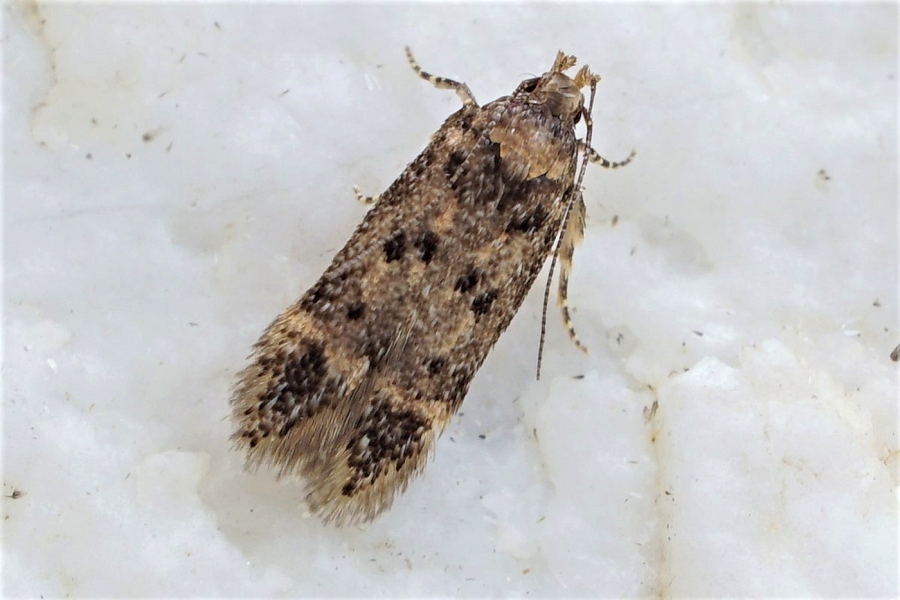
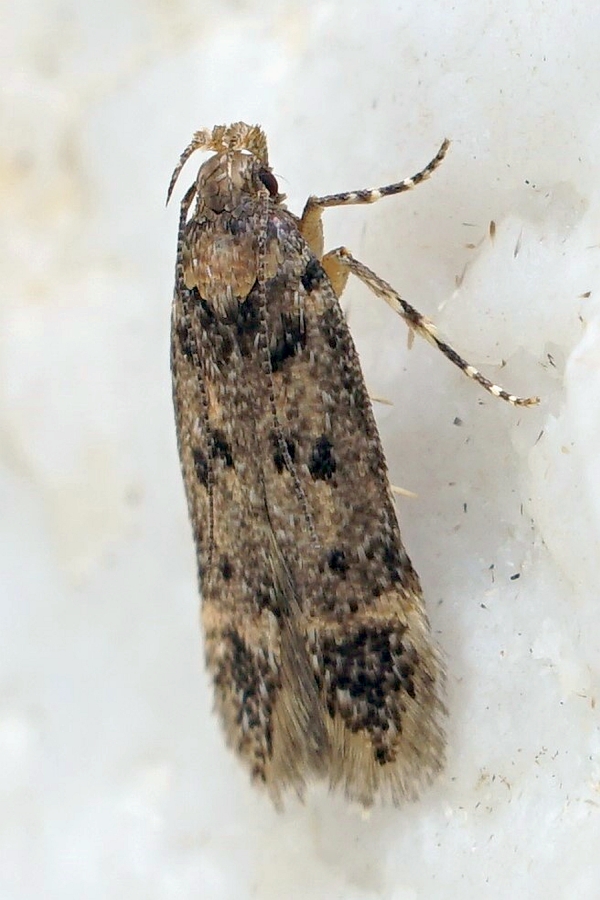
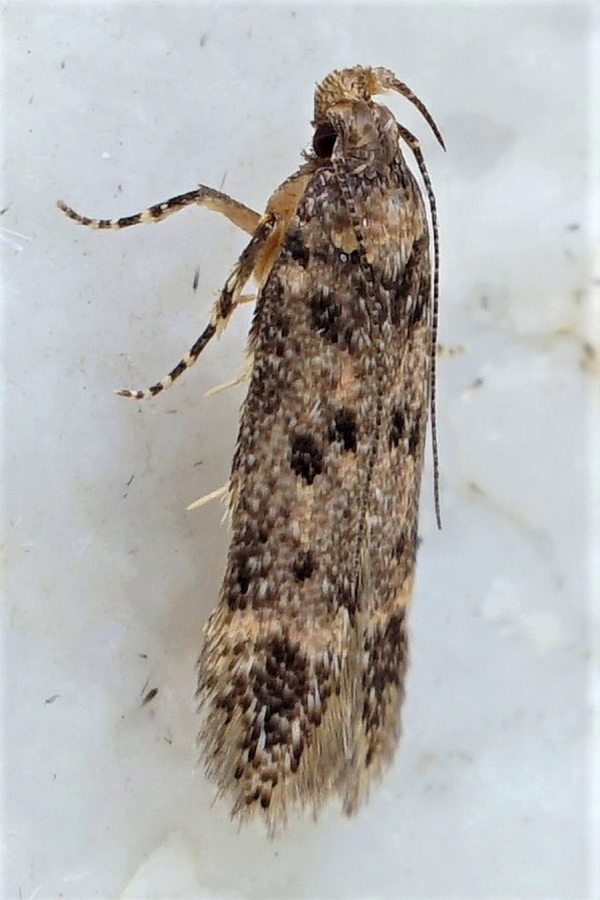
1. Lebendfotos
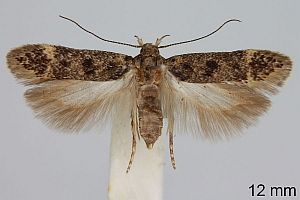
1.1. Falter
2. Diagnose
2.1. Männchen
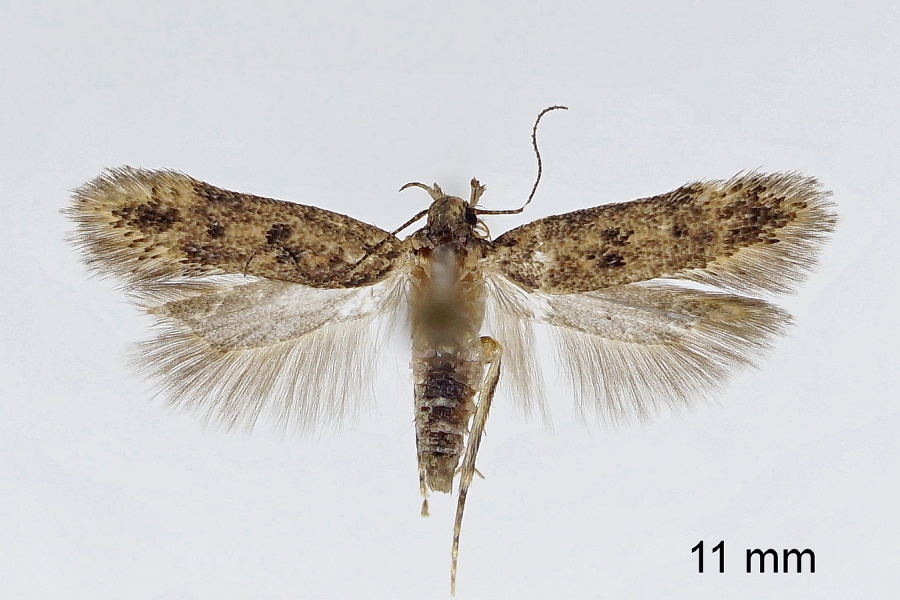
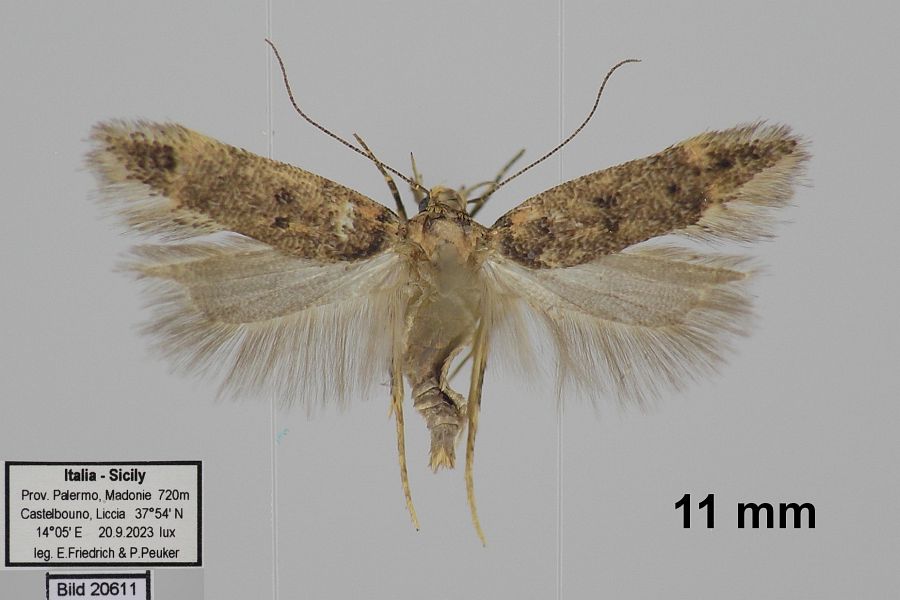
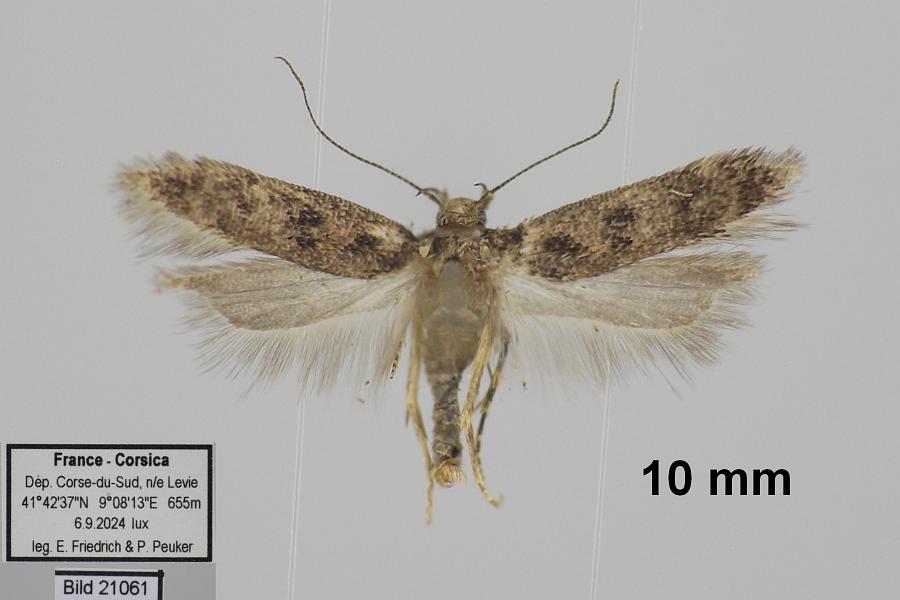
2.2. Weibchen

2.3. Geschlecht nicht bestimmt
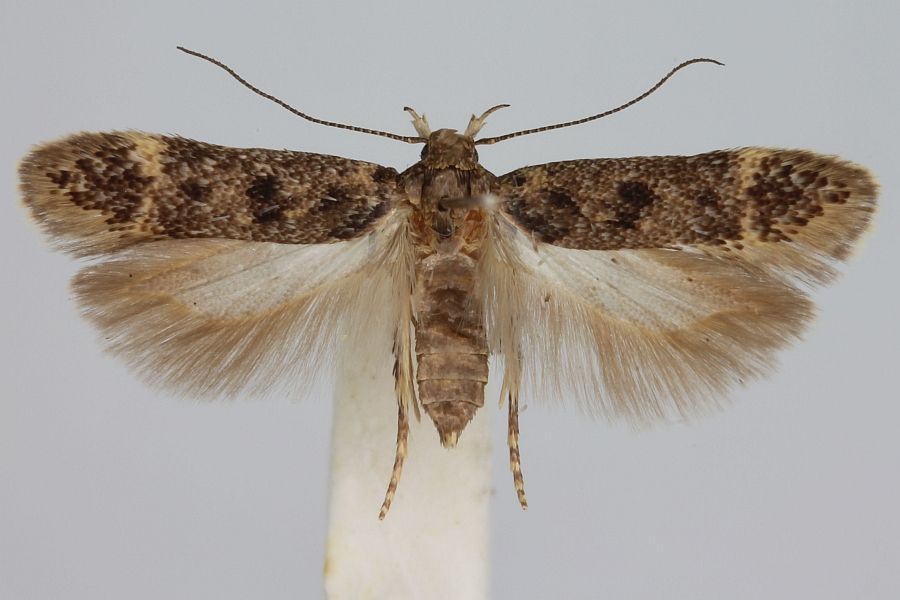
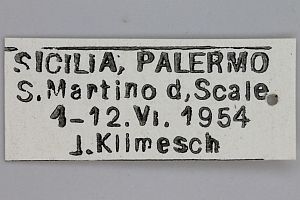
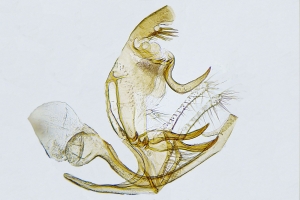
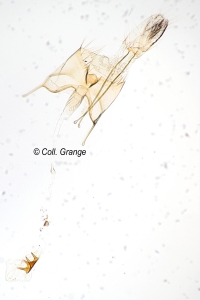
2.4. Genitalien
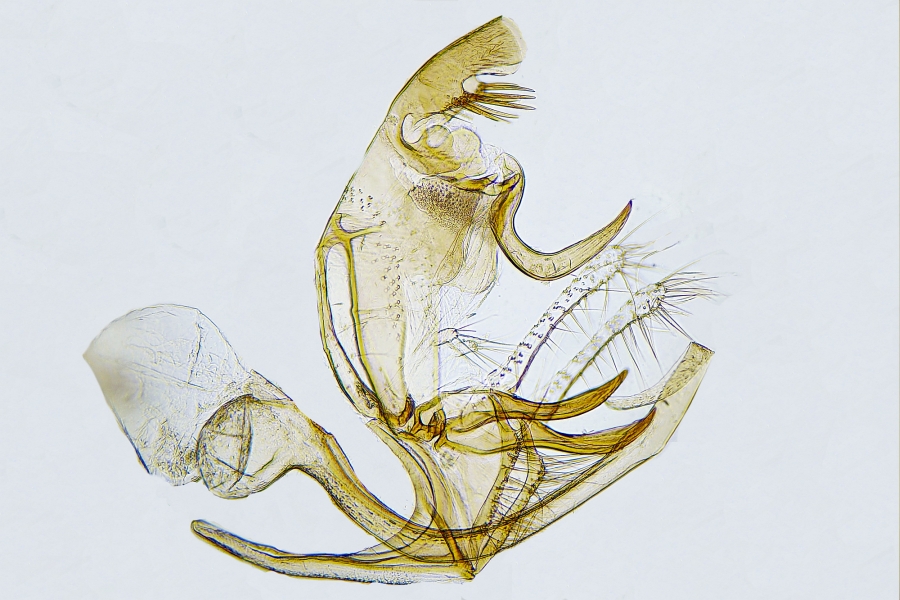
2.4.1. Männchen
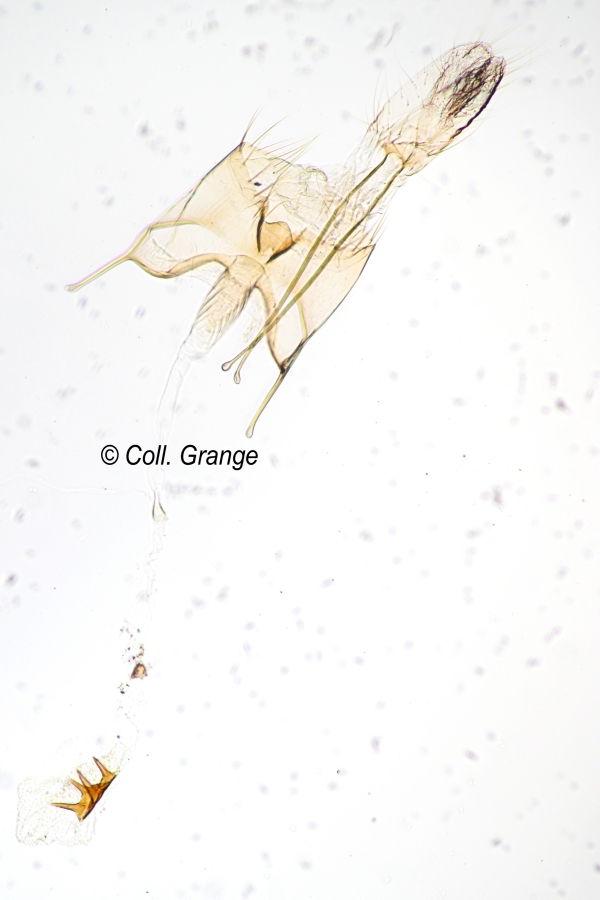
2.4.2. Weibchen
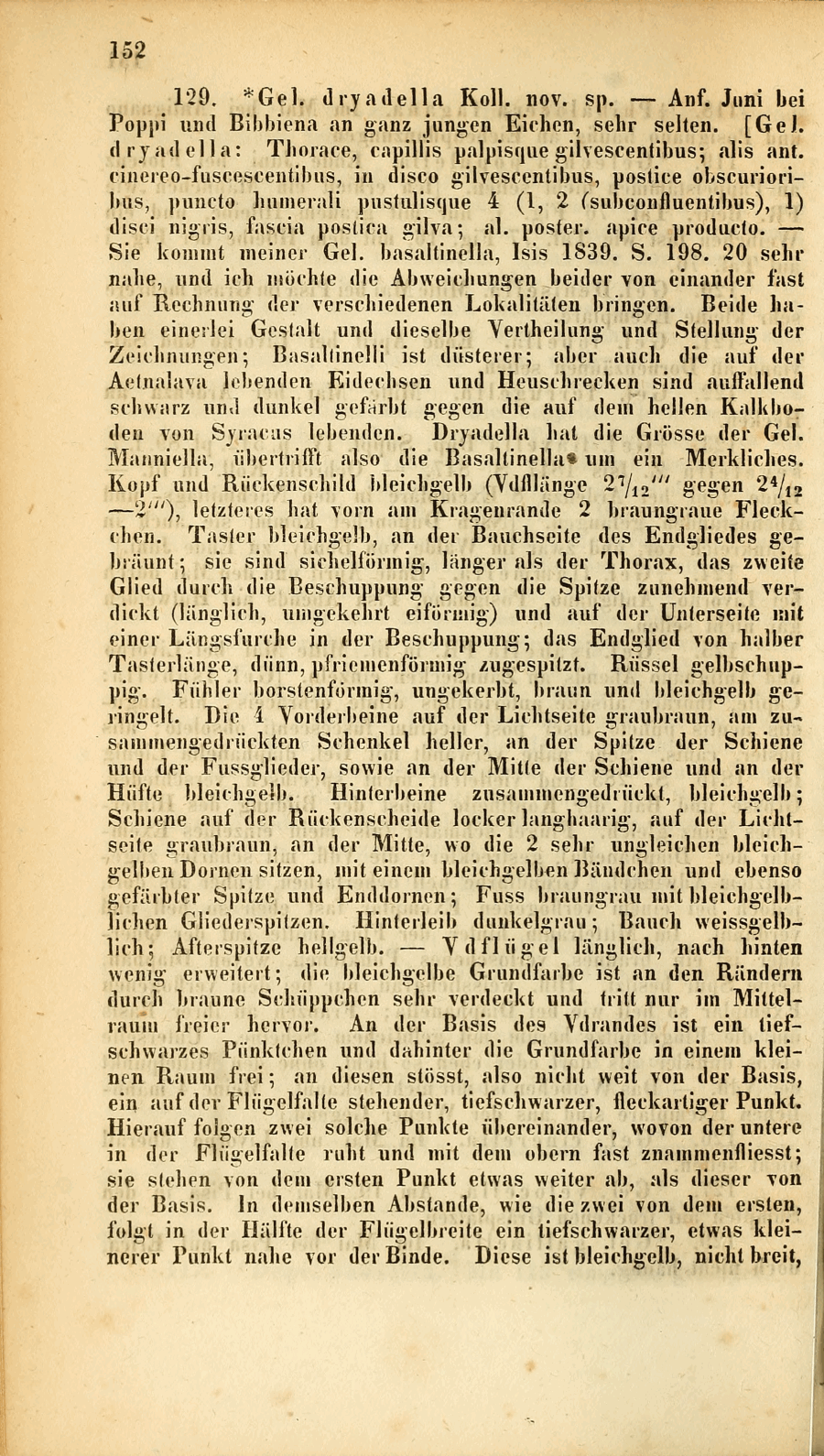
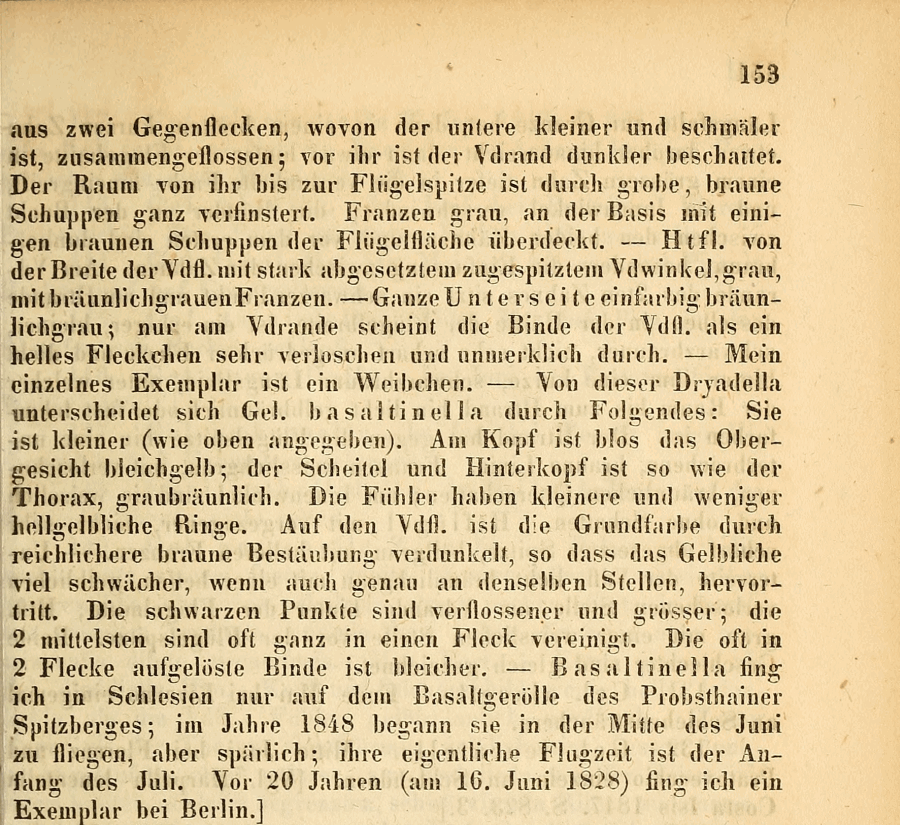
2.5. Erstbeschreibung
3. Biologie
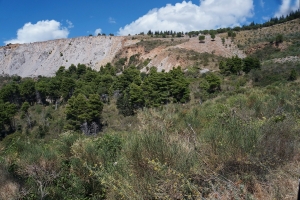
3.1. Habitat

3.2. Nahrung der Raupe
- [Hylocomiaceae:] Ctenidium molluscum (Weiches Kammmoos)
- [Pottiaceae:] Barbula unguiculata (Gespitztblättriges Bärtchenmoos)
- [Brachytheciaceae:] Homalothecium lutescens (Gelbliches Seidenmoos)
- [Bryaceae:] Bryum sp. (Birnmoos)
Karsholt & Rutten (2005: 135) stellten fest: "The biology is described in detail by Heckford & Sterling (2002). Larva with head pale brown, prothoracic plate black with pale white medial division, body purplish brown with pale white subdorsal and lateral lines, anal plate pale white with dark markings. It occupies a densely spun silken tube amongst the host plant. The larval description given by Meess (1910) most likely does not refer to a Bryotropha species (Heckford & Sattler 2002). Heckford & Sterling (2002) found B. dryadella larvae amongst Ctenidium molluscum (Hedw.), Barbula unguiculata Hedw., Homalothecium lutescens (Hedw.) H. Rob., and Bryum sp., often in association with grasses which occasionally showed signs of feeding, probably by the dryadella-larvae. A label in the MNHN with text ‘La Baule-les-Pins, e.l. Salix, 26.v.1920‘ is therefore unlikely to be correct."
Gregersen & Karsholt (2022: 228-229) ergänzen nach der gleichen Quelle: "The larva lives in a semi-transparent, whitish silken tube without fragments of moss or grass attached. The differences in biology between B. dryadella (feeding on moss on the ground) and B. basaltinella (feeding on moss on roofs or rocks) may be helpfull in separating these very similar species (Heckford in litt.)." (Autor: Erwin Rennwald)
4. Weitere Informationen
4.1. Andere Kombinationen
- Gelechia dryadella Zeller, 1850 [Originalkombination]
4.2. Synonyme
- Bryotropha saralella Amsel, 1952 [Nr. 03395 in Karsholt & Razowski (1996), synonymisiert durch Karsholt & Rutten (2005)]
4.3. Faunistik
Karsholt & Huemer (2017: 169) halten die alte Angabe von Kreta für sehr fraglich: "First record. REBEL (1916: 159) from Kavusi. [...] The record by Rebel was repeated in subsequent literature, e.g. KARSHOLT & RUTTEN (2005: 135). However, the specimen from Kavusi was not traced in the Natural History Museum Vienna, and no subsequent material has become available. Before the revision of KARSHOLT & RUTTEN (op cit.) B. dryadella was an unclear species, and until the record by Rebel can be confirmed we suggest that it is removed from the list of Gelechiidae from Crete."
4.4. Literatur
- Heckford, R.J. & K. Sattler (2002): Bryotropha dryadella (Zeller, 1850) a newly recognised British species, and the removal of B. figulella (Staudinger, 1859) from the British list (Lepidoptera: Gelechiidae). — Entomologist’s Gazette 53: 69-80. [Sekundärzitat]
- Heckford, R.J. & P.H. Sterling (2002): The discovery of the larva of Bryotropha dryadella (Zeller, 1850) and larval descriptions of this species, B. basaltinella (Zeller, 1839), B. umbrosella (Zeller, 1839) and B. senectella (Zeller, 1839) (Lepidoptera: Gelechiidae). — Entomologist’s Gazette 53: 83-91. [Sekundärzitat]
- Karsholt, O. & P. Huemer (2017): Review of Gelechiidae (Lepidoptera) from Crete. — Linzer biologische Beiträge, 49/1: 159-190. [PDF auf zobodat.at]
- Karsholt, O. & T. Rutten (2005): The genus Bryotropha Heinemann in the western Palaearctic (Lepidoptera: Gelechiidae). — Tijdschrift voor Entomologie 148: 77-207. [PDF auf nev.nl]
- Meess, A. (1910): Fam. Gelechiidae. – In: Spuler, A. (1910): Die Schmetterlinge Europas 2: 330-380. E. Schweizerbart’sche Verlagsbuchhandlung, Stuttgart.
- Erstbeschreibung: Zeller, P. C. (1850): Verzeichniss der von Herrn Jos. Mann beobachteten Toscanischen Microlepidoptera. — Entomologische Zeitung 11: (2) 59-64, (4) 134-136, (5) 139-162, (6) 195-212. Stettin.