+26Kontinente:ASAFNAMAKISA


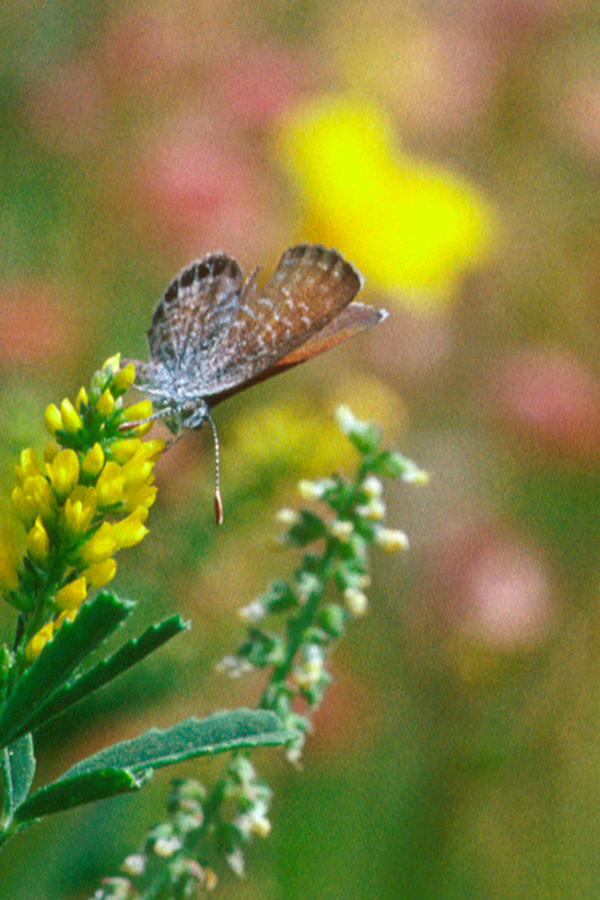
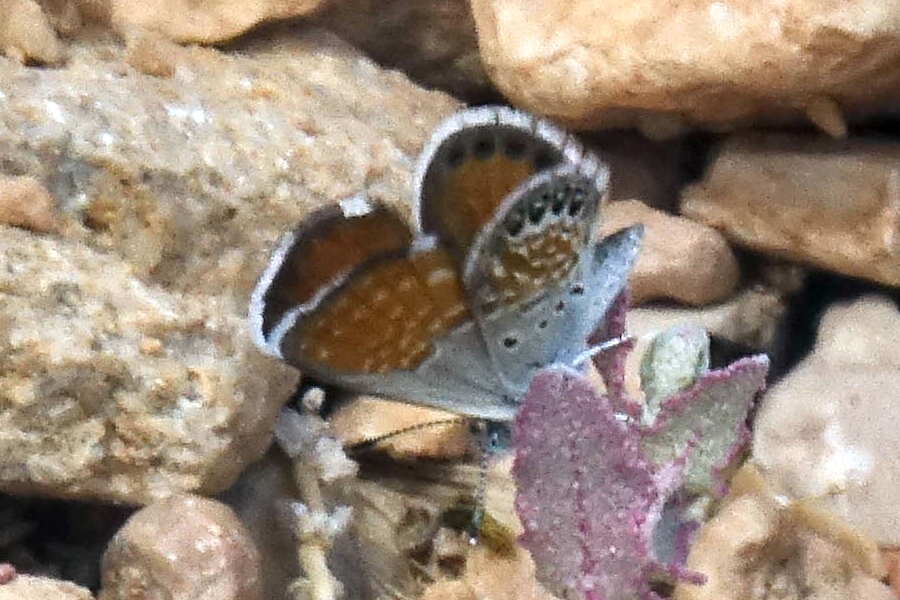
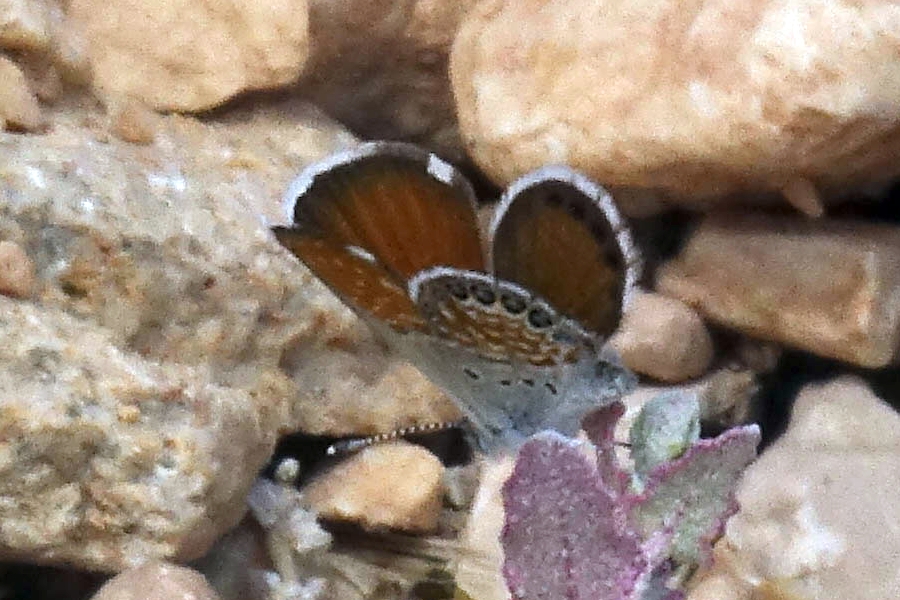
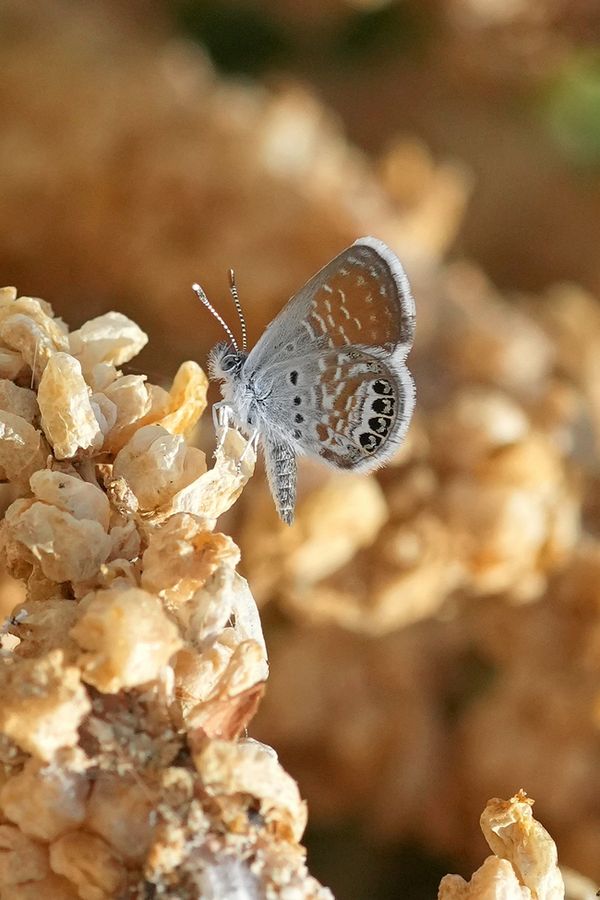
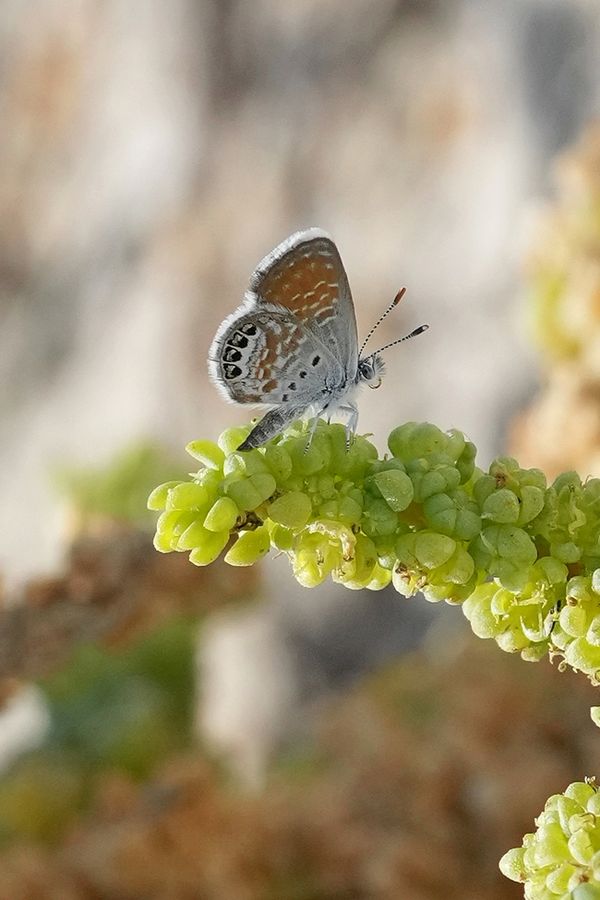
1. Lebendfotos
1.1. Falter

2. Weitere Informationen
2.1. Andere Kombinationen
- Lycaena exilis Boisduval, 1852 [Originalkombination]
2.2. Synonyme
- Lycaena fea Edwards, 1871 [Synonym nach funet.fi]
2.3. Unterarten
- Brephidium exilis isophthalma (Herrich-Schäffer, 1862) [Unterart nach funet.fi]
2.4. Faunistik
Nach [Global Biodiversity Information Facility] kommt die Art in USA. Mexiko, Vereinigte Arabische Emirate, Kuba, Kuwait, Katar, Guatemala, Oman, Kolumbien, Curacao, Bonaire, Sint Eustatius und Saba, Namibia, Saudi-Arabien, Bahrain, Ägypten, Jamaika, Dominikanische Republik, Israel, Costa Rica, Kaimaninseln und Nicaragua vor.
Locus typicus: USA, Kalifornien.
Benyamini & Laudon (2025: 64-65) fassten die ursprünglich auf Verschleppung beuhende Ausbreitungsgeschichte zu dieser nordamerikanischen Art zusammen: "Originally native to the south-western United States and parts of Mexico, this species has demonstrated a notable capacity for dispersal and establishment in new regions. In Asia, B. exilis has been documented along the Persian Gulf, Iran, Pakistan, with established populations in eastern, central and western Saudi Arabia, Bahrain, the United Arab Emirates, Qatar, Kuwait and northern Oman. The initial introduction to the Arabian Peninsula likely occurred via the importation of plant cultivars from the United States, as the butterfly's larvae feed on various host plants, including species in the goosefoot family (Chenopodiaceae). B. exilis was first recorded in the Arabian Peninsula in 1995, with a sighting in Sharjah, United Arab Emirates. Since then, it has established itself throughout the UAE, as well as in northern Oman and eastern Saudi Arabia. Otto (2014) recorded it from Sohar on the Omani coast. More recently, in 2022, B. exilis was observed in the south-western mountainous regions of Saudi Arabia, specifically near Al-Baha on 19 September 2022, and in the Wadi Reem area. These sightings are significant as they represent the first records of this species in that part of the Arabian Peninsula. Later it crossed the Red Sea to eastern Egypt, penetrating the African continent for the first time with an observation from 16 February 2023, (Verovnik et al., 2023; iNaturalist 2025: Fig. 2; Roobas et al., 2025). The presence of B. exilis in these new locations indicates its ecological adaptability, thriving in diverse habitats ranging from deserts and salt marshes to forested areas at higher elevations. The B. exilis appears to have crossed the Dead Sea westwards from Jordan to Israel in 2021 and was first reported in Israel on 3 August 2021 by Yuval Evron, a butterfly enthusiast vacationing at a Dead Sea hotel (Evron, 2021; Benyamini, 2021). It was perched on a Sesuvium plant in the hotel garden and within a few months, the rapidly spreading species was observed as far south as Eilat in Israel on 2 August 2022 (Kirshenbaum, 2022) and at the Hayarkon River north-west of Tel Aviv on 16 December 2022 (Levi-Khavut, 2023)." Auf dieser Basis ist sicher noch mit einer weiteren Ausbreitung zu rechnen.
(Autoren: Michel Kettner & Erwin Rennwald)
2.5. Literatur
- Benyamini, D. (2021): Brephidium exilis (Boisduval, 1852) (Lepidoptera: Lycaenidae, Polyommatinae) a preliminary note on the species' first record for Israel and the Western Palaearctic Region. — Entomologist's Gazette 72 (4): 265-266.
- Benyamini, D. & M. Laudon (2025): New anthropogenic lycaenid arrivals in the Levant. — Metamorphosis, 36: 64–66. [PDF auf metamorphosis.org.za]
- Markhasiov, M. (2023): First record of Western Pygmy-Blue Brephidium exilis (Boisduval, 1852) in Iran (Lepidoptera, Lycaenidae). — Atalanta 54 (1/2): 116–118. [PDF auf zobodat.at]