+24Kontinente:EU


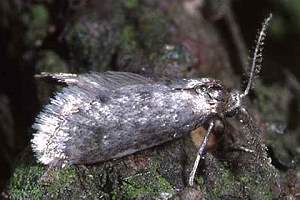
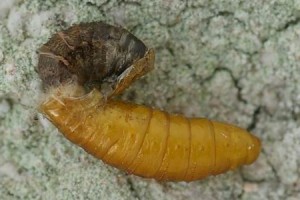
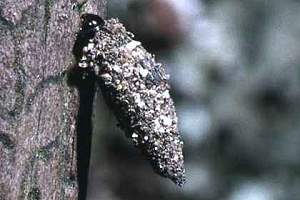
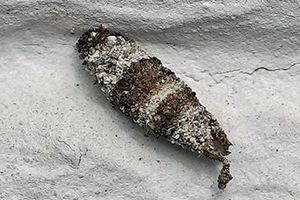
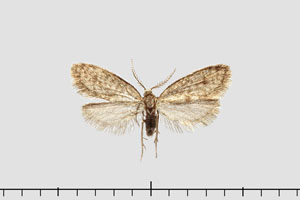
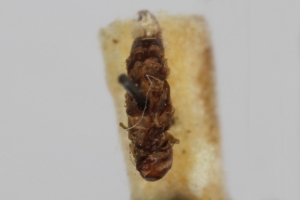
1. Lebendfotos
1.1. Falter
1.1.1. Männchen (f. lapidella)
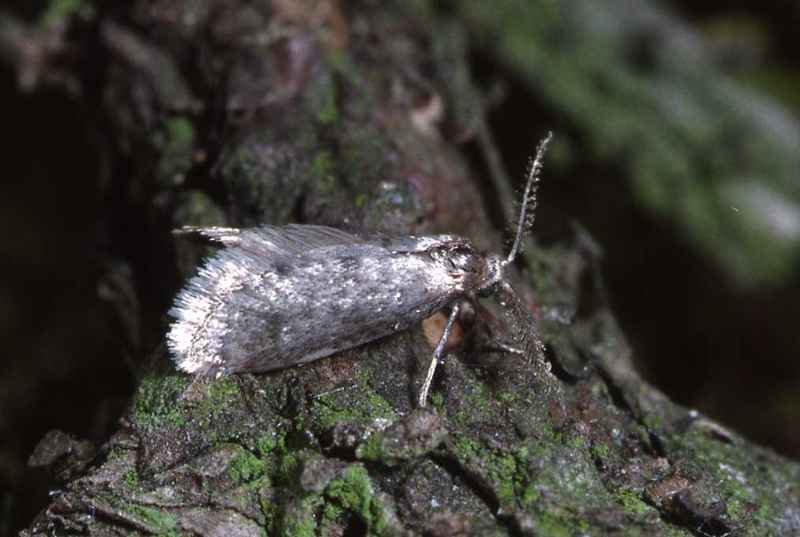
1.1.2. Weibchen (f. ferchaultella)
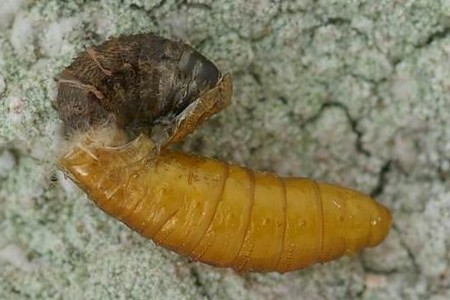
1.1.3. Raupe
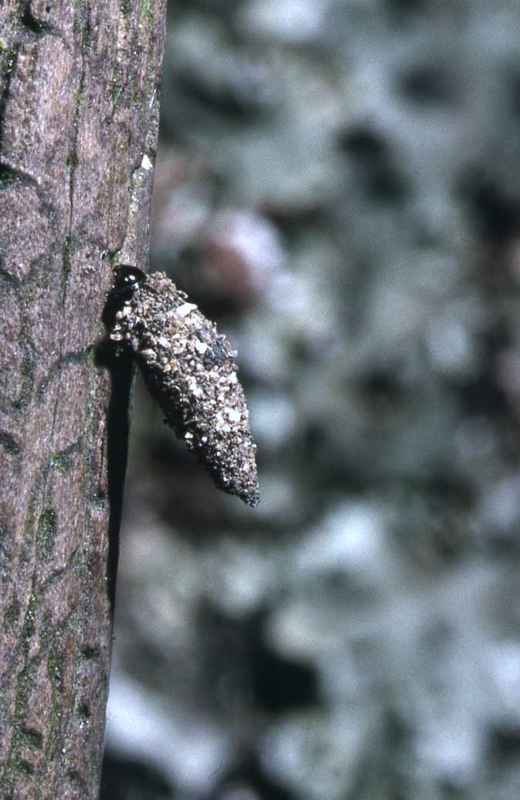
1.2. Puppe
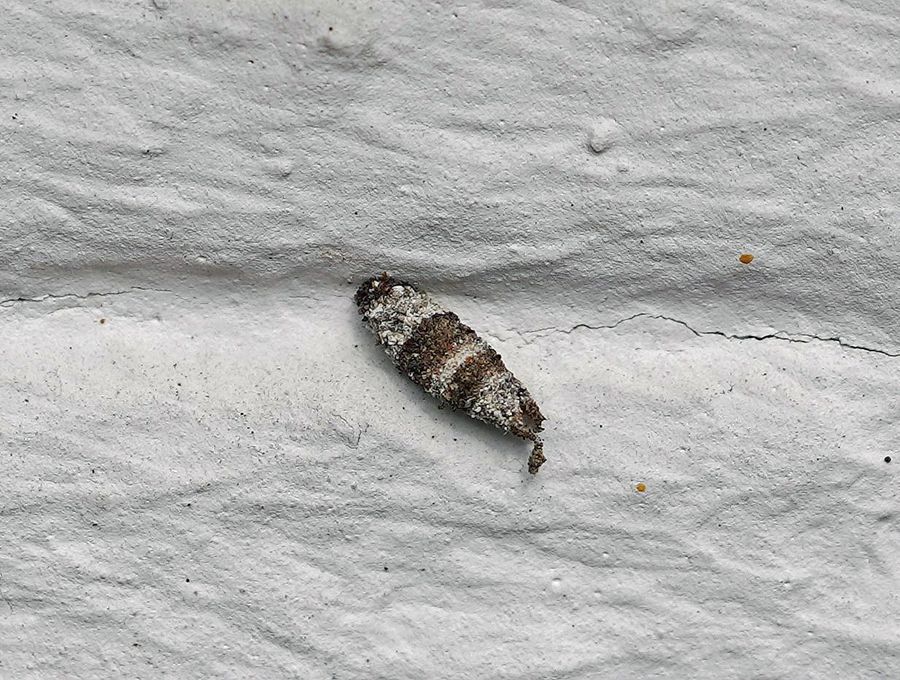
2. Diagnose
2.1. Männchen (f. lapidella)

2.2. Weibchen (f. lapidella)
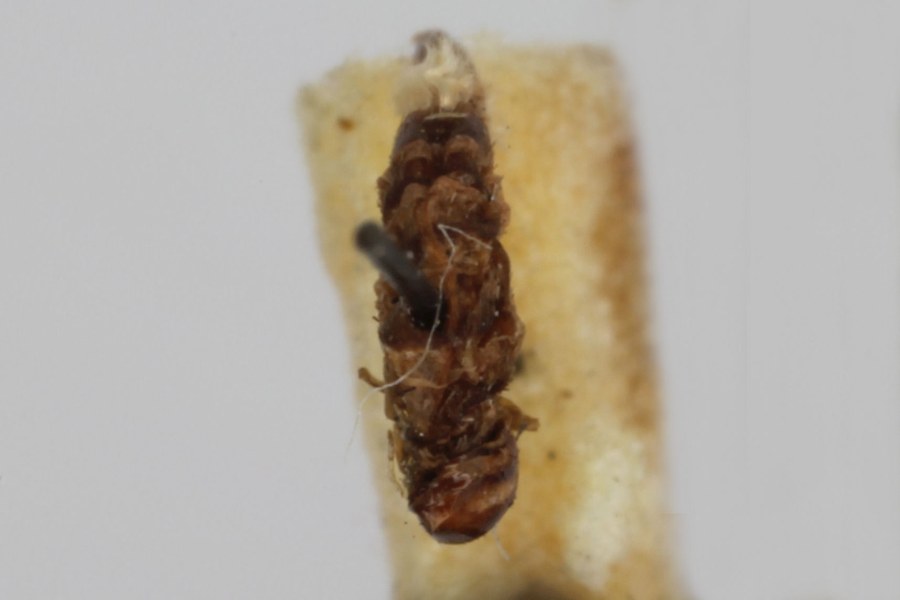

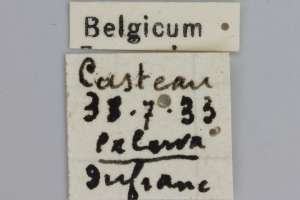
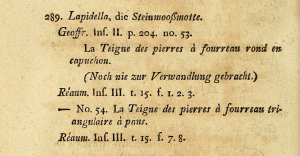
2.3. Erstbeschreibung

Darin indizierte Abbildungen

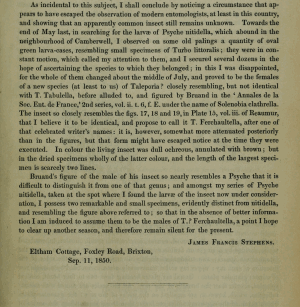
2.4. Beschreibung als Taleporia ferchaultella (jetzt f. ferchaultella)
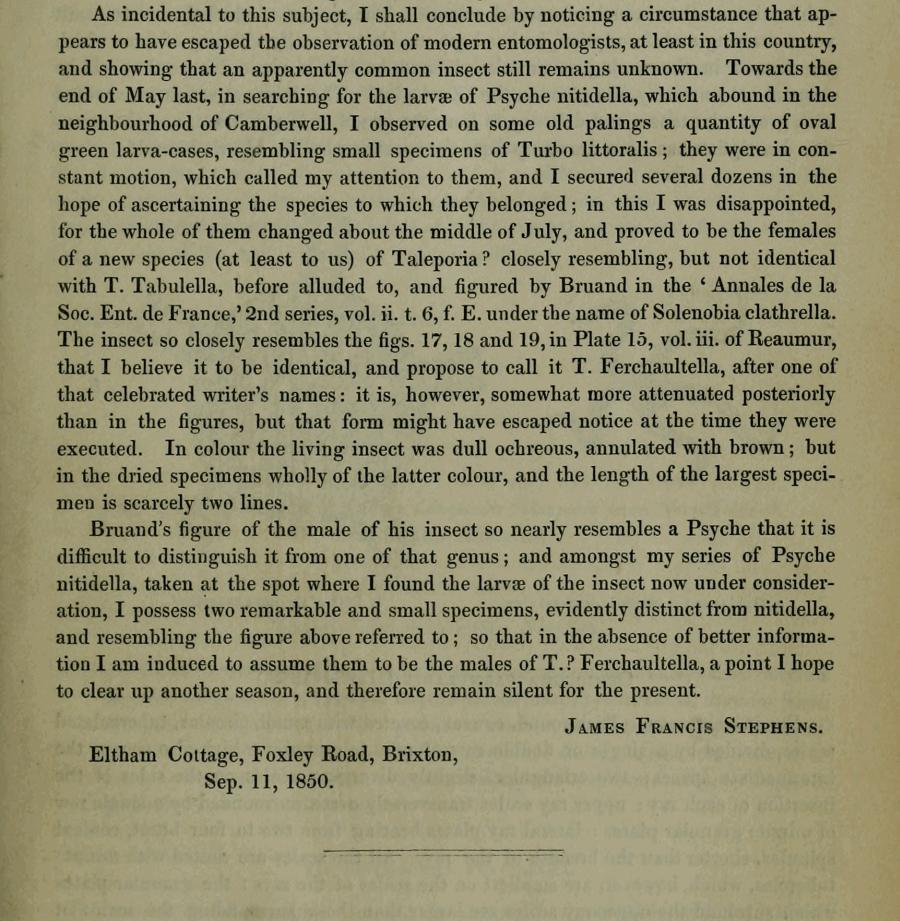
3. Biologie
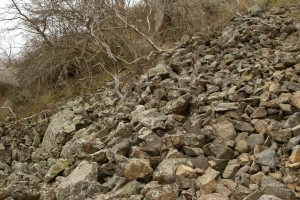
3.1. Habitat

3.2. Larvalentwicklung und Parasitierung
Parkinson (2015: 24) berichtet aus seiner Erfahrung mit der "larva aeterna" von Luffia ferchaultella: "Each August it is apparent that there are two distinct generations of larvae living alongside each other. Tiny first instar larvae commence grazing on the lichen covered fence posts and are accompanied by the large final instar caterpillars which are siblings of the newcomers’ parents. These “aunts and uncles” are destined for a “Peter Pan” existence, living on in a much extended larval period, without ever attaining the adult state. Roman poets referred to a mythological child-god who stayed forever young as puer aeternus. The term has been adopted by Jungian psychologists to describe an element of the human psyche; the female equivalent is the puella aeterna. As the word larva is a feminine noun the Peter Pan caterpillar state is referred to here as the larva aeterna." Dann folgen die Zuchterfahrungen: "In August 2014, I collected 34 of these larvae aeternae and reared them in captivity. The specimens were divided into pairs, each housed in plastic pots containing pieces of lichen-covered bark. All were kept in a garden shed, heated only at night-time, to maintain an ambient temperature between 10-18°C. On 21 September it was noted that only four larvae were still actively feeding whilst the remainder had become dormant. The four mobile individuals were transferred outside to a lichen-covered log which was carefully positioned in the garden in an attempt to mimic optimal natural conditions for them to enter their second winter. For a couple of weeks the voracious four transported themselves around the surface of the log presumably influenced by light intensity, warmth and humidity on each of the log’s different aspects. All four larval cases were marked by queen bee marker ink to facilitate the observation of their dispersion. Unfortunately three disappeared on one damp evening and are suspected to be victims of grazing slugs. Who knew that the (probably accidental) ingestion of Psychidae by slugs was a thing?!"
Die Zucht dieser "larvae aeternae" lieferte interessante Ergebnisse - die Verzögerung der Larvalentwicklung wurde offensichtlich durch Parasitierung ausgelöst: "Meanwhile, back in the garden shed, things were becoming interesting. Adult ichneumons began emerging from the Luffia cases on 28 September and by 9 October there were twelve males which I recognised as belonging to genus Diadegma." Die Schlupfwespen wurden als Diadegma naryciae Horstmann, 2008 bestimmt. Wie üblich schlüpften erst nur Männchen, in einer zweiten Welle dann die Weibchen der Schlupfwespe. Der Autor fragte sich natürlich, wie und warum es zu dieser Verzögerung der Raupenreife kommt. Seine vorläufige Antwort: "My hypothesis is that healthy Luffia were attacked as late instar caterpillars by Diadegma naryciae that had over-wintered inside caterpillars (of the same generation) parasitised in the previous October. I feel sure that the parasitoid then switches off the caterpillar’s pupation mechanism to create the Larva aeterna. Now I just have to prove it!
(Autor: Erwin Rennwald)
4. Weitere Informationen
4.1. Etymologie (Namenserklärung)
„lapis der Stein, nach dem Vorkommen.“
„R. A. Ferchault de Réaumur.“
4.2. Andere Kombinationen
- Tinea lapidella Goeze, 1783 [Originalkombination]
4.3. Synonyme
- Tinea lichenosa Geoffroy, 1785
- Talaeporia lapidicella Zeller, 1838
- Solenobia pectinella Duponchel, 1842
- Apterona pinastrella Millière, 1857
- Psyche roboricolella Birchall, 1866
- Luffia triquetrella Dale, 1866
- Luffia intermediella (Morris, 1870)
- Psyche hibernicella Gregson, 1873
- Taloeporia hibernicella (Gregson, 1873)
- Luffia conspurcatella (Millière, 1875)
f. ferchaultella
- Taleporia ferchaultella Stephens, 1850 [Originalkombination der f. ferchaultella]
- Solenobia pomonae (Stainton, 1859)
- Talaeporia pineti (Millière, 1875)
4.4. Taxonomie
Das Taxon Luffia ferchaultella wird heute fast allgemein nicht mehr als eigenständige Art angesehen, sondern als parthenogenetische Form von Luffia lapidella behandelt, so z.B. auch im "World Catalogue of Insects" von Sobczyk (2011: 172), im "Verzeichnis der Schmetterlinge Deutschlands" von Sobczyk in Gaedike et al. (2017) und bei Arnscheid & Weidlich (2017). Dieser Auffassung schließen wir uns an, belassen für die Form hier aus praktischen Gründen aber doch eine eigene Seite. Der Letzte, der noch einmal auch die Argumente, die für eine artliche Trennung sprechen könnten, zusammentrug war Sims (1999).
4.5. Faunistik
Nach Arnscheid & Weidlich (2017: 140-141) und diversen anderen Autoren ist die f. lapidella im südlichen Europa weit verbreitet: Portugal, Spanien, südliches Frankreich inkl. Korsika, Sardinien, Festland-Italien, Sizilien, Malta und die Westküsten Kroatiens und Griechenlands. "Recently it has been recorded in Bulgaria near the Black Sea coast (Rutjan 2006: in litt.), Slovenia (Rekelj, 2013: 39; Weidlich, 2013e: 163), Ukraine and Cyprus (Weidlich 2013: 166; 2015b: 119). In Central Europe it is distributeted in southern Switzerland, south France and in Great Britain on the Channel Islands. Nach Hendericks (1987) vielleicht (!) auch bei Mol in Belgien.
Die von Karsholt & Razowski (1996) nicht für Deutschland genannte Art wurde in der f. ferchaultella im Nahetal (Rheinland-Pfalz) nachgewiesen (Bläsius & Herrmann 1991), nach Gaedike et al. (2017: 28) aktuell auch in Nordrhein-Westfalen. Diese parthenogenetische Form ferchaultella tritt auch in Belgien (ob dort mit f. lapidella?), in den Niederlanden, in Luxemburg, im Norden Frankreichs und in mehreren Bereichen Großbritanniens und in Irland auf, isoliert davon auf den Azoren.
Da in einigen Bereichen der f. ferchaultella ab und zu auch einzelne Männchen auftauchen und andererseits in Bereichen mit sexueller Fortpflanzung es auch Populationen gibt, bei denen das männliche Erbgut meist gar nicht verwendet wird (f. maggiella) und die Weibchen ganz stark überwiegen, ist das alles noch viel komplizierter.
(Autor: Erwin Rennwald)
4.6. Literatur
- Arnscheid, W.R. & M. Weidlich (2017): Psychidae. — In: Karsholt, O., Mutanen, M. & M. Nuss [edit.]: Microlepidoptera of Europe. Volume 8: 1-423; Leiden & Boston (Brill).
- Bläsius, R. & Herrmann, R. (1991): Luffia lapidella Goeze 1783 f. ferchaultella Stephens 1850 auch im Nahetal (Lep., Psychidae), in: Melanargia 3/1991, S. 156-159.
- Gaedike, R., Nuss, M., Steiner, A. & R. Trusch (2017): Verzeichnis der Schmetterlinge Deutschlands (Lepidoptera). 2. überarbeitete Auflage. — Entomologische Nachrichten und Berichte (Dresden), Beiheft 21: 1-362.
- Erstbeschreibung: Goeze, J. A. E. (1783): Entomologische Beyträge zu des Ritter Linné zwölften Ausgabe des Natursystems, 3. Teil, 4. Band. I-XX + 1-178. Leipzig (Weidmanns Erben und Reich).
- Hättenschwiler, P. (1997): Luffia lapidella. — In: Pro Natura – Schweizerischer Bund für Naturschutz (Hrsg.) (1997): Schmetterlinge und ihre Lebensräume. Arten, Gefährdung, Schutz. Schweiz und angrenzende Gebiete. Band 2: 231-233. Egg (Fotorotar AG).
- Kayser, C. & U. Widowski (2026): EErgänzungen zur Kleinschmetterlingsfauna Niedersachsens (3) (Microlepidoptera). — Melanargia 38 (2): 55-76.
- Parkinson, D. (2015): The larva aeterma. — The Entomologist's record and journal of variation, 127 (1): 24-27. [Digitalisat auf biodiversitylibrary.org]
- de Reaumur (1737): Memoires pour servir à l'histoire des insectes 3: i-xl, 1-532, pl. 1-47. Paris (Imprimerie royale).
- Rekalj, J. (2013): First record of Luffia lapidella (Goeze, 1783) in Slovenia (Lepidoptera: Psychidae). Acta Entomologica Slovenica 21 št. 1: 39-46 [PDF auf pms-lj.si].
- Sauter & Hättenschwiler (2004): Zum System der palaearktischen Psychidae. 3. Teil: Bestimmungsschlüssel für die Säcke. — Nota lepidopterologica 27 (1): 59–69 [Digitalisat auf archive.org].
- Schmälter, B. (2023): Luffia lapidella f. ferchaultella (Stephens, 1850) in unserem Arbeitsgebiet – in Ausbreitung, unterkartiert oder beides? (Lep., Psychidae). — Melanargia 35 (1): 50–57.
- Shaw, M. R. (2021): Luffia lapidella (Goeze, 1783) (Lepidoptera: Psychidae) proved to be the host of Choeras gielisi van Achterberg (Braconidae: Microgastrinae), new to Britain. — Entomologist's Gazette 72 (4): 253-256.
- Sims, I. (1999): Observations on rearing Luffia spp. (Lepidoptera: Psychidae) under controlled environmental conditions, with taxonomic notes. — British journal of entomology and natural history, 12: 17-25. [Digitalisat auf biodiversitylibrary.org]
- Beschreibung als Tinea ferchaultella: Stephens, J. F. (1850): Random Observations on the Psychidae in reference to Mr. Newman's Paper on that Family (see ante, p. XCIX.). — Appendix to the Zoologist for 1850: CVI-CIX.
- Weidlich, M. (2013): The bisexual Dahlica triquetrella (Hübner, 1813) and new records of Luffia lapidella (Goeze, 1783) in Slovenia (Lepidoptera: Psychidae). — Acta Entomologica Slovenica 21 št. 2: 163-168 [PDF auf pms-lj.si].
- Zerafa, M., Sammut, P. & P. Hättenschwiler (2008): Luffia lapidella (Goeze, 1783), a new bagworm moth for the Maltese Islands (Lepidoptera, Psychidae). — Bulletin of the Entomological Society of Malta 1: 51-54.